In the realm of industrial automation and control systems, proximity sensors are indispensable components for non-contact object detection. A fundamental and critical capability of these sensors is their ability to distinguish between ferrous metals (like iron and steel) and non-ferrous metals (such as aluminum, copper, or brass). This differentiation is not merely a technical nuance but a cornerstone for numerous sorting, quality control, and process automation applications. Understanding how proximity sensors achieve this "ferrous vs. non-ferrous" separation is essential for engineers and system designers.
The core technology enabling this distinction lies primarily within inductive proximity sensors. These sensors operate by generating an oscillating electromagnetic field from a coil within the sensing face. When a metallic object enters this field, eddy currents are induced on the surface of the object. These eddy currents cause a measurable change in the sensor's own oscillation amplitude or frequency, triggering the output switch. The key to differentiation is how different metals affect this electromagnetic field.
Ferrous metals, containing iron, are both electrically conductive and highly magnetically permeable. Magnetic permeability refers to a material's ability to support the formation of a magnetic field within itself. When a ferrous target like steel approaches, it not only induces eddy currents but also concentrates the sensor's magnetic flux lines due to its high permeability. This dual effect results in a significantly stronger damping of the sensor's oscillation. Consequently, inductive sensors can detect ferrous metals from a greater distance, known as the rated operating distance (Sn).
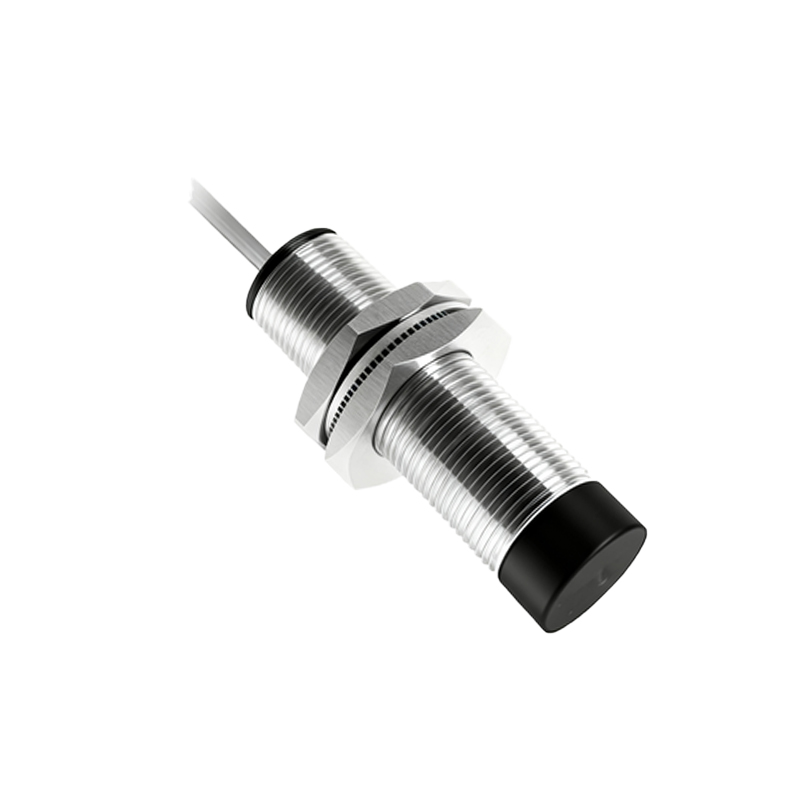
Non-ferrous metals, like aluminum or copper, are excellent electrical conductors but have very low magnetic permeability (approximately equal to air or 1). They induce strong eddy currents, which dampen the oscillation, but they do not concentrate the magnetic flux. The damping effect from eddy currents alone is less pronounced than the combined eddy current and permeability effect seen with ferrous metals. Therefore, for a standard inductive sensor, the effective sensing range for a non-ferrous target like aluminum is substantially reduced—often to 30% to 50% of the rated Sn for steel. This inherent range difference is the primary basis for separation in many applications.
To enhance and standardize this capability, specialized sensors have been developed. Factor-1 sensors are calibrated specifically for steel (Fe). All-purpose or "non-ferrous optimized" sensors are designed with different internal oscillation characteristics to provide a more consistent sensing range across various metals, though a differential usually remains. Most crucially, ferrous/non-ferrous discrimination sensors incorporate two distinct oscillator circuits. One circuit is tuned to be highly sensitive to the permeability effect (ferrous), and the other is tuned to be more sensitive to the pure conductivity effect (non-ferrous). By comparing the signals from these two oscillators, the sensor's electronics can make a definitive determination of the metal type, often providing separate digital outputs (e.g., one output for ferrous, another for non-ferrous).
Selecting the right sensor for an application requiring metal separation depends on several factors. For simple presence detection where the target material is always known, a standard inductive sensor suffices. If the goal is to sort or reject parts based on material, a dedicated discrimination sensor is necessary. Key selection parameters include the required sensing distance, the specific metals to be distinguished (e.g., aluminum vs. brass may require fine-tuning), the target size and shape, and the required switching frequency. Environmental factors like temperature, presence of cutting fluids, or metallic backgrounds also influence performance and housing material choice (e.g., stainless steel vs. nickel-plated brass).
Practical applications for this technology are vast. In automotive manufacturing, these sensors verify that engine blocks (aluminum) are not confused with transmission housings or brackets (steel) on an assembly line. In recycling facilities, they are pivotal in sorting fragmented metals, directing ferrous scrap to one conveyor and non-ferrous to another. In machining centers, they can check that the correct aluminum billet is loaded, preventing tool damage. In fastener production, they ensure stainless steel nuts are not mixed with zinc-plated steel ones.
Installation and calibration are critical final steps. Engineers must adhere to the specified mounting distances to avoid mutual interference between multiple sensors. The sensing distance must be set correctly, often using the actual target material for teach-in or calibration procedures on programmable sensors. Shielding (flush-mountable) sensors are preferred in metallic environments, while non-shielded types offer longer ranges but require more clearance from surrounding metal.
In conclusion, the separation of ferrous and non-ferrous metals by proximity sensors is a sophisticated interplay of electromagnetic principles engineered into robust industrial components. From leveraging the basic range differential of standard sensors to employing advanced dual-oscillator discrimination technology, this capability drives efficiency, ensures quality, and automates complex material handling tasks. A deep understanding of the underlying