In industrial automation, robotics, and smart systems, the consistent and accurate detection of objects is paramount. A proximity sensor that delivers "stable" performance is not merely a component; it is the foundation of operational reliability. Stability in this context refers to a sensor's ability to maintain consistent detection characteristics—such as sensing distance, response time, and output signal—despite variations in environmental conditions, target material, or electrical noise. An unstable sensor can lead to missed detections, false triggers, and ultimately, system downtime, posing significant risks to safety and productivity.
The quest for stability begins with the core sensing technology. Inductive proximity sensors, renowned for detecting metallic objects, achieve stability through robust coil design and advanced oscillation circuits. High-quality models incorporate temperature compensation circuits to counteract the drift in sensing range that can occur with ambient temperature fluctuations. Similarly, capacitive sensors, used for non-metallic materials like liquids or plastics, employ shielding and guard ring designs to minimize the influence of stray capacitance from the sensor's body or mounting hardware, ensuring the sensing field is directed precisely forward.
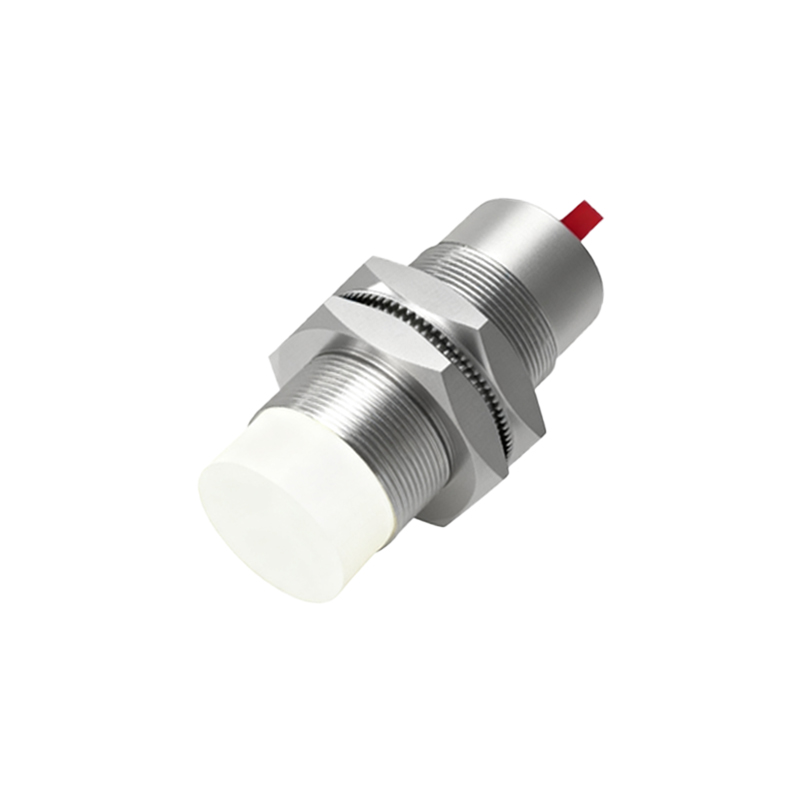
Environmental challenges are the true test of a sensor's stability. Industrial settings are rife with contaminants: oil, coolant, dust, and metal shavings. A stable proximity sensor features a housing rated to appropriate IP (Ingress Protection) standards, such as IP67 or IP69K, preventing the ingress of solids and liquids that could interfere with internal electronics or obscure the sensing face. Furthermore, electromagnetic interference (EMI) from motors, welders, or variable frequency drives can disrupt sensor operation. Sensors designed for stability include electromagnetic shielding, often with a metal housing or internal ferrite cores, and utilize filtered output circuits to suppress noise, guaranteeing a clean, unambiguous signal.
The target object itself introduces variables. For inductive sensors, the sensing distance is affected by the target's material composition and size. A stable sensor is designed with a minimal reduction factor for different metals, meaning its detection range for stainless steel is closer to its range for mild steel, providing more predictable performance. The shape and approach angle of the target also matter. Advanced sensors with homogeneous magnetic fields offer more stable switching points regardless of whether the target approaches head-on or from the side, simplifying installation and alignment.
Electrical stability is equally critical. Voltage fluctuations are common on factory floors. A high-quality, stable proximity sensor boasts a wide operating voltage range (e.g., 10-30V DC) with built-in protection against reverse polarity, overvoltage, and short circuits. This ensures consistent switching performance even when the supply voltage sags or surges. The output stage, whether PNP, NPN, or analog, must provide a robust signal with minimal leakage current to reliably interface with PLCs (Programmable Logic Controllers) or other control systems without causing ghost signals.
Beyond hardware, achieving long-term stability involves meticulous manufacturing. Precision in the machining of the sensing face and the potting of internal components with high-grade epoxy resin protects against vibration and thermal cycling, preventing micro-cracks or component movement that could alter performance over time. Regular calibration and testing during production, often involving temperature chambers and EMI test chambers, verify that each unit performs within strict tolerances.
In applications ranging from high-speed packaging lines, where millisecond consistency is key, to harsh outdoor applications monitoring bulk material levels, the value of a stable proximity sensor becomes clear. It reduces maintenance intervals, eliminates costly recalibration, and builds trust in the automated process. Engineers and system integrators prioritize sensors from manufacturers that provide detailed technical data on repeatability, temperature influence, and EMI immunity, as these specifications are the blueprint for stability.
Ultimately, selecting a stable proximity sensor is an investment in system integrity. It moves the focus from basic detection to dependable, predictable operation. By understanding the engineering principles that combat environmental, electrical, and mechanical variables, one can specify sensors that will perform today, tomorrow, and for years to come, forming the reliable sensory backbone of any dynamic application.