In the realm of industrial automation, the reliable detection of metallic objects is a cornerstone of countless processes, from assembly lines to robotic systems. Among the diverse array of sensing solutions, the 15mm metal proximity sensor stands out as a particularly versatile and widely adopted component. This article delves into the technical specifications, operational principles, selection criteria, and application best practices for these essential devices.
A 15mm metal proximity sensor, as the name implies, is a non-contact sensing device with a nominal sensing distance (Sn) of 15 millimeters. This specific range offers an optimal balance between detection capability and physical size, making it suitable for a vast spectrum of applications where space is at a premium but reliable detection is non-negotiable. These sensors operate primarily on the principle of electromagnetic induction. The core component is a coil housed within the sensor's face, which is energized by a high-frequency oscillating circuit. When a metallic object (typically ferrous metals like steel or iron, though many models detect non-ferrous metals like aluminum, copper, or brass) enters this electromagnetic field, eddy currents are induced on the surface of the target. This causes a change in the oscillation amplitude or frequency within the sensor's circuit. An integrated evaluation circuit detects this change and triggers a switching action in the output stage.
The key performance parameters for a 15mm proximity sensor include the nominal sensing distance (15mm), the assured operating distance (typically 0-12.15mm, or 81% of Sn, as per IEC 60947-5-2), the switching frequency (indicating how quickly it can detect objects, often in the range of hundreds of Hz to over 1 kHz), and the housing material (commonly nickel-plated brass, stainless steel, or PBT plastic). Output configurations are predominantly solid-state, either PNP (sourcing) or NPN (sinking), with 3-wire DC versions being the industry standard. Some models also offer analog (4-20mA or 0-10V) or IO-Link outputs for more advanced data communication. The choice between shielded (flush-mountable) and unshielded (non-flush mountable) designs is critical. Shielded sensors can be installed flush in metal without affecting their sensing field, saving space. Unshielded types have a longer sensing range for their size but require clearance from surrounding metal.
Selecting the right 15mm sensor requires careful consideration of the application environment. Key factors include the target material (ferrous vs. non-ferrous), the required sensing distance (always consider a safety factor, operating within 50-70% of the nominal range), environmental conditions (IP67 or IP69K ratings for resistance to water, dust, and washdowns are common), temperature ranges, and the presence of electrical noise or other sensors nearby. For instance, in a machining center, a shielded, stainless-steel-housed sensor with high resistance to cutting fluids and metal chips would be specified. In a packaging line detecting aluminum foil lids, a sensor specifically tuned for non-ferrous metals would be necessary.
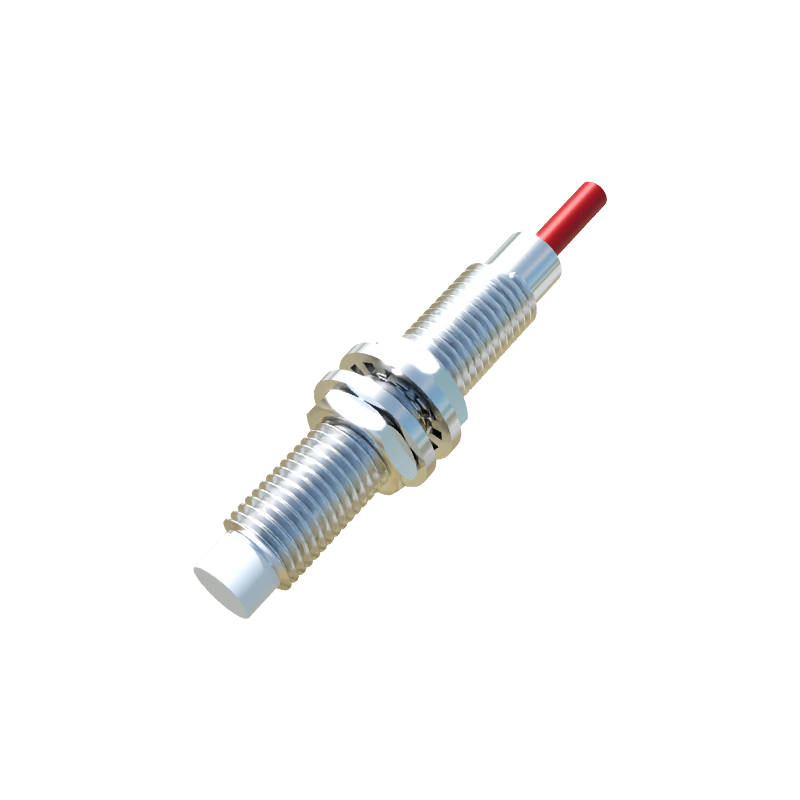
The applications for 15mm proximity sensors are virtually limitless. They are extensively used for position verification (is a part in place?), end-of-travel detection on cylinders, counting metallic parts on a conveyor, monitoring rotational speed via a gear tooth, and ensuring safety door closure. Their robust, non-contact nature eliminates mechanical wear, ensuring long service life and maintenance-free operation compared to mechanical limit switches. Installation is straightforward but must follow guidelines: ensuring proper alignment with the target, maintaining the recommended mounting distances, and using correct wiring practices to avoid electromagnetic interference.
In conclusion, the 15mm metal proximity sensor is a fundamental building block of modern industrial control systems. Its standardized size, reliable performance, and adaptability make it an engineer's go-to solution for metallic object detection. By understanding its operating principles and meticulously matching its specifications to the application demands, engineers and technicians can ensure robust, fail-safe operation, thereby enhancing the efficiency, safety, and productivity of automated processes. As Industry 4.0 advances, these sensors continue to evolve, with smarter versions offering diagnostic data and seamless integration into networked industrial ecosystems.