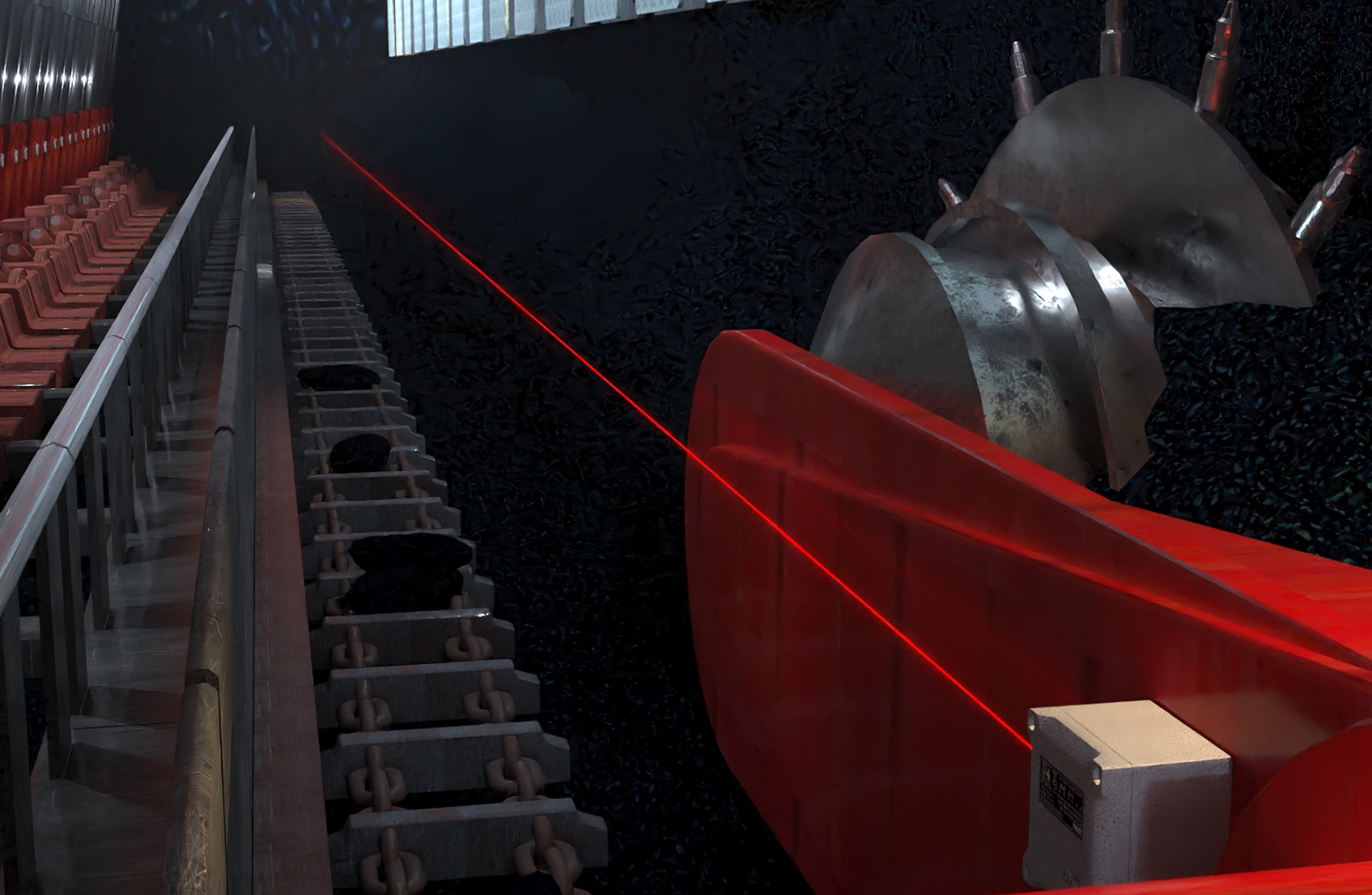
In the realm of industrial automation, precision, reliability, and efficiency are paramount. Among the myriad of sensing technologies available, the interval detection laser sensor stands out as a critical component for non-contact measurement and object detection within defined ranges. This article delves into the operational principles, key applications, and essential selection criteria for these sophisticated devices, providing a comprehensive guide for engineers and system integrators.
At its core, an interval detection laser sensor, often referred to as a background suppression or distance-measuring sensor, operates on the principle of triangulation or time-of-flight (ToF). Unlike simple through-beam or diffuse reflective sensors, it is designed to detect an object only when it is within a specific, user-defined distance interval. This is achieved by precisely evaluating the position of the reflected laser spot on a receiver element, such as a Position Sensitive Device (PSD) or a CMOS array. The sensor's electronics are calibrated to trigger an output signal only if the calculated distance to the target falls between a preset "ON" and "OFF" point. This background suppression capability allows it to reliably ignore objects beyond the set range, including the background surface, making it exceptionally robust in complex environments.
The advantages of utilizing interval detection laser sensors are numerous. They offer high precision, often with sub-millimeter resolution, enabling tasks like precise positioning or height differentiation. Their response time is extremely fast, suitable for high-speed production lines. Furthermore, the focused laser beam provides excellent performance on challenging surfaces—dark, shiny, or transparent materials that often confuse standard photoelectric sensors. The ability to set precise detection windows minimizes false triggers and enhances system stability.
Applications for these sensors span across diverse industries. In packaging and material handling, they are indispensable for precise carton presence detection on conveyors, palletizing, and controlling fill levels by detecting the height of materials in bins or on production lines. The automotive industry leverages them for robot guidance, part positioning in assembly jigs, and verifying component presence or orientation. In electronics manufacturing, they ensure precise placement of components on PCBs and detect minute height variations. Logistics and warehousing systems use them for object counting, sorting, and dimensioning packages. Their versatility also extends to quality control, where they can detect warped parts or verify assembly completeness by checking for the presence of multiple features at specific heights.

Selecting the appropriate interval detection laser sensor requires careful consideration of several technical parameters. First, define the required sensing range and the specific detection window (the interval). Manufacturers specify both a maximum sensing distance and the minimum adjustable window size. Second, consider the spot size and beam characteristics. A smaller spot allows for higher precision and detection of smaller objects. Third, evaluate the required output type (PNP/NPN, analog, IO-Link, etc.) and switching frequency to match the controller and process speed. Environmental factors are crucial: the sensor's housing rating (IP67/IP69K for washdown areas), operating temperature range, and resistance to ambient light interference must be suitable for the installation site. Finally, features like teach-in functionality (for easy setup), built-in diagnostics, and connectivity for Industry 4.0 applications (like IO-Link for parameterization and data exchange) add significant value.
Installation and alignment are critical for optimal performance. Ensure the sensor is mounted securely to avoid vibration. The laser beam should be perpendicular to the target surface for accurate distance measurement. Utilize the sensor's built-in indicators or remote teach-in tools for precise setting of the detection window. Regular maintenance involves keeping the lens clean from dust, oil, or debris and verifying calibration periodically, especially in environments with significant temperature fluctuations.
In conclusion, interval detection laser sensors are powerful tools that bring a new level of intelligence and precision to automated systems. By understanding their working principle and meticulously matching their specifications to the application requirements, engineers can solve complex detection challenges, improve product quality, and enhance overall operational efficiency. As technology advances, we can expect these sensors to become even more compact, intelligent, and integrated into the smart factory ecosystem, continuing to drive innovation in industrial automation.