Diode laser sensors have become indispensable components in the realm of industrial automation and precision measurement. Their operational principle is fundamentally based on the emission of a highly focused, coherent light beam from a semiconductor diode. This laser beam is directed towards a target object. The sensor then meticulously analyzes the properties of the reflected or scattered light, such as intensity, phase shift, or time-of-flight, to derive critical data including distance, displacement, presence, or profile of the object. This non-contact methodology is a key advantage, eliminating mechanical wear and allowing for high-speed inspection of sensitive, hot, or moving surfaces that would be impossible or impractical to measure with tactile probes.
The core architecture of a typical diode laser sensor comprises several integrated elements. The laser diode itself serves as the light source, often operating in the visible red or infrared spectrum. Precise collimating optics shape the emitted light into a tight, consistent beam. A photodetector, such as a position-sensitive device (PSD), a charge-coupled device (CCD), or a complementary metal-oxide-semiconductor (CMOS) array, captures the returning light signal. Finally, sophisticated embedded signal processing electronics interpret the detector's output, applying algorithms to filter noise, compensate for environmental variables, and calculate the final measurement value with high accuracy and repeatability.
Several distinct measurement techniques are employed, each suited to specific applications. Triangulation is one of the most prevalent methods for distance and displacement measurement. Here, the emitted laser beam, the reflected beam, and the detector are arranged in a triangular geometry. A shift in the target's position causes a proportional shift in the location where the reflected beam strikes the detector. This method offers excellent resolution for short to medium ranges. Time-of-Flight (ToF) technology measures the time delay between the emission of a laser pulse and the reception of its reflection. This is ideal for longer-range distance measurement, commonly used in logistics for pallet profiling or vehicle detection. Confocal chromatic sensing utilizes a white light source passed through a multi-lens optical system, where only a specific wavelength is precisely focused on the target. By analyzing the spectral composition of the reflected light, it achieves exceptional resolution for thickness, transparency, and multi-layer measurements.
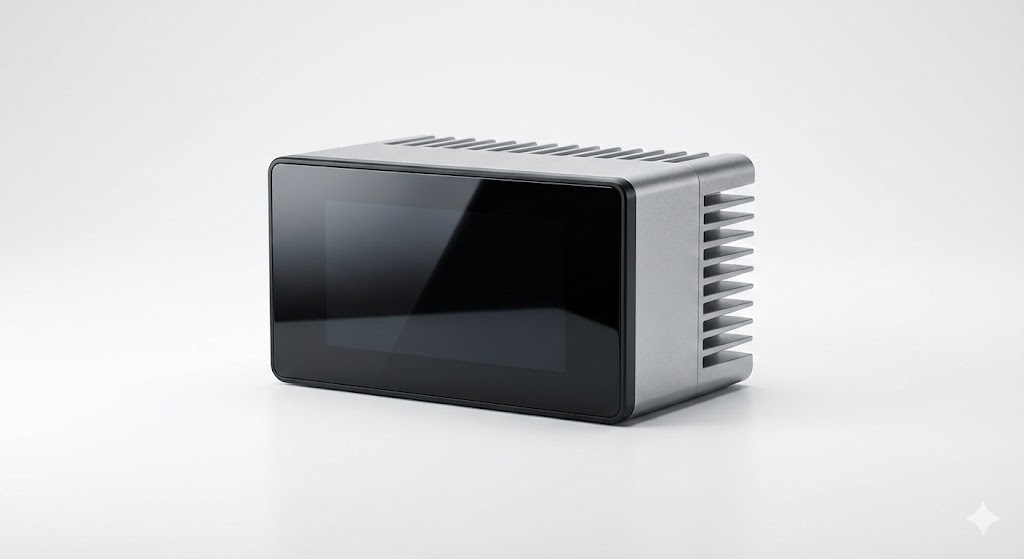
The advantages of implementing diode laser sensors in industrial settings are multifaceted. They provide sub-micron resolution and high repeatability, which are critical for quality control in semiconductor manufacturing, precision machining, and electronics assembly. Their fast response times, often in the microsecond range, enable 100% inline inspection on high-speed production lines, such as in bottling plants or automotive component manufacturing. Furthermore, their robust construction allows them to perform reliably in harsh environments with significant vibration, dust, or temperature fluctuations, common in metalworking, foundries, and outdoor applications.
However, engineers must carefully consider certain limitations and application-specific factors. The characteristics of the target surface significantly influence performance. Highly reflective, mirror-like surfaces can cause specular reflection, directing the beam away from the detector, while dark, matte, or transparent materials may absorb or transmit too much light, reducing signal strength. Advanced sensors often feature automatic gain control or modulated light sources to mitigate these issues. Ambient light, particularly strong infrared from furnaces or direct sunlight, can interfere with the sensor's operation, necessitating the use of optical filters or specific spectral ranges. Finally, the presence of contaminants like oil mist, steam, or dust in the measurement path can attenuate or scatter the laser beam, requiring protective enclosures or air purge systems.

Looking forward, the evolution of diode laser sensor technology is closely tied to broader trends in Industry 4.0. The integration of Industrial Internet of Things (IIoT) capabilities is becoming standard, with sensors featuring integrated Ethernet, PROFINET, or IO-Link interfaces for seamless data communication and remote diagnostics. Miniaturization continues, allowing sensors to be installed in increasingly confined spaces. Furthermore, the development of multi-point and profile sensors, which use laser lines instead of single points, enables complex 2D and 3D contour inspection, gap and flush measurement, and surface defect detection at unprecedented speeds. These advancements solidify the role of the diode laser sensor not merely as a measurement tool, but as a fundamental data acquisition node within the smart, connected factory of the future.