In the realm of industrial automation and control systems, inductive proximity sensors are indispensable components for detecting metallic objects without physical contact. Their reliability, durability, and non-contact operation make them ideal for harsh environments. However, a critical aspect often overlooked in their application is the selection of the appropriate capacitor, commonly referred to as "C" in circuit design. This component plays a pivotal role in tuning the sensor's oscillator circuit, directly impacting performance metrics such as sensing range, response time, and stability. This article delves into the technical considerations for selecting the right C for inductive proximity sensors, ensuring optimal functionality in diverse operational scenarios.
Inductive proximity sensors operate on the principle of electromagnetic induction. They contain an oscillator circuit that generates a high-frequency electromagnetic field from a coil. When a metallic target enters this field, eddy currents are induced in the target, causing a change in the oscillation amplitude or frequency. This change is detected by the sensor's circuitry, triggering an output signal. The capacitor C in this oscillator circuit is fundamental; it works in conjunction with the inductor (the sensing coil) to determine the resonant frequency. The resonant frequency (f) is given by the formula f = 1 / (2π√(LC)), where L is the inductance of the coil and C is the capacitance. Therefore, the value of C is crucial for setting the operating frequency, which in turn influences the sensor's characteristics.
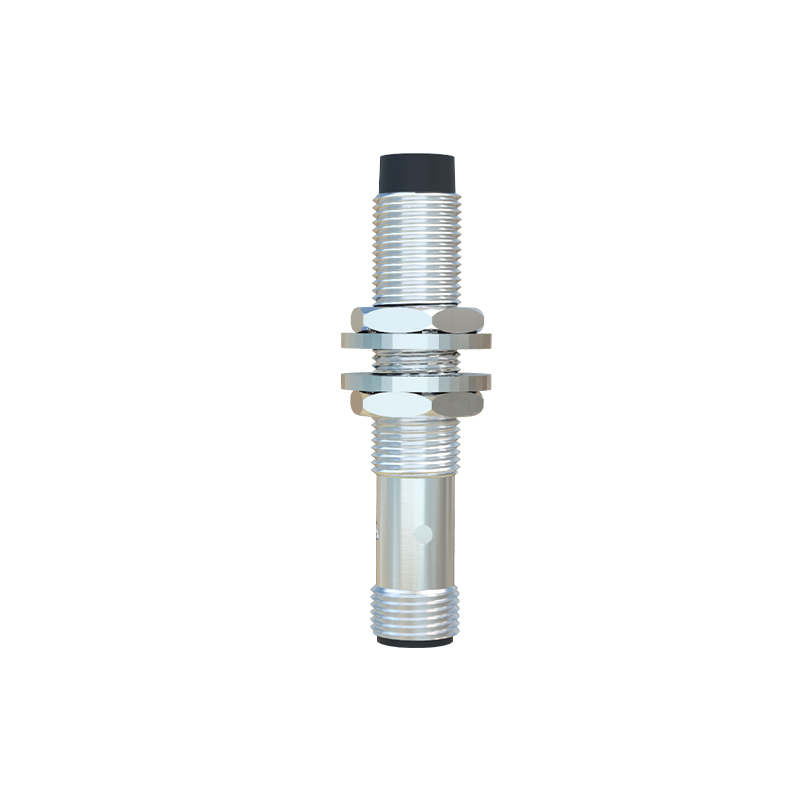
The primary factors influencing the choice of C are the desired sensing range, the target material, and environmental conditions. For a standard sensing range, manufacturers typically specify a nominal capacitance value. However, applications requiring an extended sensing range may necessitate a lower capacitance value to increase the resonant frequency, thereby enhancing the electromagnetic field's penetration. Conversely, a higher capacitance value lowers the frequency, which can be beneficial for detecting specific metals like stainless steel or non-ferrous materials (e.g., aluminum, copper) that have different electromagnetic properties. It is essential to consult the sensor's datasheet, as the relationship between C and sensing range is not linear and varies by model.
Environmental factors such as temperature fluctuations, humidity, and electromagnetic interference (EMI) also dictate capacitor selection. Temperature variations can affect both the inductance of the coil and the capacitance value. Using a capacitor with a low temperature coefficient (e.g., C0G/NP0 ceramic capacitors) ensures minimal drift in capacitance over a wide temperature range, maintaining consistent performance. In high-humidity or corrosive environments, the capacitor's construction and coating must be robust to prevent degradation. Additionally, in settings with significant EMI, selecting a capacitor with stable characteristics helps mitigate noise-induced false triggers, enhancing sensor reliability.
Another critical consideration is the capacitor's type and quality. For inductive proximity sensors, ceramic capacitors, particularly multilayer ceramic capacitors (MLCCs), are commonly preferred due to their small size, high reliability, and excellent high-frequency performance. Within ceramic capacitors, classes like C0G (NP0) offer superior stability and low losses, making them suitable for precision applications. Tantalum or aluminum electrolytic capacitors are generally avoided in the oscillator circuit due to their higher equivalent series resistance (ESR) and potential for performance degradation over time. The capacitor's voltage rating must also exceed the circuit's operating voltage with a sufficient safety margin to prevent breakdown.
Practical steps for C selection begin with reviewing the sensor manufacturer's specifications. Most datasheets provide recommended capacitance values for standard operating conditions and may include graphs showing the relationship between capacitance and sensing distance. If modifying C for a custom application, prototyping and testing are imperative. Use a variable capacitor in the initial circuit to empirically determine the optimal value for the specific target material and required range. Measure the sensor's response time, repeatability, and stability under expected environmental stresses. Ensure that the chosen capacitor is sourced from reputable suppliers to guarantee consistency and longevity.
In summary, selecting the right capacitor C for an inductive proximity sensor is a nuanced process that balances electrical requirements with environmental demands. By understanding the sensor's operating principle, consulting technical datasheets, and considering factors like target material, temperature stability, and capacitor quality, engineers can optimize sensor performance. Proper C selection not only maximizes detection reliability but also extends the sensor's operational life, contributing to efficient and robust automation systems. Always prioritize testing and validation to confirm that the chosen component meets the application's specific needs.