In today's globalized market, counterfeit goods have become a pervasive issue, affecting industries from pharmaceuticals and electronics to luxury items and automotive parts. These fake products not only cause significant economic losses but also pose serious risks to consumer safety and brand reputation. Traditional methods of counterfeit detection, such as visual inspection, barcode scanning, or manual measurement, often fall short in accuracy and efficiency. However, advanced technologies like laser displacement sensors are emerging as powerful tools in the fight against counterfeiting.
Laser displacement sensors operate on the principle of triangulation or time-of-flight measurement. They emit a focused laser beam onto the target surface and capture the reflected light with a sensitive receiver. By analyzing the position or phase shift of the reflected beam, these sensors can calculate the exact distance to the object with micron-level precision. This non-contact measurement capability allows for rapid, high-resolution profiling of surface topography, dimensions, and structural features.
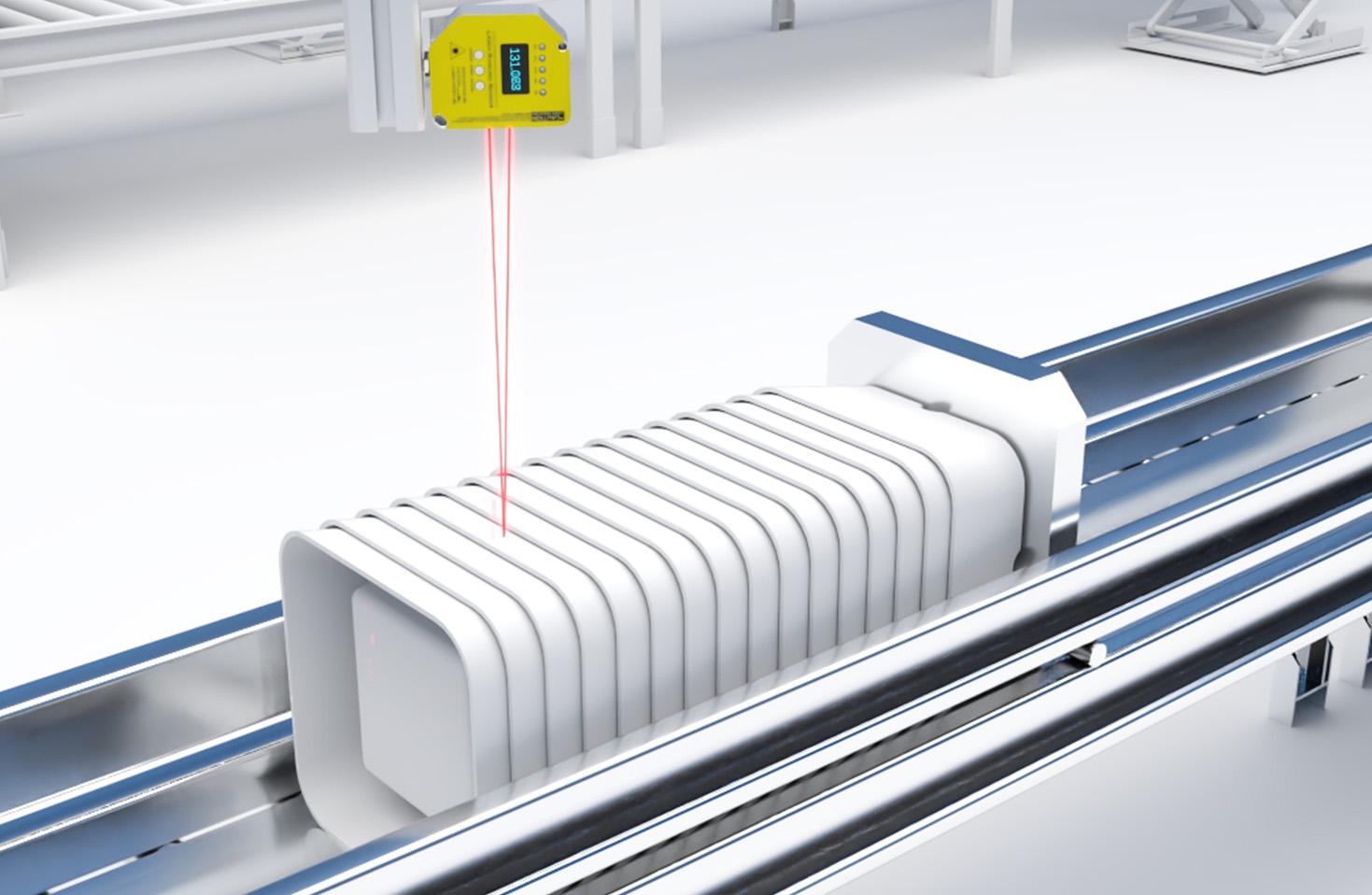
When applied to counterfeit detection, laser displacement sensors excel at identifying subtle discrepancies that are invisible to the human eye or conventional tools. For instance, authentic products often have specific surface textures, engraving depths, or dimensional tolerances resulting from controlled manufacturing processes. Counterfeit items, typically produced with inferior equipment and materials, tend to deviate from these precise specifications. A laser sensor can scan a product’s surface—such as a logo, serial number, or structural contour—and generate a detailed 3D profile. This profile is then compared against a reference model of a genuine item. Even minor variations in depth, width, or surface roughness can be flagged as potential signs of forgery.

In the pharmaceutical industry, laser sensors are used to inspect packaging and pill molds. Authentic medicine blister packs have precise embossing depths and seal widths, while counterfeit versions may show inconsistent dimensions. Similarly, in electronics, sensors verify the exact placement and height of components on circuit boards—a common giveaway for fake devices. Luxury goods, like watches or handbags, often feature intricate engravings or stitching patterns that are difficult to replicate accurately. Laser scanning can detect imperfections in these fine details within seconds.
One key advantage of laser displacement sensors is their adaptability. They can be integrated into automated production lines for real-time, 100% inspection without slowing down throughput. Unlike destructive testing methods, laser inspection is non-invasive, preserving the integrity of genuine products. Moreover, the data collected can be stored and analyzed for trend detection, helping brands identify patterns in counterfeit production and strengthen their anti-fraud strategies.
Despite their effectiveness, implementing laser sensor systems requires careful consideration. Factors like surface reflectivity, environmental vibrations, and ambient light must be controlled to ensure accurate readings. Calibration with certified genuine samples is essential to establish reliable baseline profiles. Additionally, while laser sensors are excellent for physical authentication, they are often combined with other technologies—such as RFID tags, spectral analysis, or blockchain tracking—for a multi-layered security approach.

As counterfeiting techniques evolve, so must detection technologies. Modern laser displacement sensors are becoming more compact, affordable, and equipped with AI-driven software that enhances pattern recognition and anomaly detection. This continuous improvement makes them accessible not only to large corporations but also to small and medium-sized enterprises seeking to protect their products.
In conclusion, laser displacement sensors offer a precise, efficient, and non-destructive solution for counterfeit detection across various industries. By capturing minute physical deviations, they provide objective evidence of authenticity, safeguarding both businesses and consumers. As technology advances, these sensors will play an increasingly vital role in ensuring product integrity and trust in the marketplace.