Proximity sensors are fundamental components in modern industrial automation, serving as the critical "eyes" of countless machines and control systems. This article, accompanied by a detailed explanatory video, delves into the core operating principles of these ubiquitous devices, providing electrical engineers and technicians with a thorough technical understanding.
The core function of a proximity sensor is to detect the presence or absence of a target object without any physical contact. This non-contact operation eliminates mechanical wear and tear, ensuring high reliability and a long operational life. The accompanying video begins by categorizing the primary types based on their detection principle: inductive, capacitive, ultrasonic, and photoelectric. Each type is suited for specific applications and target materials.
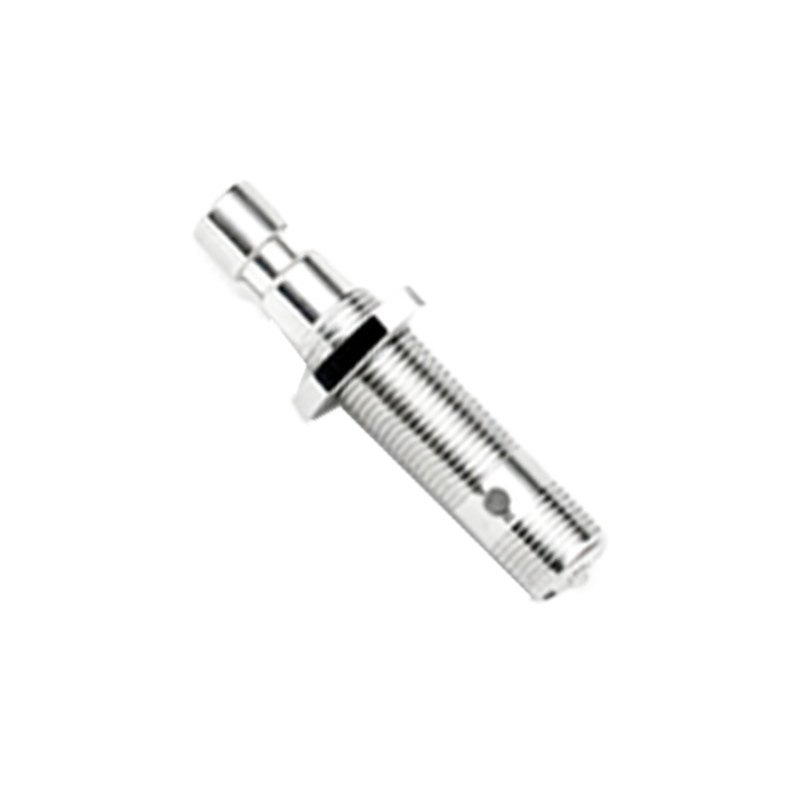
Inductive proximity sensors, arguably the most common in industrial settings, are the first focus. The video uses clear 3D animations to demonstrate how an oscillator circuit generates a high-frequency electromagnetic field at the active face of the sensor. When a metallic target enters this field, eddy currents are induced on the target's surface. These eddy currents draw energy from the oscillator, causing its amplitude to decrease. This change is detected by a threshold circuit, which subsequently switches the sensor's output state (e.g., from OFF to ON). The video highlights key characteristics: they primarily detect ferrous and non-ferrous metals, with factors like target material, size, and the sensor's nominal sensing distance influencing performance.
Next, the video explores capacitive proximity sensors. Their operating principle is similar but relies on changes in capacitance. The sensor face and the target act as two plates of a capacitor. The oscillator circuit is tuned to sense the capacitance of this system. When any material—metal, plastic, wood, or liquid—enters the sensing field, it alters the dielectric constant and thus the capacitance. This change triggers the output switch. The video illustrates their versatility in detecting a wide range of materials, making them ideal for level detection of liquids or granular solids.
For applications requiring longer sensing ranges or detection of irregular surfaces, ultrasonic sensors are examined. The video breaks down the "time-of-flight" principle. The sensor emits high-frequency sound pulses and listens for the echo. An internal timer measures the delay between emission and return. When a target object reflects the sound waves back sooner (indicating a closer object), the sensor's output is activated. This technology is effective for most solid objects regardless of color or material transparency.
Finally, the photoelectric sensor principle is covered. The video differentiates between through-beam, retro-reflective, and diffuse reflective modes. It explains how a light emitter (usually LED) and a receiver work in concert. In the through-beam mode, the output triggers when a target breaks the light beam between separate emitter and receiver units. The diffuse mode, using a single housing, relies on the target reflecting light back to the receiver. The video notes the importance of target color, reflectivity, and environmental conditions like dust or fog on performance.
Throughout the video, practical considerations for electrical engineers are emphasized. This includes wiring configurations (NPN vs. PNP, normally open vs. normally closed), housing styles (cylindrical, rectangular), output types (digital, analog), and critical specifications like repeat accuracy, hysteresis, and switching frequency. Real-world application shots show sensors in action on conveyor lines, robotic arms, and assembly machines, contextualizing the theory.
Understanding these principles is not merely academic; it is essential for correct sensor selection, troubleshooting, and system integration. Selecting the wrong type—for instance, using an inductive sensor to detect a plastic bottle—will lead to system failure. The video concludes by reinforcing the need to consult datasheets for specific sensing distances, temperature ratings, and environmental protection (IP ratings) to ensure robust and reliable automation system design. By mastering these foundational principles, engineers can design more efficient, reliable, and intelligent automated systems.