In the realm of industrial automation and control systems, the terms "sensor" and "proximity switch" are frequently used, often leading to confusion. While both are critical components for detecting objects, monitoring processes, and triggering actions, they differ fundamentally in their scope, operating principles, and application domains. Understanding these distinctions is paramount for engineers and technicians designing, specifying, and maintaining efficient and reliable systems.
A sensor is a broad, umbrella term for any device that detects and responds to a specific input from the physical environment. This input can be virtually any measurable phenomenon: light, heat, motion, moisture, pressure, position, or the presence of a particular substance. The primary function of a sensor is to convert this physical parameter into an electrical signal—typically analog or digital—that can be read, interpreted, and utilized by a controller, such as a PLC (Programmable Logic Controller) or a data acquisition system. Sensors provide information. Examples are vast and varied: temperature sensors (thermocouples, RTDs), pressure transducers, photoelectric sensors, level sensors, flow meters, and gas concentration sensors. Their output is often a continuous variable proportional to the measured quantity, enabling precise monitoring and control.
A proximity switch, on the other hand, is a specific type of sensor. Its sole function is to detect the presence or absence of a target object without any physical contact, within a defined sensing range. It is a discrete, or binary, device. Its output is a simple on/off signal: it switches state (e.g., from 0V to 24V DC) when an object enters its detection field. It does not provide information about the object's distance, speed, or composition (beyond its detectability). It answers a simple yes/no question: "Is an object here?" Proximity switches are predominantly used for object detection, counting, position verification, and limit switching in machinery.
The core operational difference lies in the output and application intent. Sensors often yield analog signals (4-20mA, 0-10V) or digital values representing a scaled measurement. A temperature sensor tells you the exact degree, a pressure sensor the precise psi. A proximity switch provides a clean, digital on/off signal ideal for direct input into a PLC's digital input module to initiate an action—like stopping a conveyor, activating a cylinder, or indexing a machine.
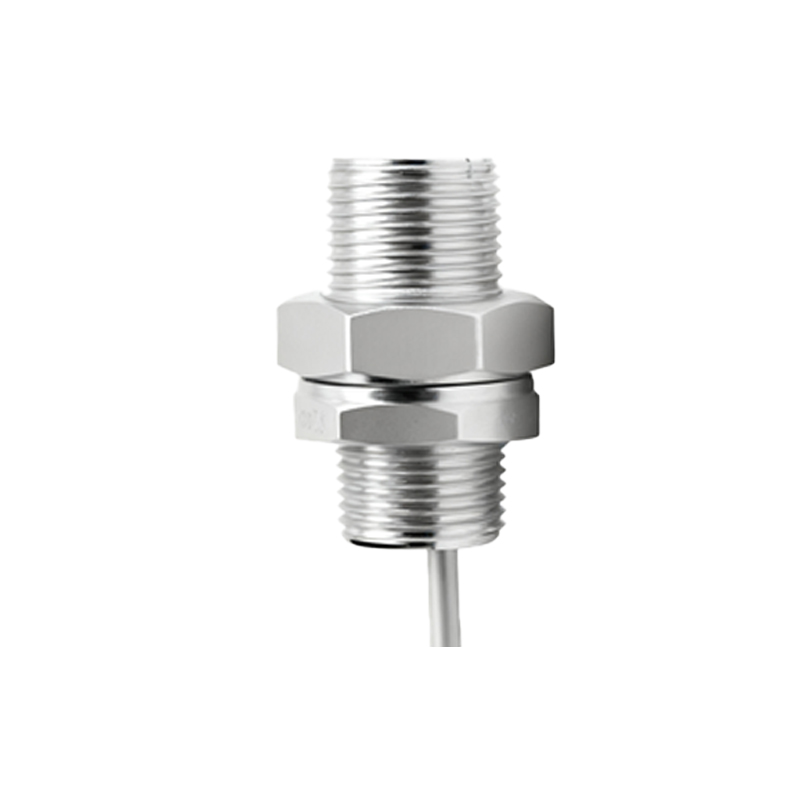
Technologically, proximity switches are categorized mainly by their sensing principle:
Inductive Proximity Switches: Detect metallic objects (ferrous and non-ferrous) by disturbing an electromagnetic field. Ideal for harsh environments with dirt, dust, or moisture.
Capacitive Proximity Switches: Detect both metallic and non-metallic materials (plastics, liquids, wood) by sensing changes in capacitance. Used for level detection of materials inside containers.
Ultrasonic Proximity Switches: Use sound waves to detect objects and can often measure distance (acting as a proximity sensor in analog mode).
Photoelectric Switches: Use a beam of light (visible or infrared) to detect objects. They offer longer sensing ranges.
Choosing between a general sensor and a proximity switch depends entirely on the application requirement. If you need to measure a variable continuously (e.g., tank level, oven temperature, motor speed), a sensor is the necessary tool. If you need to detect the presence of an object at a specific point to trigger an event (e.g., part in position, door closed, end of travel), a robust and simple proximity switch is typically the most cost-effective and reliable solution.
In practice, many devices blur the line. An ultrasonic sensor can provide both an analog distance measurement and a discrete switch output at a set threshold. However, the fundamental design philosophy remains: sensors inform and measure; proximity switches detect and trigger. For an industrial engineer, specifying the correct device—whether a sophisticated analog sensor for process control or a rugged proximity switch for repetitive machine automation—is a critical step in ensuring system performance, safety, and longevity. Misapplication can lead to measurement inaccuracies, false triggers, or premature device failure, underscoring the importance of this basic yet crucial distinction in component selection.