In the realm of industrial automation and control systems, the terms "sensor" and "proximity switch" are frequently used, often leading to confusion about their relationship and specific functions. While they are fundamentally related, they are not identical. Understanding the distinction is crucial for engineers, technicians, and system designers to select the correct component for a given application, ensuring optimal performance, reliability, and cost-effectiveness.
At its core, a sensor is a broad, umbrella term for any device that detects or measures a physical property and records, indicates, or otherwise responds to it. Sensors convert a physical phenomenon—such as light, heat, motion, pressure, or presence—into an electrical signal that can be read by an instrument or a controller like a PLC (Programmable Logic Controller). The universe of sensors is vast and includes thermocouples for temperature, photoelectric cells for light, pressure transducers, level sensors, flow meters, and indeed, proximity sensors. The output from a sensor can be analog (a continuous signal representing a range, e.g., 4-20 mA or 0-10 V) or digital (discrete on/off signals).
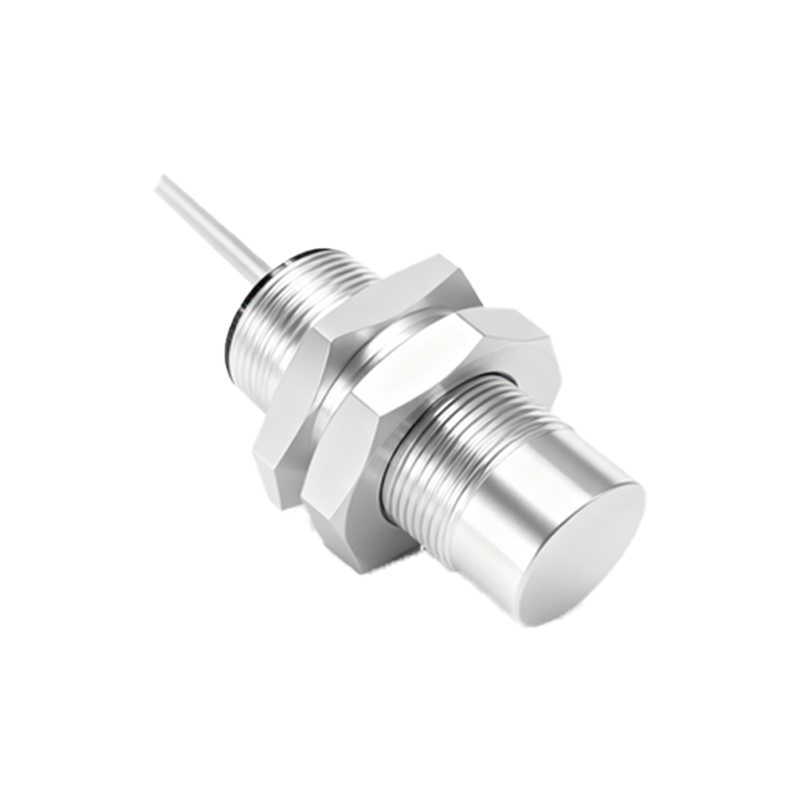
A proximity switch, on the other hand, is a specific type of sensor. More precisely, it is a non-contact proximity sensor with a built-in switching function. Its primary purpose is to detect the presence or absence of a target object within a defined sensing range without any physical contact. When an object enters this range, it triggers a change in the internal state of the switch, which in turn changes its output signal. This output is typically a discrete digital signal—either ON (e.g., 24V DC) or OFF (0V). This binary nature is why it is called a "switch." It provides a simple, robust "yes/no" or "go/no-go" type of detection.
The key operational principle of most industrial proximity switches is based on electromagnetic fields. The most common types are:
1. Inductive Proximity Switches: Detect metallic objects (primarily ferrous metals like steel and iron, with some types for non-ferrous metals). They generate an oscillating electromagnetic field. When a metal object enters this field, it induces eddy currents, causing a change in oscillation amplitude that is detected by the circuit, triggering the output switch.
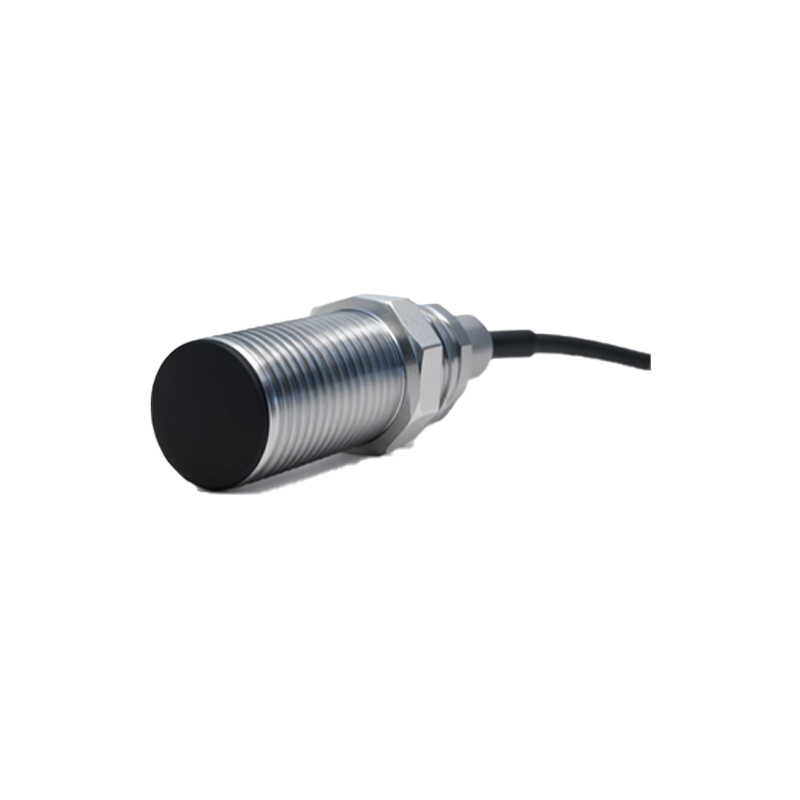
2. Capacitive Proximity Switches: Can detect both metallic and non-metallic materials (plastics, wood, liquids, powders). They generate an electrostatic field. The presence of any material with a different dielectric constant than air alters the capacitance of the field, which is detected to activate the switch.
3. Ultrasonic Proximity Switches: Use sound waves beyond human hearing. They measure the time taken for an emitted sound wave to bounce back from a target, detecting presence and often distance.
4. Photoelectric Switches: Use a beam of light (visible, infrared, or laser). The presence of an object is detected by either breaking the beam (through-beam), reflecting it back (retro-reflective), or diffusing it (diffuse reflective).
So, to clarify the relationship: All proximity switches are sensors, but not all sensors are proximity switches. A thermocouple is a sensor but not a proximity switch. An analog distance-measuring laser sensor is a sensor that can measure proximity, but its continuous analog output differentiates it from the discrete on/off function of a standard proximity switch.
The choice between a general sensor and a specific proximity switch hinges entirely on the application requirements:
Use a Proximity Switch when: You need simple, reliable, and fast detection of an object's presence/absence for counting, positioning, limit switching, or safety interlocking. Examples include detecting a metal part on a conveyor, checking if a cabinet door is closed, or confirming the end position of a cylinder. Their rugged, sealed designs are ideal for harsh industrial environments with dust, oil, and vibration.
Use Other Types of Sensors when: You need to measure a variable with precision, not just detect its presence. For instance, you would use a temperature sensor to control an oven's exact heat, a pressure transducer to monitor fluid pressure in a pipeline, or an analog distance sensor to gauge the precise gap between two parts.
In summary, while the terminology is sometimes used loosely in conversation, the technical distinction is clear. A sensor is the overarching category for detection devices. A proximity switch is a specialized subset within that category, defined by its non-contact operation and discrete switching output. For an electrical engineer or automation specialist, specifying "inductive proximity switch" or "capacitive proximity sensor with PNP output" provides precise, unambiguous information, ensuring the right technology is