Laser rangefinder sensors represent a critical technology in modern measurement systems, combining principles of optics, electronics, and signal processing to achieve precise distance calculations. The core design revolves around emitting a laser beam toward a target and measuring the time it takes for the reflected light to return, known as the time-of-flight (TOF) method. Alternatively, phase-shift or triangulation techniques may be employed depending on the application's accuracy requirements and environmental conditions.
A typical laser rangefinder sensor comprises several key components: a laser diode as the light source, a photodetector to capture the reflected signal, a timing circuit for precise measurement, and a microcontroller for data processing. The laser diode, often operating in the infrared or visible spectrum, must be selected based on factors like wavelength, power output, and beam divergence. For instance, shorter wavelengths (e.g., 905 nm) are common in industrial applications due to their balance of performance and safety, while eye-safe wavelengths (e.g., 1550 nm) are preferred in consumer devices.
The photodetector, such as an avalanche photodiode (APD) or PIN photodiode, converts the returning light into an electrical signal. Its sensitivity and response time directly impact the sensor's range and accuracy. In TOF designs, the timing circuit—often using high-speed clocks or time-to-digital converters (TDCs)—must resolve picosecond-level delays to achieve millimeter precision. For phase-based systems, the design focuses on modulating the laser beam and analyzing the phase difference between emitted and received signals, which can enhance accuracy in shorter ranges.
Environmental factors pose significant challenges in sensor design. Ambient light, atmospheric absorption, and target surface properties (e.g., reflectivity, color) can degrade signal quality. To mitigate these issues, designers incorporate optical filters to block unwanted wavelengths, adaptive gain control in the detection circuit, and signal averaging algorithms. Additionally, mechanical design considerations, such as housing stability and lens alignment, ensure consistent performance under vibration or temperature fluctuations.
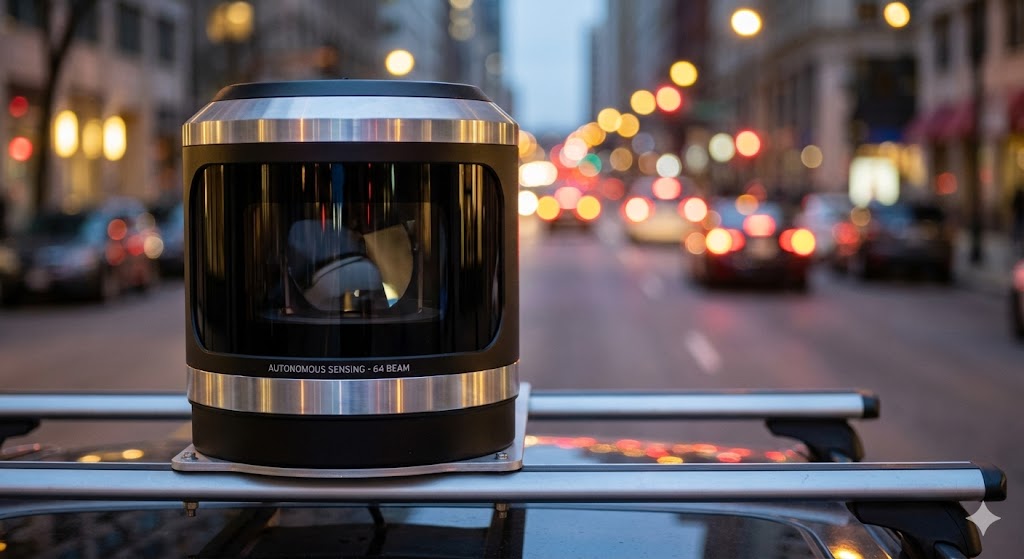
Applications of laser rangefinder sensors span diverse fields, from autonomous vehicles and robotics to construction and aerospace. In autonomous systems, sensors require high update rates and robustness against interference, often integrating multiple units for redundancy. For surveying equipment, emphasis is placed on long-range capability (up to several kilometers) and sub-millimeter accuracy. Recent advancements include the integration of MEMS technology for miniaturization, as well as the use of machine learning algorithms to filter noise and improve reliability in dynamic environments.
Future trends in laser rangefinder sensor design point toward higher integration, lower power consumption, and enhanced smart features. Innovations like single-photon avalanche diode (SPAD) arrays enable 3D imaging, while silicon photonics may reduce costs and size. As industries demand more precise and adaptable measurement tools, ongoing research focuses on overcoming limitations in extreme conditions, such as fog or low-reflectivity surfaces, through hybrid sensing approaches and advanced materials.