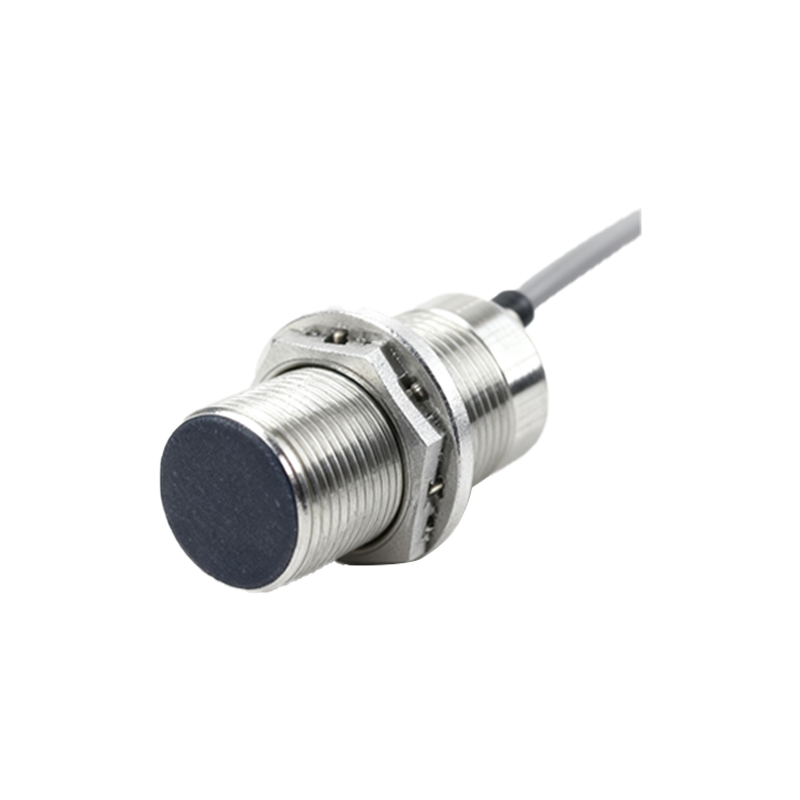
In the realm of industrial automation and control systems, proximity sensors play a pivotal role in enhancing efficiency, safety, and precision. Among the diverse range of sensors available, the P4S-H2N1 proximity sensor stands out as a reliable and versatile component designed for demanding applications. This article delves into the technical specifications, operational principles, and practical uses of the P4S-H2N1, offering insights for engineers and technicians seeking to optimize their systems.
The P4S-H2N1 is an inductive proximity sensor, a type that detects metallic objects without physical contact. It operates on the principle of electromagnetic induction, where an oscillator generates a high-frequency magnetic field. When a metal target enters this field, eddy currents are induced, causing a change in the sensor's oscillation amplitude. This change is detected by a threshold circuit, which triggers an output signal—typically a switch to control machinery or provide feedback to a programmable logic controller (PLC). The P4S-H2N1 is engineered for robustness, featuring a durable housing that resists environmental factors such as dust, moisture, and mechanical shocks, making it suitable for harsh industrial settings like manufacturing plants, automotive assembly lines, and material handling systems.
Key specifications of the P4S-H2N1 include a sensing range tailored for precise detection, often up to a few millimeters, depending on the target material and size. It supports various output configurations, such as NPN or PNP transistor outputs, allowing compatibility with different control systems. The sensor operates on a standard DC voltage supply, commonly 10-30 VDC, ensuring easy integration into existing electrical setups. Additionally, it offers a high switching frequency, enabling rapid detection in high-speed applications like conveyor belts or robotic arms. Its compact design facilitates installation in tight spaces, while LED indicators provide visual status feedback for troubleshooting and maintenance.

In practice, the P4S-H2N1 is utilized across multiple industries. In automotive manufacturing, it ensures precise positioning of components during assembly, reducing errors and downtime. In packaging machinery, it detects metal lids or containers to synchronize operations, improving throughput. The sensor also enhances safety by monitoring guard doors or emergency stops, preventing accidents in automated environments. When selecting the P4S-H2N1, engineers should consider factors like target material (ferrous vs. non-ferrous metals), environmental conditions (temperature, humidity), and required sensing distance to ensure optimal performance. Regular calibration and cleaning are recommended to maintain accuracy over time.
Overall, the P4S-H2N1 proximity sensor exemplifies innovation in industrial sensing technology. Its combination of durability, precision, and adaptability makes it a valuable asset for modern automation projects. As industries continue to embrace smart manufacturing and IoT integration, sensors like the P4S-H2N1 will remain integral to achieving higher productivity and reliability. For those in the electrical and automation fields, understanding its capabilities can lead to more efficient system designs and reduced operational costs.