Inductive proximity sensors are fundamental components in modern industrial automation, offering non-contact detection of metallic objects. These sensors operate on the principle of electromagnetic induction, generating an oscillating electromagnetic field from a coil within the sensor. When a metallic target enters this field, eddy currents are induced on the target's surface, causing a change in the oscillation amplitude. This change is detected by the sensor's circuitry, triggering a solid-state output signal. The primary advantage of this technology is its ability to detect objects without physical contact, eliminating mechanical wear and enabling high-speed operation in harsh environments where dirt, oil, or vibrations are present.
A key application area is in machine automation on production lines. Inductive sensors are extensively used for precise position detection of metal parts, such as verifying the presence of a piston in a cylinder, confirming the closed position of a metal door or guard, or counting metallic products on a conveyor belt. Their robustness allows them to function reliably near welding equipment or in machining centers where coolant sprays are common. Unlike optical sensors, they are immune to dust, smoke, or light interference, making them ideal for foundries or stamping plants.
Another critical use is in rotary speed and direction monitoring. By detecting the teeth of a metal gear or slots on a rotating shaft, these sensors provide vital tachometer feedback for motor control systems. This is essential for synchronizing conveyor speeds, controlling robotic arm movements, or preventing overspeed conditions in machinery. The sensors' fast response time and high switching frequency are crucial for these dynamic applications.
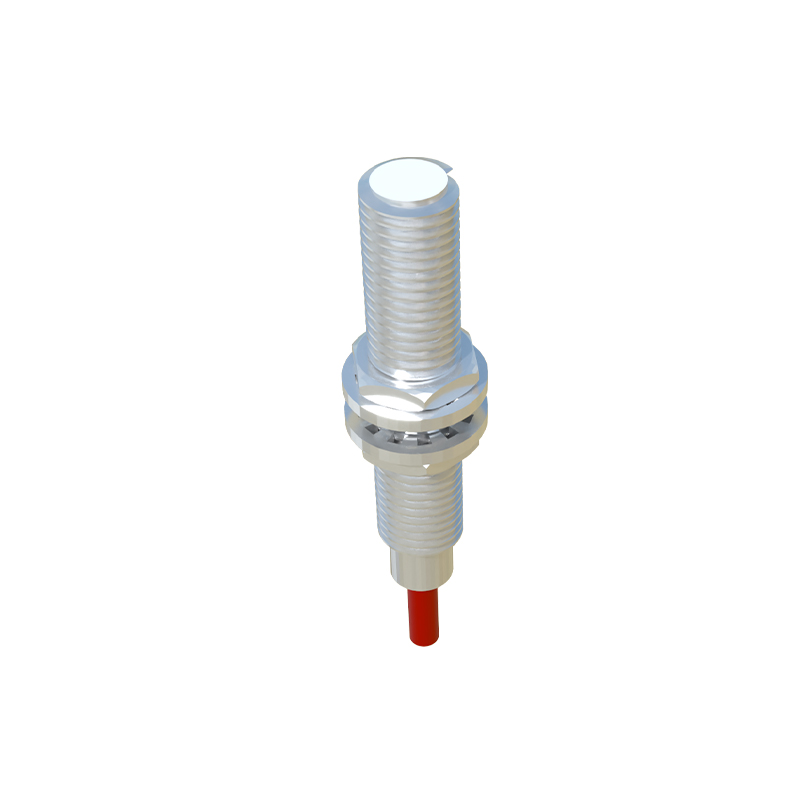
Safety systems heavily rely on inductive proximity sensors for presence sensing. They are integrated into safety interlocks on machine guards, ensuring that access doors are securely closed before hazardous operations can commence. In automated guided vehicles (AGVs) and robotics, they provide object detection for collision avoidance, sensing nearby metal structures or other vehicles. Their long operational life and minimal maintenance requirements contribute to overall system uptime and safety compliance.
Selection of the correct sensor involves several technical considerations. The sensing range, typically a few millimeters, is specified based on the target material (steel, aluminum, brass) and size. Factors like housing material (often nickel-plated brass or stainless steel), output type (PNP/NPN, NO/NC), and connection method (pre-wired or quick-disconnect) are chosen based on the electrical interface and environmental conditions. Advanced models feature embedded diagnostics, IO-Link communication for parameter setting and condition monitoring, and increased resistance to electromagnetic interference from variable frequency drives.
In summary, inductive proximity sensors are indispensable for enhancing efficiency, precision, and safety in automated industrial processes. Their non-contact nature, durability, and reliability in detecting metallic objects make them a cornerstone technology across manufacturing, packaging, material handling, and automotive industries. Continuous advancements in miniaturization, sensing distance, and smart features further expand their potential applications in the evolving landscape of Industry 4.0 and smart factories.