Laser speed sensors represent a critical advancement in industrial measurement technology, offering non-contact, high-precision velocity and length measurements. At their core, these sensors operate on the principle of laser Doppler velocimetry (LDV) or, in some configurations, time-of-flight and triangulation methods for specific applications. The most prevalent and precise technique for speed measurement is the Laser Doppler Velocimeter.
The fundamental operating principle of LDV-based speed sensors relies on the Doppler effect. When a laser beam is directed at a moving surface or particle in a fluid stream, the light scattered back undergoes a frequency shift proportional to the velocity of the target. The sensor emits a coherent laser beam—typically from a low-power helium-neon or semiconductor laser diode—towards the object. The scattered light, with its shifted frequency, is collected by a receiver within the sensor. This received light is then mixed with a reference beam (a portion of the original laser light that did not interact with the target) in a process called optical heterodyning. This mixing creates an interference pattern and a beat frequency signal.
This beat frequency is the direct electrical representation of the Doppler shift, denoted as f_D. The relationship is given by the equation: v = (λ * f_D) / (2 * cos θ), where 'v' is the target velocity component along the laser beam axis, 'λ' is the wavelength of the laser light, and 'θ' is the angle between the laser beam and the velocity vector. Sophisticated signal processors within the sensor analyze this frequency to calculate the instantaneous speed with remarkable accuracy, often within 0.1% or better.
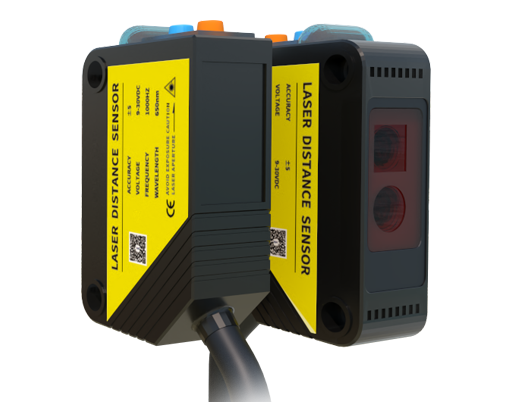
A key advantage of this method is its complete non-contact nature. The sensor does not physically touch the measured object, eliminating wear, slippage errors, and the risk of damaging delicate materials. This makes it ideal for applications involving hot surfaces (e.g., in steel rolling mills), fragile webs (like paper or plastic films), rotating shafts, fast-moving vehicles on test tracks, or even turbulent gases and liquids.
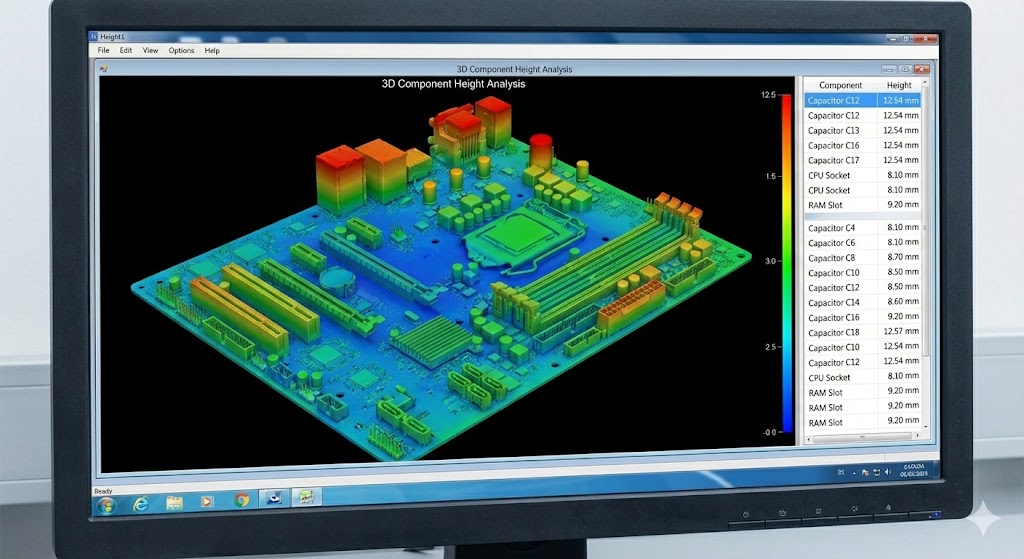
Beyond classic LDV, other laser speed sensing techniques include:
1. Laser Time-of-Flight (ToF): Measures the time delay between emitted and reflected laser pulses to calculate distance; successive distance measurements yield speed. Used for longer ranges.
2. Laser Triangulation: Projects a laser spot onto a surface, and a position-sensitive detector observes the spot's location. Movement of the surface causes the spot to move across the detector, allowing calculation of displacement and, over time, speed. Excellent for short-range, high-resolution measurements on solid surfaces.

3. Correlation Methods: Two laser spots are focused a known distance apart on a moving surface. A processor correlates the random surface pattern signals from the two spots; the time delay for the pattern to move between spots gives the speed. Highly immune to surface irregularities.
In industrial settings, laser speed sensors are indispensable. In metal processing, they monitor the velocity of strips in rolling mills for precise thickness control. In printing and converting, they ensure web tension control and registration accuracy. In automotive testing, they measure vehicle speed directly from the road surface, independent of wheel slip. In aerodynamics and fluid mechanics research, they map complex flow velocities without intrusive probes.
Integration with modern industrial control systems is seamless. The sensor's analog (e.g., 0-10V, 4-20mA) or digital (e.g., Ethernet, PROFIBUS) output feeds directly into PLCs (Programmable Logic Controllers) or data acquisition systems, enabling real-time process feedback and closed-loop control.
When selecting a laser speed sensor, engineers must consider several factors: the required measurement range and resolution, the surface properties of the target (rough, shiny, transparent), environmental conditions (dust, vibration, ambient light), and the necessary output interface. Proper alignment and installation are crucial for optimal performance, as the laser beam must be correctly oriented relative to the motion direction.
Maintenance is generally minimal due to the lack of moving parts, but keeping the optical windows clean from dust and debris is essential to maintain signal integrity. Regular calibration checks against a master reference are recommended for critical applications.
In conclusion, laser speed sensors leverage the physics of light and the Doppler effect to provide unparalleled non-contact speed measurement. Their accuracy, versatility, and robustness make them a cornerstone technology for enhancing quality, efficiency, and control across a vast spectrum of industrial and scientific fields. As laser and photonic signal processing technologies continue to evolve, these sensors will push the boundaries of what is measurable, enabling even more precise and demanding applications.