Proximity sensors are indispensable components in modern industrial automation, robotics, and safety systems. They detect the presence or absence of an object without physical contact, offering reliability, longevity, and precision. As an electrical engineer, understanding the diverse methods of proximity sensing is crucial for selecting the right technology for any application. This article delves into the primary methods, their operating principles, advantages, and typical use cases.
The most prevalent method is inductive proximity sensing. These sensors generate an electromagnetic field and detect changes caused by metallic objects entering this field. They are highly reliable, resistant to environmental contaminants like dust or oil, and excel in harsh industrial environments. Common applications include position sensing of metal parts in assembly lines, machine tool positioning, and robotic end-effector detection. Their limitation is that they only detect conductive metals, typically ferrous materials like steel and iron, though some specialized versions can sense non-ferrous metals.
Capacitive proximity sensors operate by detecting changes in capacitance. They generate an electrostatic field and sense variations when any object, metallic or non-metallic, enters this field. This makes them versatile for detecting materials like plastics, glass, liquids, and wood. They are ideal for level detection in tanks (e.g., liquid or granular materials), presence detection of non-metallic objects on conveyors, and touch-sensitive interfaces. However, they can be sensitive to environmental factors like humidity and require careful calibration to avoid false triggers from non-target materials.
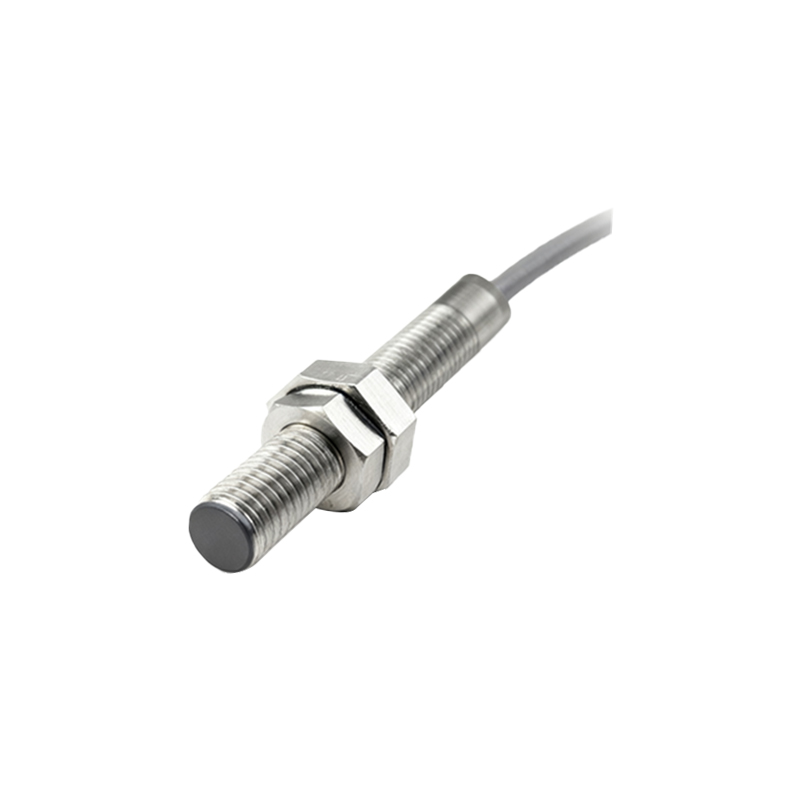
Ultrasonic proximity sensors use sound waves beyond the human hearing range. They emit ultrasonic pulses and measure the time taken for the echo to return after hitting an object. This time-of-flight calculation determines the object's distance. These sensors are excellent for detecting objects regardless of material, color, or transparency, and they work well in challenging environments with dust, smoke, or light interference. Typical applications include distance measurement, object detection in packaging, and liquid level sensing in opaque containers. Their drawbacks include potential interference from air turbulence, temperature variations, and soft materials that absorb sound.
Photoelectric (or optical) proximity sensors utilize light beams, typically infrared, visible red, or laser. They consist of an emitter and a receiver. The three main configurations are through-beam (separate emitter and receiver), retro-reflective (light reflected back by a reflector), and diffuse (reflective), where the sensor detects light reflected directly from the object. Photoelectric sensors offer long sensing ranges, fast response times, and high accuracy. They are perfect for detecting small objects, transparent materials, and precise positioning in clean environments like electronics manufacturing. Limitations include susceptibility to ambient light interference, dirt on lenses, and performance issues with highly reflective or absorbent surfaces.
Magnetic proximity sensors, often reed switches or Hall-effect sensors, detect the presence of a magnetic field, typically from a permanent magnet. Reed switches use ferromagnetic reeds that close or open in a magnetic field, while Hall-effect sensors produce a voltage proportional to the magnetic field strength. These sensors are simple, cost-effective, and consume very little power. They are widely used in safety door interlocks, position sensing in cylinders, and speed detection in rotating shafts. Their main constraint is the requirement for a magnet on the target object, limiting use to specific setups.
Each method has distinct electrical characteristics. Inductive and capacitive sensors are often available in DC (NPN/PNP) or AC versions, with output types including normally open (NO), normally closed (NC), or analog (4-20 mA, 0-10 V). Ultrasonic and photoelectric sensors may provide digital switches or analog outputs for distance measurement. Magnetic sensors typically offer simple switch outputs.
Selection criteria depend on the target material, required sensing distance, environmental conditions (temperature, humidity, contaminants), response speed, accuracy, and installation constraints. For instance, in a metal machining center, an inductive sensor is optimal for tool positioning. In a bottling plant, a capacitive sensor might detect plastic bottle levels, while an ultrasonic sensor could monitor fill height in opaque containers.
Emerging trends include the integration of IO-Link for smart sensor communication, enabling parameter adjustment, diagnostics, and data exchange directly with PLCs. Additionally, miniaturization and enhanced robustness continue to expand application possibilities.
In conclusion, proximity sensing methods each offer unique strengths. Inductive sensors are the workhorses for metals in tough environments. Capacitive sensors provide material versatility. Ultrasonic sensors excel in non-contact distance measurement. Photoelectric sensors offer precision and range for clean applications. Magnetic sensors deliver simplicity and low power. A thorough analysis of the application requirements ensures optimal sensor selection, enhancing system efficiency, safety, and reliability in any electrical engineering project.