The evolution of gas detection technology has been profoundly shaped by the advent of laser-based spectroscopic methods. Among these, laser multi-gas sensors represent a significant leap forward, offering unparalleled precision, selectivity, and reliability for industrial monitoring applications. Unlike traditional electrochemical or catalytic bead sensors, which can suffer from cross-sensitivity, drift, and limited lifespan, laser sensors utilize the fundamental principle of absorption spectroscopy. Each gas molecule possesses a unique absorption fingerprint at specific wavelengths of light. By tuning a laser to precisely target these absorption lines, these sensors can detect and quantify multiple gases simultaneously with minimal interference.
The core technology enabling this capability is often based on Tunable Diode Laser Absorption Spectroscopy (TDLAS) or, for broader multi-gas analysis, technologies like Cavity Ring-Down Spectroscopy (CRDS) or Photoacoustic Spectroscopy (PAS). In a typical TDLAS setup, a tunable diode laser emits a beam of light through a sample gas. The light is absorbed at wavelengths characteristic of the target gases. A photodetector measures the intensity of the transmitted light. By rapidly tuning the laser wavelength across a spectral region containing absorption lines of several gases, the sensor can decode the absorption pattern to determine the concentration of each constituent. This method provides a direct, absolute measurement that is inherently stable and requires less frequent calibration.
The advantages of laser multi-gas sensors for industrial settings are substantial. First and foremost is their exceptional selectivity. They can distinguish between gases with very similar chemical properties, such as methane (CH4) and ethane (C2H6), which is critical in petrochemical and natural gas industries. Secondly, they offer high sensitivity, capable of detecting trace concentrations at parts-per-billion (ppb) levels, essential for leak detection and environmental compliance. Their response time is extremely fast, often in the range of seconds, enabling real-time process control and rapid hazard alerting. Furthermore, they are non-consumptive; the light beam measures the gas without altering it, leading to virtually zero maintenance and a long operational life, reducing total cost of ownership.
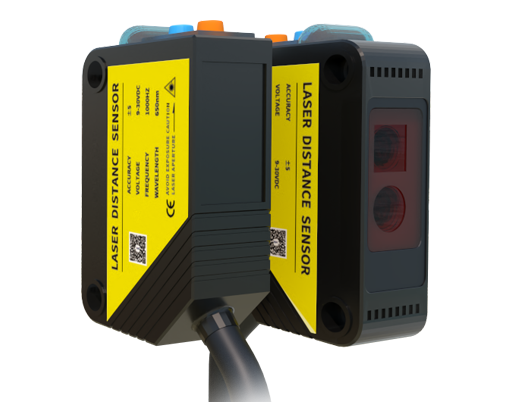
Industrial applications are diverse and demanding. In the oil and gas sector, these sensors are deployed for upstream leak detection on wellheads and pipelines, monitoring for methane and hydrogen sulfide (H2S). In midstream operations, they ensure the quality and composition of natural gas in transmission lines. Within chemical manufacturing plants, they provide continuous emission monitoring (CEM) for stacks and fence-line monitoring, tracking pollutants like ammonia (NH3), carbon dioxide (CO2), and volatile organic compounds (VOCs). In semiconductor fabrication, ultra-pure environments are guarded by sensors detecting minute traces of moisture, oxygen, and other contaminant gases. Energy production, from combustion turbines to biogas facilities, relies on them for optimizing fuel-air ratios by measuring O2, CO, and CO2, thereby enhancing efficiency and reducing emissions.
Despite their strengths, implementing laser multi-gas sensors requires careful consideration. Initial capital investment is higher than for conventional sensors. The optical components, while robust, need protection from extreme particulate contamination, requiring effective sample conditioning or in-situ installation in relatively clean areas. The complexity of the technology also demands a higher level of technical expertise for installation and initial setup. However, the return on investment is quickly realized through reduced downtime, lower maintenance costs, improved safety, and regulatory compliance.
Looking ahead, the trajectory of laser multi-gas sensing points towards further miniaturization, integration, and intelligence. The development of quantum cascade lasers (QCLs) and interband cascade lasers (ICLs) is expanding the spectral range accessible to these sensors, allowing detection of an even wider array of gases. Integration with the Industrial Internet of Things (IIoT) platforms is turning standalone sensors into networked nodes, providing centralized data analytics, predictive maintenance insights, and seamless integration with plant control systems. Furthermore, advancements in photonic integrated circuits are paving the way for smaller, more cost-effective multi-gas sensor modules.
In conclusion, laser multi-gas sensors have established themselves as a cornerstone technology for modern industrial gas monitoring. Their superior performance characteristics address the critical needs of safety, environmental stewardship, and process efficiency in increasingly complex industrial landscapes. As technology continues to advance, these sensors will become even more accessible, intelligent, and indispensable, solidifying their role in enabling smarter and safer industrial operations for the future.