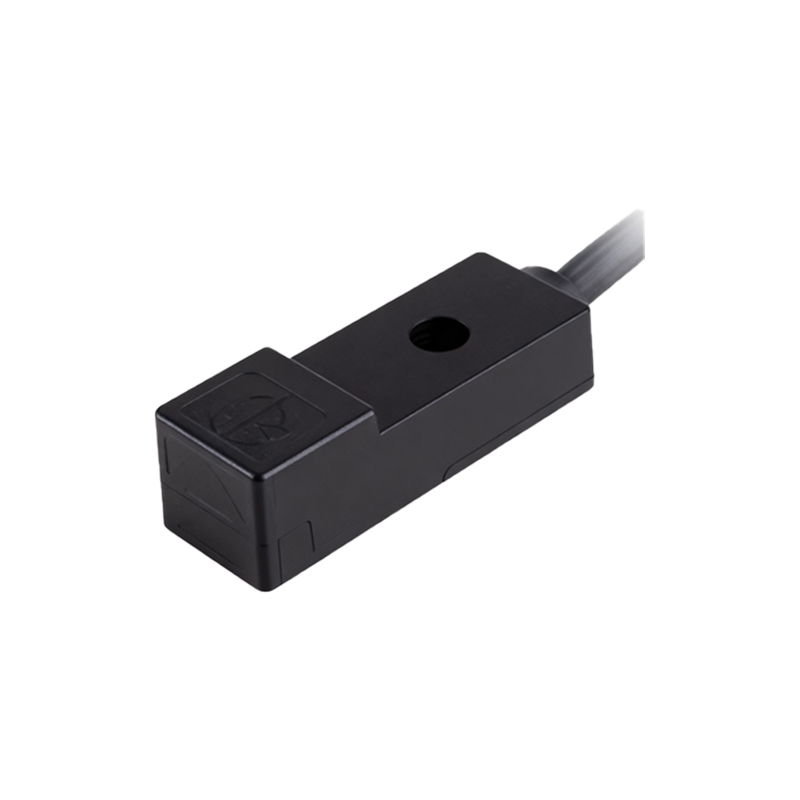
Cylindrical proximity sensors are fundamental components in modern industrial automation, widely used for non-contact detection of metallic objects. Their robust design, typically housed in a cylindrical metal or polymer body, makes them suitable for harsh environments where reliability is paramount. Understanding the operational principles of these sensors is essential for engineers and technicians involved in system design, maintenance, and troubleshooting.
The core working principle of most cylindrical proximity sensors is based on electromagnetic induction or changes in an oscillating circuit. The most common type is the inductive proximity sensor, designed to detect ferrous and non-ferrous metals. Inside the cylindrical housing, a coil is wound around a ferrite core. An oscillator circuit generates a high-frequency electromagnetic field that radiates from the active face (sensing surface) of the sensor. When a metallic target enters this field, eddy currents are induced on the surface of the target. These eddy currents draw energy from the oscillator, causing a reduction in the amplitude of oscillation. A subsequent evaluation circuit monitors this amplitude change. Once the amplitude drop exceeds a predefined threshold—corresponding to the sensor's specified sensing distance—the circuit triggers a switching action in the sensor's output stage. This output can be a solid-state switch (PNP or NPN transistor) or a relay contact, providing a signal to a programmable logic controller (PLC) or other control system.
Key specifications define a sensor's performance. The nominal sensing distance (Sn) is a theoretical value under standardized conditions. The effective operating distance (Sr) accounts for real-world factors like temperature and supply voltage. A crucial parameter is the reduction factor, which indicates how the sensing distance decreases for different metals compared to mild steel (the reference material). For instance, stainless steel or aluminum typically requires a sensor with a longer nominal range to achieve the same detection distance as mild steel. Hysteresis is another vital characteristic; it is the difference between the switch-on point as the target approaches and the switch-off point as it moves away. This feature prevents output chatter when a target is positioned at the exact sensing limit.
Beyond the standard inductive type, cylindrical housings also contain other sensing technologies. Capacitive proximity sensors can detect both metallic and non-metallic materials (plastics, liquids, wood) by measuring changes in capacitance caused by the target's dielectric constant. Ultrasonic sensors use sound waves to measure distance to objects of any material. However, the inductive variant remains the industry staple for metal detection due to its speed, precision, and immunity to environmental contaminants like dust, oil, and coolants.
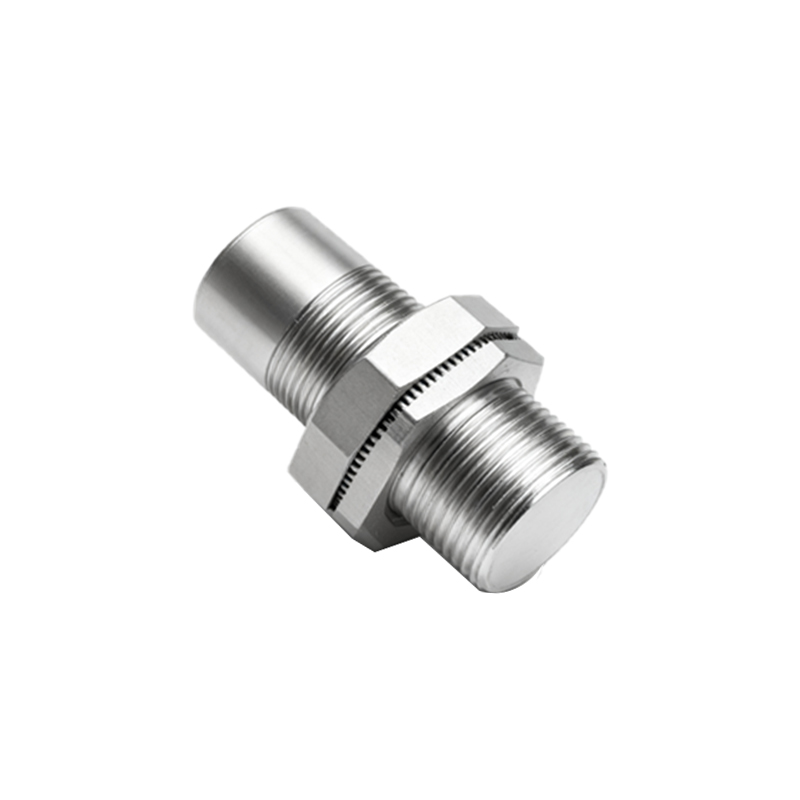
Selecting the right cylindrical sensor requires careful analysis of the application. Engineers must consider the target material, required sensing distance, switching frequency, environmental conditions (IP rating for ingress protection), temperature range, and electrical output type. Installation is equally critical; sensors must be mounted properly to avoid interference from surrounding metal (the flush-mounting or non-flush-mounting requirement). Incorrect installation can lead to reduced sensing ranges or false triggering.
In summary, the cylindrical proximity sensor is a sophisticated device that converts the physical presence of a target into a clean electrical signal through well-defined electromagnetic principles. Its durability, versatility, and non-contact nature make it indispensable in applications ranging from machine tool positioning and robotic end-effector guidance to conveyor line counting and safety interlocking. A deep grasp of its underlying technology enables optimal integration, ensuring efficient and fault-resistant automation systems.