In the realm of industrial automation and electronic systems, proximity sensors stand as fundamental components, enabling machines to "sense" the presence or absence of objects without physical contact. These devices are pivotal for enhancing efficiency, safety, and reliability across countless applications. This article delves into the core principles, various types, common applications, and key selection factors for proximity sensors.
At its essence, a proximity sensor detects the presence of a nearby object, typically termed the "target." It does so by emitting an electromagnetic field or a beam of electromagnetic radiation (like infrared light) and then looking for changes in the field or return signal. The primary advantage is the non-contact operation, which eliminates mechanical wear and tear, allows for high-speed operation, and enables sensing of objects in harsh or unclean environments.
Several main types of proximity sensors dominate the market, each with distinct operating principles and ideal use cases.
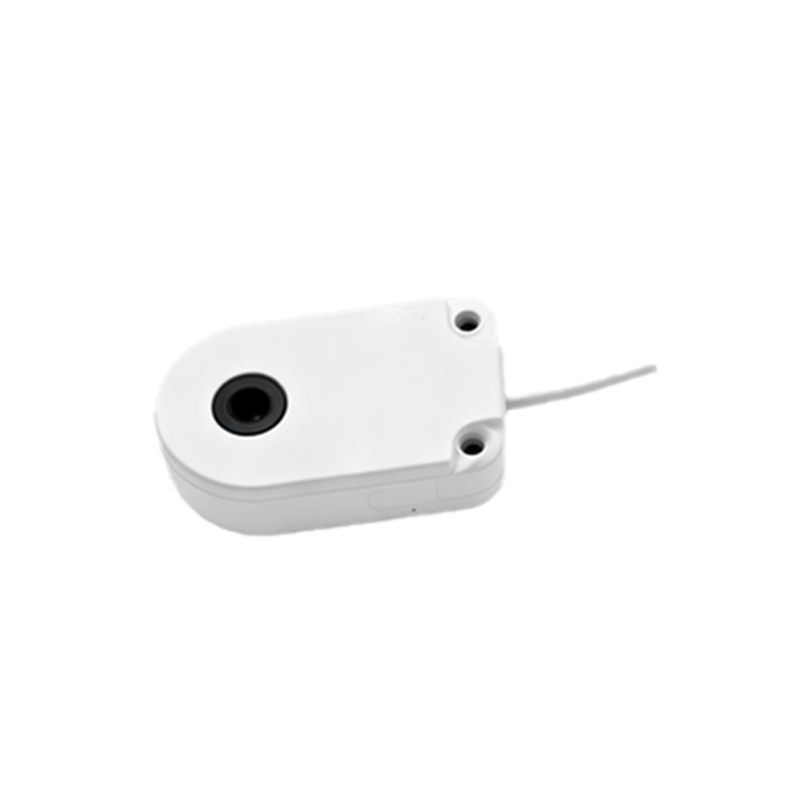
Inductive Proximity Sensors are among the most common. They generate an oscillating electromagnetic field. When a metallic target enters this field, it induces eddy currents within the target, which in turn causes a change in the sensor's oscillation amplitude. This change triggers the sensor's output switch. These sensors are exclusively for detecting metals, with ferrous metals like iron and steel typically offering the longest sensing ranges. They are robust, resistant to dirt and moisture, and widely used in machine automation for tasks like counting, positioning, and limit switching.
Capacitive Proximity Sensors can detect both metallic and non-metallic objects, including liquids, powders, plastics, and wood. They function by generating an electrostatic field. Any object that enters this field alters the capacitance of the sensor's circuit, prompting a state change in the output. This makes them versatile for applications like liquid level detection, material handling, and presence sensing of non-metallic containers or products.
Photoelectric Sensors operate on optical principles. They consist of a light emitter (usually LED) and a receiver. When a target interrupts or reflects the light beam, the receiver detects the change and switches the output. They offer the longest sensing ranges and can detect virtually any material. Sub-types include through-beam (separate emitter and receiver), retro-reflective (uses a reflector), and diffuse (reflective), where the sensor and target are on the same side. Applications are vast, from packaging and assembly lines to object counting and smoke detection.
Ultrasonic Proximity Sensors use sound waves beyond human hearing. They emit ultrasonic pulses and measure the time for the echo to return. The time delay is used to calculate the distance to the target. These sensors are excellent for detecting objects of any material, shape, or color, and are particularly effective in challenging environments with dust, fog, or varying light conditions. Common uses include distance measurement, level sensing of bulk materials, and robotic obstacle avoidance.
Magnetic Proximity Sensors, often called reed switches or Hall-effect sensors, detect the presence of a magnetic field, usually from a permanent magnet attached to the moving target. They are simple, reliable, and used in applications where only a magnetic target needs to be sensed, such as in cylinder position sensing or door/window security systems.
Selecting the right proximity sensor requires careful consideration of several parameters. First, identify the target material (metal, plastic, liquid) to narrow down the sensor type. The required sensing distance, or range, is critical and must be specified with a safety margin. Environmental conditions like temperature, humidity, presence of chemicals, or washdown requirements dictate the sensor's housing material and ingress protection (IP) rating. The output type (NPN/PNN transistor, analog, IO-Link) must be compatible with the control system (PLC). Other factors include response speed, mounting style (flush or non-flush for inductive), size constraints, and electrical requirements (voltage, current).
In conclusion, proximity sensors are indispensable tools for modern automation. Understanding their different technologies—inductive, capacitive, photoelectric, ultrasonic, and magnetic—allows engineers and technicians to make informed decisions. By meticulously matching the sensor's characteristics to the application's demands for target material, range, environment, and output, one can ensure optimal system performance, longevity, and reliability. As Industry 4.0 and smart manufacturing evolve, the role of these precise and versatile sensing devices will only continue to expand.