Proximity eddy current sensors are non-contact devices widely used in industrial automation for precise measurement of displacement, vibration, and position of conductive targets. Their operation is grounded in the principles of electromagnetic induction, offering high resolution and reliability in demanding environments.
At the core of the sensor lies a coil wound around a ferrite core, which is energized by a high-frequency alternating current (typically ranging from 100 kHz to several MHz). This alternating current generates a dynamic magnetic field that radiates from the sensor's active face. When a conductive target, such as aluminum, steel, or copper, approaches this magnetic field, eddy currents are induced on the target's surface. These eddy currents, according to Lenz's Law, create their own opposing magnetic field, which interacts with the sensor's original field. This interaction alters the impedance of the sensor coil. Specifically, the effective resistance of the coil increases, while its inductance decreases. The degree of impedance change is directly correlated to the distance between the sensor and the target—closer proximity results in stronger eddy currents and a more pronounced impedance shift.
The sensor's electronic oscillator and conditioning circuitry continuously monitor this impedance variation. The oscillator's amplitude or frequency is modulated by the changing coil impedance. This modulated signal is then demodulated, linearized, and converted into a standardized output signal, such as a 4–20 mA analog current, a 0–10 V voltage, or a digital signal. This output provides a precise, real-time representation of the gap or displacement.
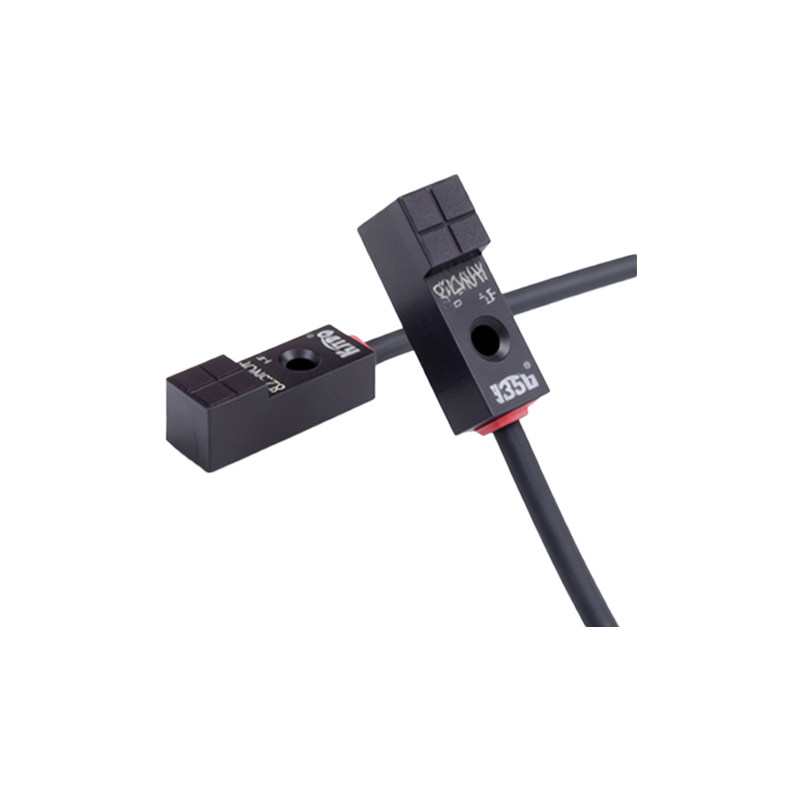
Key performance characteristics include high resolution (often in the sub-micron range), excellent frequency response (enabling measurement of high-speed vibrations), and robustness against environmental contaminants like oil, dust, or moisture, as the magnetic field penetrates non-conductive materials. However, the sensor's performance is inherently dependent on the target material's electrical conductivity and magnetic permeability. Different materials affect the eddy current magnitude and penetration depth, necessitating calibration for specific applications. For instance, a sensor calibrated for mild steel will require adjustment for use with aluminum.
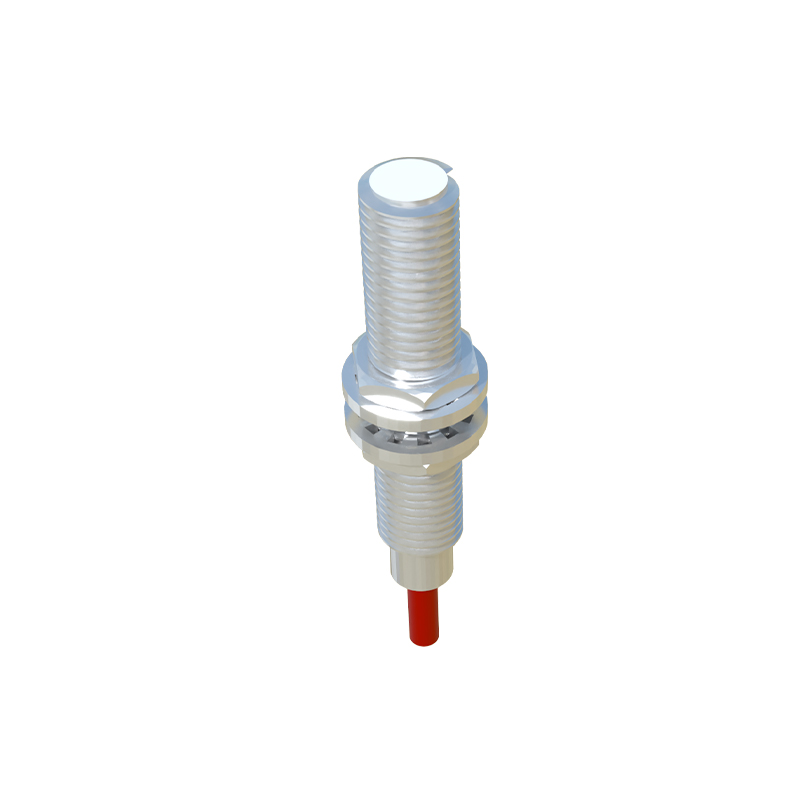
Applications are extensive across industries. In turbomachinery, these sensors monitor shaft radial vibration and axial thrust position. In manufacturing, they gauge precision part dimensions, control robotic arm positioning, and detect metal object presence. Their non-contact nature eliminates mechanical wear, ensuring long-term stability and making them indispensable for predictive maintenance and quality control systems.
In summary, the proximity eddy current sensor translates the electromagnetic interaction between a coil and a conductive target into a precise, linear electrical signal proportional to distance. Its design elegantly leverages fundamental physics to deliver reliable metrology in complex industrial settings.