Laser grating sensors represent a sophisticated class of measurement devices that have become indispensable in modern industrial automation and precision engineering. Operating on the fundamental principles of optical diffraction and interference, these sensors offer non-contact, high-resolution, and high-speed measurement capabilities critical for demanding applications. At their core, a laser grating sensor projects a coherent laser beam onto a physical grating scale, which is typically a reflective surface inscribed with a periodic pattern of lines. The interaction between the incident laser light and this grating pattern generates diffracted beams. These beams are then collected and made to interfere within the sensor's optical system.
The resulting interference pattern is exquisitely sensitive to the relative movement between the sensor head and the grating scale. As the scale moves, the phase of the interference fringes shifts. A photodetector within the sensor converts these optical phase shifts into electrical signals. Sophisticated signal processing electronics then interpret these signals, translating them into precise, real-time measurements of displacement, position, or velocity. The resolution of such a system is directly tied to the pitch of the grating—the distance between adjacent lines—often achieving sub-micron or even nanometer-level accuracy.
The advantages of laser grating sensors over traditional measurement methods are substantial. Their non-contact nature eliminates issues of mechanical wear, hysteresis, and backlash associated with tactile probes or linear variable differential transformers (LVDTs). They are immune to electromagnetic interference, making them ideal for use in environments with strong magnetic fields or near powerful motors. Furthermore, they offer exceptional linearity over long measurement ranges, high bandwidth for dynamic measurements, and remarkable long-term stability.
In industrial practice, laser grating sensors are deployed across a vast spectrum of applications. In semiconductor manufacturing, they are crucial for the precise positioning of photolithography stages and wafer inspection systems. Within coordinate measuring machines (CMMs) and ultra-precision machine tools, they provide the feedback necessary for closed-loop control, ensuring machining accuracy. The field of metrology relies on them for calibrating other instruments and performing dimensional inspection of critical components. They are also found in specialized equipment such as precision stages for microscopy, alignment systems for particle accelerators, and vibration analysis setups.
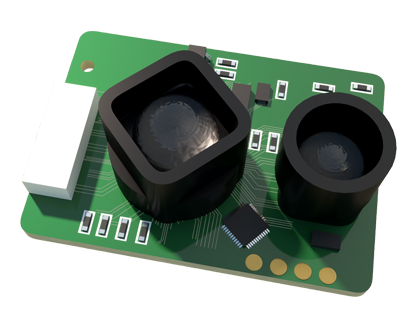
Recent technological advancements continue to push the boundaries of what is possible with laser grating sensors. The development of absolute grating scales, which encode position information directly into the grating pattern, allows the sensor to determine its position immediately upon power-up without needing a reference homing cycle—a significant boost for system availability. Miniaturization of optical components has led to more compact sensor heads, enabling integration into tighter spaces. Enhanced signal processing algorithms, often incorporating digital interpolation techniques, have dramatically increased resolution and improved signal-to-noise ratios, allowing reliable operation even with imperfect grating surfaces or in the presence of contaminants like oil mist or dust.
Another key trend is the integration of intelligence directly into the sensor. Modern laser grating sensors often feature onboard processors, digital interfaces (such as Ethernet, EtherCAT, or PROFINET), and advanced diagnostics. This "smart sensor" capability facilitates easier integration into Industry 4.0 and Industrial Internet of Things (IIoT) frameworks, enabling predictive maintenance by monitoring signal quality and detecting early signs of grating contamination or misalignment.
Selecting the appropriate laser grating sensor for a specific application requires careful consideration of several parameters. The required measurement range and resolution are primary drivers. Environmental factors like temperature stability, resistance to coolants or cleaning agents, and the presence of vibrations must be evaluated. The choice between reflective and transmissive grating types depends on the mechanical design of the system. Furthermore, the selection of the grating pitch, signal period, and output interface type (analog, digital, or serial) must align with the overall control system architecture.

Installation and commissioning are critical phases to ensure optimal performance. Proper alignment between the sensor head and the grating scale is paramount; even minor angular errors (pitch, yaw, and roll) can introduce measurement inaccuracies known as Abbé errors. The mounting must be rigid and stable to prevent thermally or mechanically induced drift. Regular maintenance, though minimal, typically involves keeping the grating scale clean and free from scratches or debris that could scatter the laser beam.

In conclusion, laser grating sensors are a cornerstone technology for high-precision industrial measurement. Their unique blend of optical precision, robustness, and versatility makes them the preferred solution where accuracy, speed, and reliability are non-negotiable. As manufacturing tolerances tighten and automation systems become more sophisticated, the role of these sensors will only grow, driven by continuous innovation in optics, materials, and digital signal processing. For engineers and system integrators, a deep understanding of their operating principles and application nuances is essential for harnessing their full potential to enhance product quality and operational efficiency.