In the realm of industrial automation and quality control, precision is not merely a goal; it is an absolute necessity. Among the array of sophisticated tools enabling this precision, laser profiling sensors stand out as a cornerstone technology. These non-contact measurement devices project a line of laser light onto a target object. A high-resolution camera, positioned at a calibrated angle to the laser source, captures the deformation or profile of this laser line. By analyzing this captured image through triangulation algorithms, the sensor generates a highly accurate, two-dimensional cross-sectional profile of the object, often at speeds exceeding thousands of profiles per second. This capability to deliver dense, real-time 3D data—through the rapid acquisition of successive 2D profiles—makes them indispensable across diverse sectors.
The core principle behind a laser profiler is optical triangulation. Imagine a simple triangle formed by the laser emitter, a point on the target object's surface, and the camera's sensor. Any variation in the height or contour of the target surface causes the laser line to shift its position on the camera's imaging plane. Sophisticated software interprets these minute shifts, converting pixel data into precise dimensional measurements such as height, width, angle, and volume. Unlike traditional contact probes or simple laser point sensors that measure only a single spot, a profiling sensor captures thousands of data points along the laser line in a single snapshot, providing a complete contour map.

The applications for laser profile sensors are vast and transformative. In automotive manufacturing, they are deployed for critical gap and flush measurements on car body assemblies, ensuring door panels, hoods, and trunks meet stringent aesthetic and aerodynamic specifications. They inspect the integrity of weld seams, verifying bead geometry and detecting defects like underfill or porosity. On electronics assembly lines, these sensors measure the coplanarity of component leads on chips or the precise height of solder paste deposits on printed circuit boards, preventing costly failures. In logistics and packaging, they perform rapid box dimensioning for warehouse cubing and palletizing, optimizing storage space and shipping costs. Furthermore, in the food industry, they monitor product size, shape, and volume for quality sorting and portion control.

Selecting the appropriate laser profiling sensor requires careful consideration of several key parameters. Measurement range and standoff distance define the working envelope. Resolution and repeatability determine the smallest detectable feature and the consistency of measurements. The laser's wavelength (commonly red or blue) is chosen based on the target material; blue lasers often provide better performance on shiny or organic surfaces by reducing specular reflection. Scan rate, measured in hertz (Hz), dictates how quickly profiles can be captured, which is crucial for high-speed production lines. Environmental factors like ambient light, dust, and vibration must also be accounted for, often necessitating protective housings or specific filtering techniques.
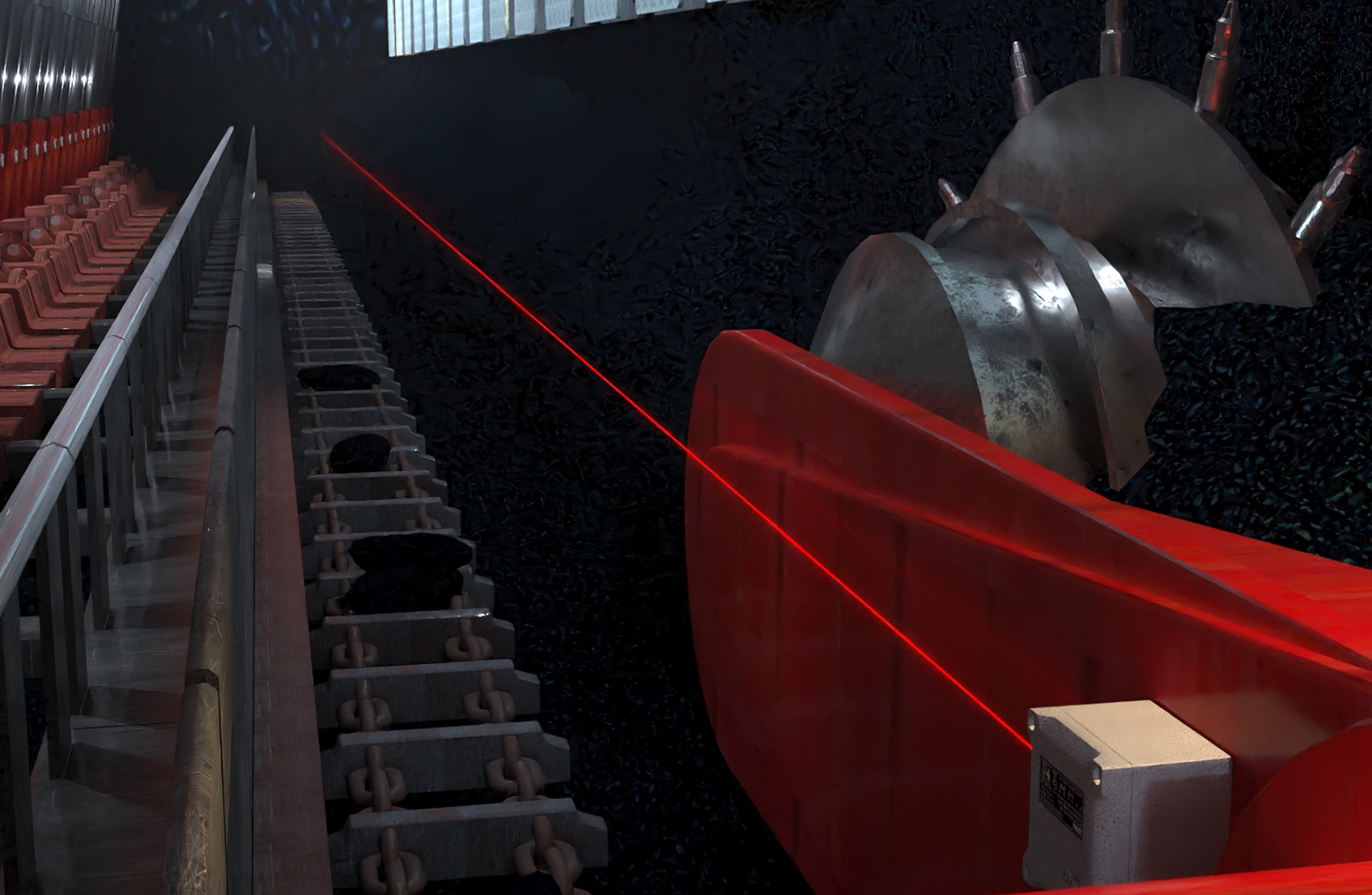
The integration of these sensors into a production environment typically involves mounting them on a fixed bracket, a robotic arm, or a moving gantry. Data is streamed via standard industrial communication protocols like Ethernet/IP, PROFINET, or TCP/IP to a programmable logic controller (PLC) or a dedicated industrial computer. Here, the raw profile data is compared against digital tolerances. Instantaneous decisions can be made: accepting a part, flagging it for review, or triggering a reject mechanism. This closed-loop feedback is the essence of automated process control, enabling real-time corrections and preventing the production of non-conforming parts.
Looking ahead, the evolution of laser profiling technology continues. Advancements in sensor fusion, combining laser data with 2D vision or other 3D technologies, are creating more robust inspection systems. Embedded processing power is increasing, allowing for more complex feature extraction directly at the sensor level, reducing latency and network load. Furthermore, the development of more compact, cost-effective models is democratizing access, bringing high-precision metrology to smaller manufacturers. As Industry 4.0 and smart factory concepts mature, laser profilers are becoming integral data-generating nodes, feeding information into digital twin models and AI-driven analytics platforms for predictive maintenance and continuous process optimization.
In conclusion, laser profiling sensors are far more than just measurement devices. They are enablers of quality, efficiency, and intelligence in modern manufacturing and beyond. By providing fast, accurate, and reliable dimensional data without physical contact, they solve complex inspection challenges, ensure product consistency, and drive automation forward. For any engineer or manager tasked with improving a process, ensuring quality, or automating a task, understanding and leveraging the power of laser profile measurement is a critical step toward operational excellence.