Laser distance sensors have become indispensable tools across numerous industrial sectors, offering non-contact, high-precision measurement capabilities. Their applications range from robotics and automation to construction, logistics, and quality control. However, the reliable performance of these sensors in demanding environments hinges on rigorous and systematic testing protocols. This article outlines a comprehensive framework for testing and validating laser distance sensors, ensuring they meet the stringent requirements of modern industrial applications.
The foundation of any sensor testing regimen begins with defining key performance parameters. For laser distance sensors, these typically include accuracy, repeatability, resolution, linearity, and measurement range. Accuracy refers to the closeness of the measured value to the true distance. Testing for accuracy involves placing the sensor at known, calibrated distances from a target—preferably using a high-precision linear stage or gauge blocks—and comparing the sensor's output to the reference value. Environmental factors such as temperature must be controlled or compensated for during these tests, as they can significantly affect the laser's wavelength and the sensor's electronic components.
Repeatability, or precision, is the sensor's ability to produce the same measurement under unchanged conditions. This is tested by taking multiple measurements of a static target at a fixed distance and calculating the standard deviation of the readings. High repeatability is critical for processes where consistency is paramount, such as in automated assembly lines.
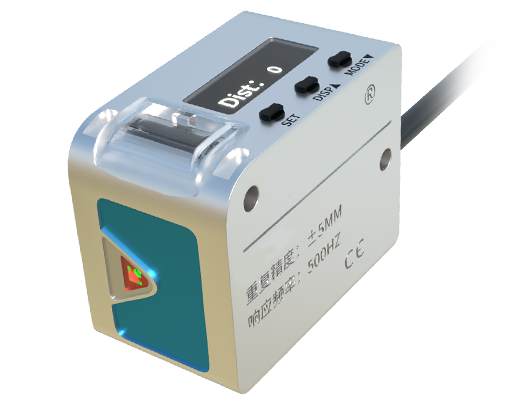
Resolution defines the smallest change in distance the sensor can detect. Testing resolution requires moving the target in very fine increments and observing the smallest step that produces a corresponding change in the sensor's output signal. Linearity testing evaluates whether the sensor's output is directly proportional to the distance across its entire measurement range. Non-linearity can be corrected through software calibration, but it must first be characterized. This is often done by measuring at multiple points across the range and plotting the error from a best-fit straight line.

Beyond these fundamental parameters, real-world performance testing is crucial. This involves assessing the sensor's behavior under various operational challenges. Target surface characteristics have a profound impact. A standard test suite should include measurements on surfaces of different colors (from white to black), materials (metal, plastic, wood, glass), and finishes (matte, glossy, transparent). Glossy or transparent surfaces can cause specular reflection or beam penetration, leading to measurement errors or dropouts. Sensors using phase-shift or time-of-flight principles may behave differently compared to triangulation-based sensors under these conditions.
Environmental robustness testing is another critical pillar. Industrial settings often expose sensors to temperature extremes, humidity, vibration, and electromagnetic interference (EMI). Temperature cycling tests, conducted within the sensor's specified operating range, verify the stability of its measurements and the integrity of its components. Vibration testing, aligned with standards like ISO 9022-23, ensures the sensor can withstand the mechanical stresses encountered on moving machinery or in transportation. EMI testing confirms that the sensor's readings are not corrupted by nearby motors, drives, or communication devices.
The response time and sampling rate of a laser sensor determine its suitability for dynamic applications. Testing involves moving the target at known speeds and assessing the sensor's ability to track the movement without lag or aliasing. For high-speed applications, such as monitoring conveyor belt objects, a fast sampling rate and minimal output delay are essential.
Finally, long-term reliability and durability testing, often through accelerated life testing, provide insights into the sensor's mean time between failures (MTBF). This involves operating the sensor continuously under typical or slightly elevated stress conditions to identify potential wear-out mechanisms.
In conclusion, a holistic testing approach for laser distance sensors must move beyond datasheet specifications. It requires a combination of controlled laboratory measurements to quantify core performance parameters and applied environmental and functional tests to simulate real-world operating conditions. Only through such comprehensive validation can engineers confidently integrate these sophisticated sensors into systems where measurement reliability directly impacts safety, efficiency, and product quality. Documentation of all test procedures, conditions, and results is equally important for quality assurance and troubleshooting throughout the sensor's lifecycle.