Infrared proximity sensors have become indispensable in a wide range of industrial and consumer applications, serving as the eyes of automated systems. These devices operate on a simple yet effective principle: they emit an infrared light beam and detect its reflection from a nearby object. The time taken for the light to return or the intensity of the reflected signal is measured to determine the object's presence and distance. This non-contact method of detection offers significant advantages, including high reliability, long operational life, and immunity to environmental factors like dust or audible noise that often plague mechanical switches.
In industrial automation, infrared proximity sensors are the backbone of countless processes. On assembly lines, they precisely count products, control the flow of materials, and verify the correct positioning of components. Their ability to detect objects regardless of color or material (with some limitations on highly reflective or absorbent surfaces) makes them exceptionally versatile. Robotics heavily relies on these sensors for navigation and obstacle avoidance, enabling collaborative robots to work safely alongside human operators. Machine safety systems integrate them as part of light curtains and area guards, instantly halting equipment when a breach is detected, thereby preventing accidents.
The automotive sector is another major beneficiary. From parking assistance systems that alert drivers to nearby obstacles to automatic door control in vehicles and buildings, infrared sensors provide crucial input. In consumer electronics, they enable features like automatic screen dimming on smartphones and tablets when held close to the face during a call, conserving battery life. They are also fundamental in touchless interfaces, such as automatic faucets, soap dispensers, and hand dryers, promoting hygiene in public spaces.
When selecting an infrared proximity sensor, engineers must consider several key parameters. Sensing range, response time, and beam pattern are critical for the application. The environment is also a deciding factor; sensors with robust housings (IP67 or higher) are necessary for washdown areas or outdoor use. Furthermore, the choice between analog output (providing continuous distance data) and digital output (simple on/off signal) depends on whether the system needs precise measurement or mere presence detection. Modern sensors often come with advanced features like background suppression, which allows them to ignore objects beyond a set distance, and immunity to ambient light interference, ensuring stable operation under varying lighting conditions.
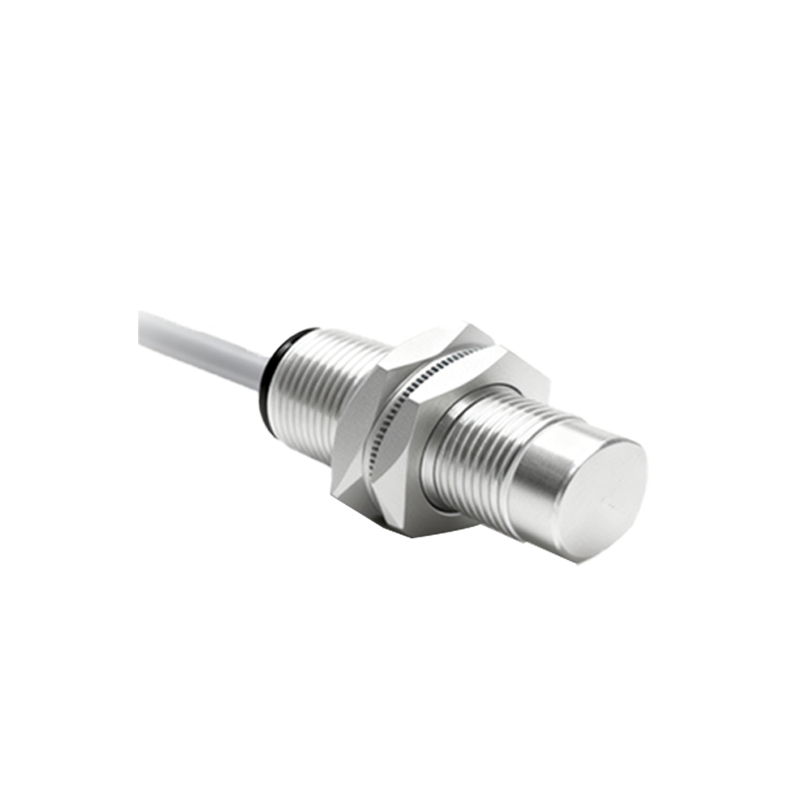
Installation and alignment are crucial for optimal performance. Sensors must be mounted securely to prevent vibration-induced misalignment. The target object's properties—size, shape, and surface texture—can affect the effective sensing range and must be accounted for during system design. Regular maintenance, primarily lens cleaning to prevent dirt buildup from attenuating the infrared signal, is a simple but essential practice to ensure long-term reliability.
Looking ahead, the integration of infrared sensing with IoT and Industry 4.0 platforms is a growing trend. Sensors with IO-Link or other smart communication protocols can transmit not just switch status but also diagnostic data like signal strength, internal temperature, and operating hours. This facilitates predictive maintenance, reducing downtime and optimizing system performance. As technology advances, we can expect even smaller form factors, lower power consumption for battery-operated devices, and enhanced intelligence directly at the sensor edge.
In conclusion, the infrared proximity sensor is a silent workhorse of modern technology. Its role in enhancing efficiency, enabling automation, and ensuring safety continues to expand. From the factory floor to our daily lives, these sensors provide a reliable and cost-effective solution for non-contact detection, forming a critical link in the chain of automated control and intelligent system design. Their continued evolution will undoubtedly unlock new possibilities across diverse engineering fields.