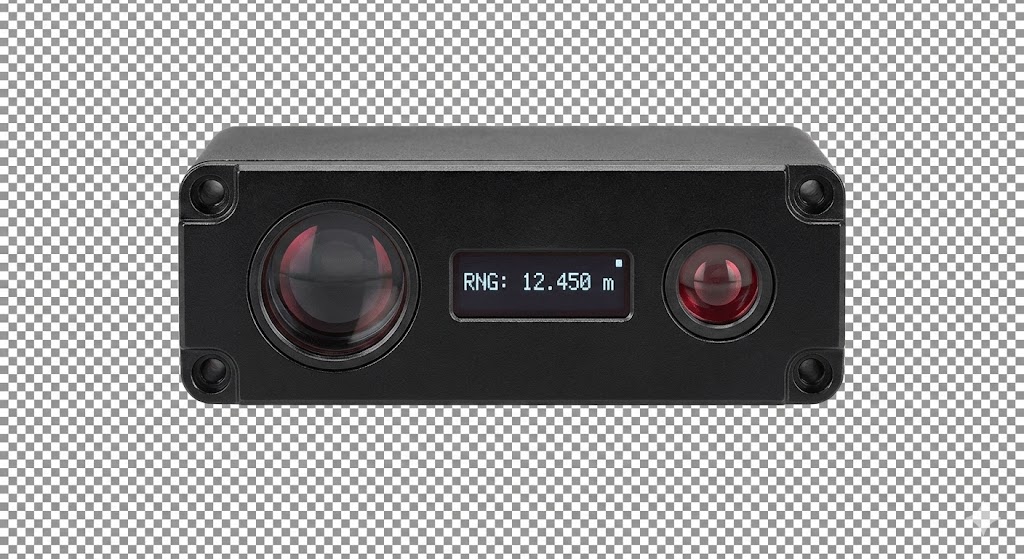
In the realm of industrial automation and quality control, laser sensors have emerged as a cornerstone technology for non-contact depth measurement. These devices operate on the principle of triangulation or time-of-flight (ToF), offering high accuracy, rapid response, and robustness in challenging environments. A typical laser displacement sensor projects a focused laser beam onto a target surface. The reflected light is captured by a receiver, and through geometric calculations or time delay analysis, the distance or depth is precisely determined. Triangulation-based sensors are ideal for short to medium ranges with micron-level resolution, commonly used in semiconductor inspection, automotive assembly, and precision machining. For longer distances or larger measurement volumes, ToF sensors excel by measuring the round-trip time of laser pulses, finding applications in robotics, logistics, and construction surveying.
The advantages of laser depth sensors are manifold. They eliminate mechanical contact, preventing damage to both the sensor and delicate objects. Their high sampling rates, often exceeding 10 kHz, enable real-time monitoring of dynamic processes. Moreover, they perform reliably under varying environmental conditions—resistant to dust, vibrations, and ambient light interference when properly configured. Advanced models incorporate features like multi-echo detection to penetrate transparent surfaces or filter out background noise, enhancing versatility. Integration with industrial networks (e.g., EtherCAT, PROFINET) and software platforms allows seamless data acquisition for statistical process control, 3D profiling, and automated feedback loops.
However, selecting the appropriate laser sensor requires careful consideration of key parameters. Measurement range, spot size, linearity error, and repeatability must align with the application's tolerances. Surface properties—such as color, texture, and reflectivity—can influence signal strength; some sensors offer automatic gain adjustment to compensate. For deep recesses or complex geometries, specialized models with narrow beam angles or coaxial optics are available. Calibration against certified standards ensures traceability, a critical aspect in regulated industries like aerospace and medical device manufacturing.

Looking ahead, innovations in laser technology continue to push boundaries. Miniaturization enables integration into compact robotic grippers, while wavelength diversification (e.g., blue lasers for copper surfaces) expands material compatibility. The fusion of laser sensing with artificial intelligence facilitates adaptive systems that self-optimize measurement parameters, predict maintenance needs, and detect anomalies beyond simple depth values. As Industry 4.0 advances, laser depth sensors will remain pivotal in enabling smart factories, where precise dimensional data drives efficiency, quality, and innovation across the production lifecycle.