In the realm of precision measurement and industrial automation, phase laser distance sensors have emerged as a cornerstone technology. Unlike simpler time-of-flight (ToF) laser sensors, phase-based systems offer superior accuracy and resolution for medium-range applications, making them indispensable in fields ranging from construction and surveying to robotics and quality control. This article delves into the operating principles, key advantages, common applications, and critical factors for selecting the right phase laser distance sensor.
The fundamental principle behind a phase laser distance sensor is the measurement of the phase shift between a modulated laser beam emitted towards a target and the reflected beam returning to the detector. The sensor emits a continuous-wave laser beam whose intensity is modulated at a specific high frequency. This modulated light travels to the target object and is reflected back. Due to the finite speed of light, the returning wave exhibits a phase shift relative to the emitted wave. The sensor's sophisticated electronics precisely measure this phase difference. Since the phase shift is directly proportional to the distance the light has traveled, the sensor's processor can calculate the absolute distance to the target with remarkable precision. The formula is essentially: Distance = (c * ΔΦ) / (4π * f_mod), where c is the speed of light, ΔΦ is the measured phase shift, and f_mod is the modulation frequency. Higher modulation frequencies allow for finer resolution, as the wavelength of the modulation becomes shorter.
The primary advantage of this method over direct time-of-flight measurement is its exceptional accuracy at shorter to medium ranges, typically from a few centimeters up to several hundred meters. While pure ToF sensors excel at very long distances, phase-based sensors can achieve sub-millimeter resolution where it matters most for industrial tasks. They are also generally less susceptible to errors from ambient light interference due to their narrow-band detection tuned to the modulation frequency. Furthermore, modern phase laser sensors are compact, robust, and feature fast measurement rates, enabling real-time distance monitoring in dynamic environments.
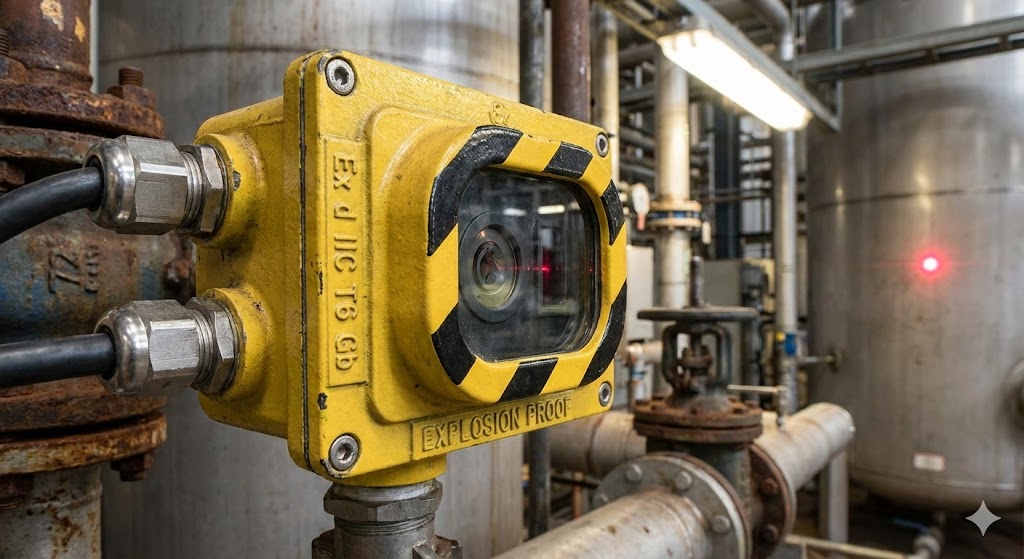
The applications for phase laser distance sensors are vast and varied. In industrial automation, they are used for precise positioning of robotic arms, monitoring material thickness on production lines, and controlling fill levels in tanks or silos. In the construction and civil engineering sectors, they facilitate tasks like building information modeling (BIM), deformation monitoring of structures, and volume calculation of stockpiles. Surveying professionals utilize them for topographic mapping and as components in advanced total stations. Emerging applications include obstacle detection for autonomous guided vehicles (AGVs), vibration analysis, and even reverse engineering through 3D scanning when combined with scanning mechanisms.
Selecting the appropriate phase laser distance sensor requires careful consideration of several parameters. First, define the required measurement range and the necessary accuracy/resolution. A sensor with a 0-100m range and ±1mm accuracy is vastly different from one with a 0-10m range and ±0.1mm accuracy. Second, consider the target surface properties. Highly reflective or dark, absorbent surfaces can challenge some sensors; look for models with automatic gain control or diffuse reflection technology for reliable performance on diverse materials. Third, the measurement speed or frequency is crucial for tracking moving objects. Fourth, evaluate the environmental conditions: the sensor's ingress protection (IP) rating for dust and water resistance, operating temperature range, and resistance to vibrations. Finally, the output interface (analog 4-20mA, voltage, digital RS-232/485, Ethernet, PROFIBUS, etc.) must be compatible with the existing control or data acquisition system.
Installation and operational best practices are also key to optimal performance. Ensure the sensor is mounted securely to minimize vibration. The laser beam should strike the target perpendicularly to avoid cosine error, which can introduce a measurement offset. For transparent surfaces like glass or liquids, special considerations or sensor models with background suppression may be required. Regular maintenance, primarily keeping the lens clean from dust and debris, is essential for maintaining signal integrity and accuracy.

In conclusion, phase laser distance sensors represent a mature yet continually evolving technology that bridges the gap between high precision and practical utility. By understanding their phase-comparison operating principle, recognizing their strengths in accuracy and resolution, and systematically evaluating application needs against sensor specifications, engineers and technicians can effectively harness their capabilities. As industries push for greater automation and data-driven precision, the role of these reliable and versatile measurement tools will only become more pronounced, driving efficiency and innovation across countless sectors.