In the realm of industrial automation and electrical engineering, proximity sensors are indispensable components. They detect the presence or absence of an object without physical contact, enabling precise control, safety, and efficiency in countless applications. Understanding the different types is crucial for selecting the right sensor for a specific task. This guide delves into the primary categories of proximity sensors, explaining their operating principles, typical applications, and key considerations.
The most fundamental distinction lies in the sensing technology employed. The first major category is Inductive Proximity Sensors. These sensors generate an electromagnetic field. When a metallic object (typically ferrous metals like steel or iron, though some models detect non-ferrous metals) enters this field, it induces eddy currents within the object. This change in the electromagnetic field is detected by the sensor's internal circuitry, triggering an output signal. Inductive sensors are renowned for their robustness, high switching frequency, and immunity to environmental factors like dust, oil, or moisture. They are ideal for detecting metal parts in machine tools, conveyor systems, and automotive assembly lines. However, their limitation is clear: they only detect metallic targets.
To detect non-metallic objects, Capacitive Proximity Sensors are the solution. These sensors function by generating an electrostatic field. Any object that enters this field alters the sensor's capacitance. This change occurs because different materials have different dielectric constants. Capacitive sensors can detect a wide variety of materials, including plastics, glass, wood, liquids, and granular substances. They are commonly used in level detection for tanks (liquids or powders), material handling for non-metallic parts, and even as touch-sensitive switches. Their sensitivity is adjustable, which is both an advantage and a potential source of false triggers if not calibrated correctly for the specific environment and target material.
For applications requiring longer sensing ranges or detection of any solid object regardless of material, color, or surface finish, Ultrasonic Proximity Sensors are often chosen. These sensors work on the principle of echolocation. They emit high-frequency sound waves (ultrasound) and then listen for the echo reflected from a target object. By measuring the time interval between the emission and the reception of the echo, the sensor can calculate the distance to the object. This makes them excellent not just for presence detection, but also for precise distance measurement and level sensing in challenging environments with smoke, dust, or light interference. They are widely used in parking assistance systems, robotic palletizing, and bulk material level monitoring.
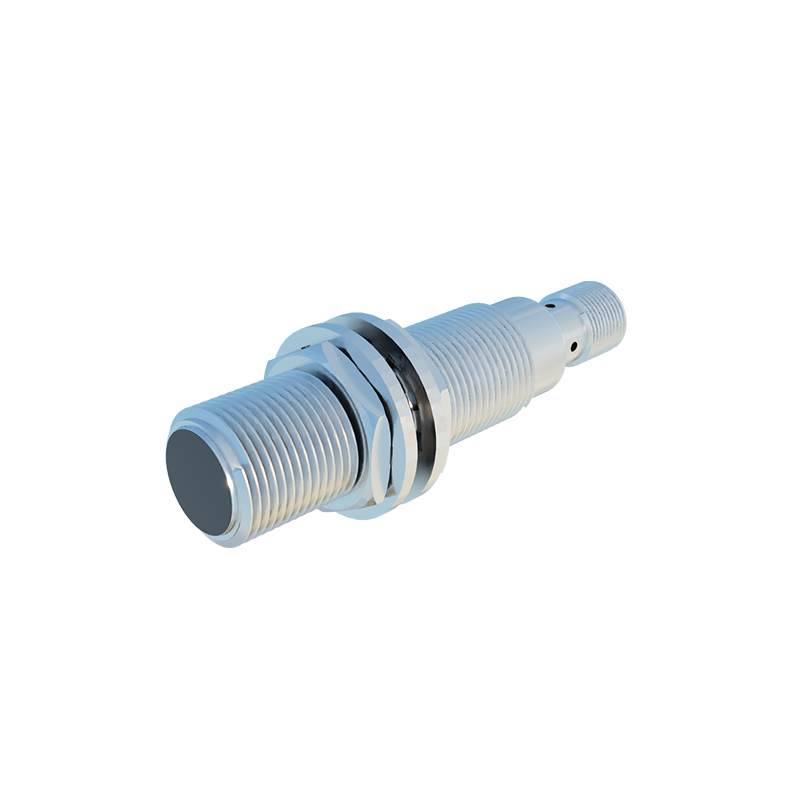
Another prominent type is the Photoelectric Sensor, which uses light to detect objects. While often considered a separate broad category, in the context of proximity-style operation (diffuse or retro-reflective modes), they function as non-contact proximity devices. A photoelectric sensor consists of a light emitter (usually an LED producing visible red, infrared, or laser light) and a receiver. In the diffuse (proximity) mode, the sensor's emitted light hits the target object and is scattered back to the receiver. Detection occurs when enough reflected light is received. These sensors offer very long sensing ranges and can detect virtually any material, but their performance can be affected by the object's color, reflectivity, and environmental conditions like ambient light or dirty lenses.
A specialized and highly precise category is the Magnetic Proximity Sensor (often using Reed Switches or Hall Effect sensors). These detect the presence of a magnetic field, typically from a permanent magnet attached to the moving target. When the magnet comes within range, it either closes a reed switch (a pair of ferromagnetic contacts sealed in a glass tube) or triggers a Hall Effect integrated circuit. They are extremely reliable for detecting position in clean environments, such as in cylinder position sensing for pneumatic actuators, door/window security systems, and speed sensing in automotive applications. Their operation is unaffected by non-magnetic materials like dirt or plastic.
Finally, for the most demanding high-speed and ultra-precise positioning applications, Eddy-Current Sensors represent a specialized subset of inductive technology. They generate high-frequency electromagnetic fields to induce eddy currents in conductive (usually non-ferrous) targets. By analyzing the interaction, they can provide micron-level resolution for displacement and vibration measurement, commonly found in precision machining, semiconductor manufacturing, and condition monitoring of rotating machinery.
Selecting the appropriate proximity sensor requires a careful analysis of several factors: the target material, required sensing distance, environmental conditions (temperature, contaminants), switching frequency, output type (PNP/NPN, analog, IO-Link), and installation constraints. Inductive sensors dominate metal detection, capacitive handles non-metallics, ultrasonic excels in challenging conditions and distance measurement, photoelectric offers versatility and range, magnetic provides simple and reliable position feedback, and eddy-current delivers extreme precision. A thorough understanding of these core types empowers engineers to design more efficient