In the rapidly evolving landscape of industrial automation and smart manufacturing, proximity sensors play a pivotal role in enhancing operational efficiency, safety, and precision. Among the myriad of sensor technologies available, the S8+ proximity sensor stands out as a robust and versatile solution designed to meet the rigorous demands of modern industrial environments. This article delves into the technical specifications, operational principles, and diverse applications of the S8+ series, providing insights for engineers and industry professionals seeking reliable sensing solutions.
The S8+ proximity sensor is engineered based on inductive sensing technology, which enables it to detect metallic objects without physical contact. This non-contact detection capability is crucial in applications where mechanical wear, contamination, or high-speed operations are concerns. The sensor operates by generating an electromagnetic field from its coil oscillator. When a metallic target enters this field, eddy currents are induced, causing a change in the oscillation amplitude. This change is detected by the sensor's circuitry, triggering an output signal. The S8+ series typically offers a sensing range of up to 15 mm, depending on the specific model and target material, with high repeat accuracy and minimal hysteresis.
Key features of the S8+ proximity sensor include its rugged construction, often rated at IP67 or higher for resistance to dust, water, and oil ingress. This makes it suitable for harsh environments such as automotive assembly lines, metalworking shops, and outdoor machinery. The sensor housing is commonly made of stainless steel or nickel-plated brass, providing durability against mechanical impacts and corrosive substances. Additionally, the S8+ series incorporates advanced electronic designs that offer immunity to electromagnetic interference (EMI) and voltage fluctuations, ensuring stable performance in electrically noisy settings. Many models feature short-circuit and overload protection, along with reverse polarity safeguards, which enhance system reliability and reduce downtime.
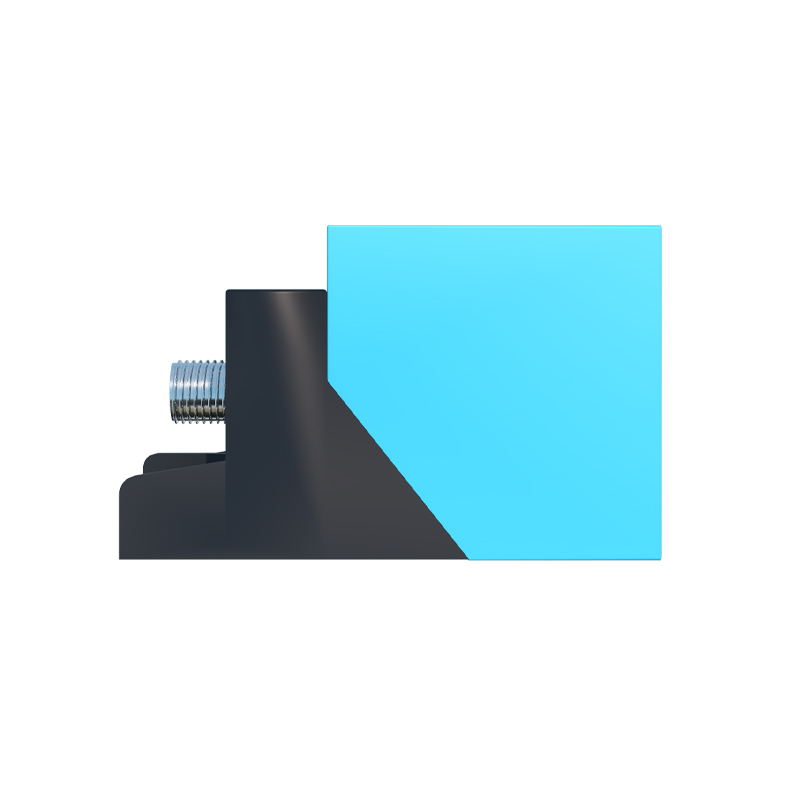
Output configurations for the S8+ sensor are versatile, including NPN, PNP, analog, and IO-Link options. The IO-Link compatibility is particularly noteworthy, as it enables smart sensor functionalities such as parameterization, diagnostics, and integration with Industry 4.0 frameworks. This allows for real-time monitoring of sensor health, predictive maintenance, and seamless data exchange with control systems like PLCs. The operating voltage range typically spans from 10 to 30 V DC, catering to standard industrial power supplies. Response times are swift, often in the microsecond range, facilitating high-speed counting, positioning, and detection tasks in automated processes.
Applications of the S8+ proximity sensor are extensive across various sectors. In automotive manufacturing, these sensors are used for part presence verification, robotic arm positioning, and conveyor belt monitoring. In packaging machinery, they detect metal components or foil seals to ensure proper filling and capping. The food and beverage industry employs them in equipment where stainless steel detection is required, albeit often with specific hygienic design variants. Moreover, in material handling and logistics, S8+ sensors assist in palletizing, sorting, and inventory management by sensing metal racks or containers. Their robustness also makes them ideal for heavy machinery, such as CNC machines, where they monitor tool wear or detect workpiece positions.
Installation and maintenance considerations are straightforward. Engineers should ensure proper alignment between the sensor and target, avoiding parallel placement with other metallic objects to prevent false triggers. Regular cleaning of the sensing face is recommended to remove debris, though the IP rating mitigates most environmental issues. When integrating into control systems, attention to wiring and grounding practices is essential to optimize performance. Manufacturers often provide detailed datasheets with mounting dimensions, temperature ratings (commonly -25°C to 70°C), and output load specifications to aid in selection.
In conclusion, the S8+ proximity sensor represents a mature yet continually refined technology that addresses core industrial sensing needs. Its combination of durability, precision, and adaptability makes it a cornerstone in automation projects. As industries advance toward greater connectivity and intelligence, sensors like the S8+ will remain integral, evolving with features that support predictive analytics and energy efficiency. For engineers, understanding its capabilities and proper implementation is key to leveraging its full potential in driving productivity and innovation.