In the demanding landscape of modern industrial automation, the reliable detection of metallic objects is a fundamental requirement. However, many standard inductive proximity sensors face significant performance degradation or outright failure when deployed in environments with strong magnetic fields. This is where anti-magnetic inductive proximity sensors emerge as a critical technological solution, engineered specifically to maintain operational integrity amidst magnetic interference.
The core operating principle of a standard inductive proximity sensor involves an oscillator circuit that generates a high-frequency electromagnetic field from a coil wound around a ferrite core. When a metallic target enters this active field, eddy currents are induced within the target, causing a change in the oscillation amplitude. This change is detected by a threshold circuit, which subsequently triggers a solid-state output switch. The inherent vulnerability lies in the sensor's ferromagnetic core and internal circuitry, which can be saturated or influenced by external magnetic fields, leading to false triggering, reduced sensing range, or a complete loss of function.
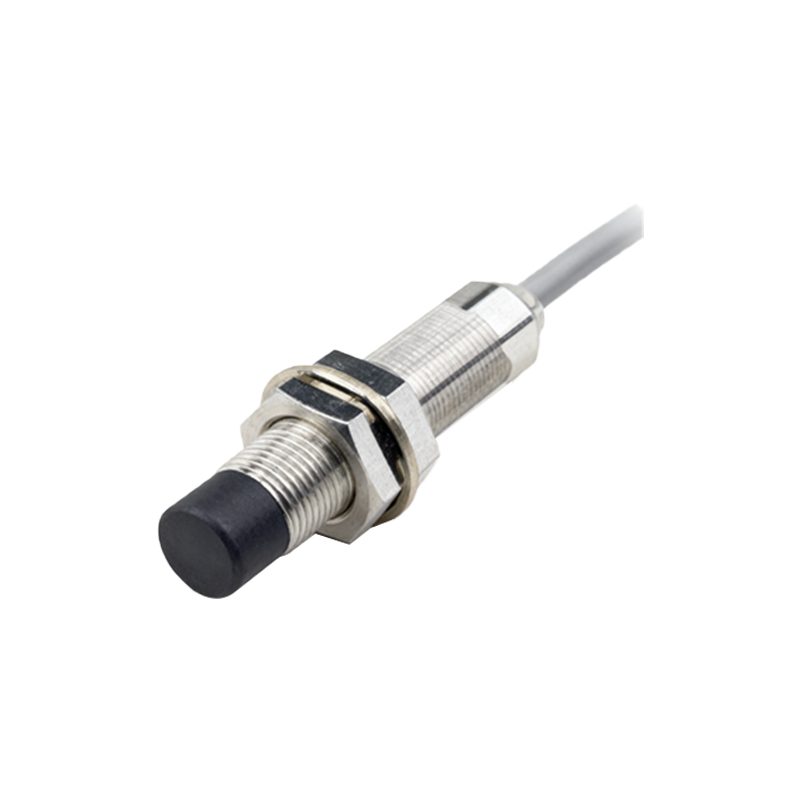
Anti-magnetic variants are meticulously designed to counteract these effects. Key design strategies include the use of specialized magnetic shielding materials, such as mu-metal, to encase sensitive internal components. This shielding effectively diverts and contains external magnetic flux, preventing it from penetrating the core and coil assembly. Furthermore, engineers employ differential sensing techniques and advanced signal processing algorithms. These methods allow the sensor to distinguish between the signature of a genuine metallic target and the "noise" introduced by an ambient magnetic field. The electrical design often incorporates compensation circuits that actively nullify the effects of low-frequency magnetic disturbances, commonly found near large motors, transformers, or welding equipment.
The construction of these robust sensors also involves high-grade, non-ferrous materials for housings and sensing faces. Stainless steel, particularly austenitic grades like 316L, is frequently used for its excellent mechanical strength and very low magnetic permeability. This ensures the sensor body itself does not become magnetized or act as an attractor in magnetic fields.
The applications for anti-magnetic inductive proximity sensors are vast and critical in several heavy industries. In metal processing and stamping plants, they provide reliable position feedback for robotic arms and conveyors operating near powerful magnetic lifters or separators. Within the renewable energy sector, they are indispensable for monitoring turbine blade position and gearbox components in direct-drive wind turbines, which generate substantial magnetic fields. Automotive manufacturing, especially in electric vehicle production lines involving magnet assembly or motor testing, relies on these sensors for precision automation. They are also essential in mining operations, where large electromagnetic crushers and separators are used, and in subsea applications where equipment may be exposed to magnetic fields from other instruments.
Selecting the appropriate anti-magnetic sensor requires careful consideration of several parameters beyond standard sensing range and output type. First, quantify the magnetic field strength in the application environment, typically measured in Gauss or Tesla. Manufacturers specify a sensor's immunity level, often stating a maximum tolerable static (DC) and alternating (AC) magnetic field intensity. The sensor's housing material and IP (Ingress Protection) rating are crucial for withstanding not just magnetic fields but also dust, moisture, and physical impact common in harsh settings. The sensing frequency, or the speed at which it can detect passing targets, must match the process requirements. Additionally, verify the temperature operating range, as extreme temperatures can affect both the sensor's electronics and the properties of its magnetic shielding.
Installation and maintenance also demand attention. Even the best anti-magnetic sensor can be compromised if installed too close to an extreme field source. Following manufacturer guidelines for minimum distances from magnetic equipment is paramount. Regular functional checks are recommended, using a non-magnetic test target (like brass or aluminum) to verify switching performance without the test tool itself being affected by the field.
In conclusion, anti-magnetic inductive proximity sensors represent a specialized and vital category of industrial sensing technology. By integrating advanced magnetic shielding, intelligent signal processing, and ruggedized construction, they deliver unwavering reliability where conventional sensors would falter. For engineers and system integrators designing automation solutions for magnetically hostile environments, understanding their principles and selection criteria is not just an option—it is a necessity for ensuring system uptime, safety, and long-term operational efficiency.