In the realm of industrial automation and control systems, proximity sensors stand as indispensable components, providing non-contact detection of objects with high reliability and speed. Their ability to operate without physical contact eliminates mechanical wear, ensures longevity, and enables detection of delicate or fast-moving targets. This article delves into the common types of proximity sensors, their operational principles, key applications, and critical factors for selection, offering a comprehensive guide for engineers and technicians.
The fundamental principle behind proximity sensors is the detection of an object's presence or absence within a specified sensing range without any physical contact. This is achieved by emitting a field or beam and monitoring changes in its return signal or the field itself. The most prevalent categories include inductive, capacitive, ultrasonic, and photoelectric sensors.
Inductive proximity sensors are the workhorses of metal detection. They generate an oscillating electromagnetic field from a coil located at the sensing face. When a metallic object enters this field, eddy currents are induced within the target, causing a change in the oscillation amplitude. The sensor's internal circuit detects this change and triggers a switching output. These sensors are highly robust, resistant to environmental factors like dust, oil, and moisture, and are ideal for detecting ferrous and non-ferrous metals in applications such as machine tooling, conveyor systems, and robotic end-effector positioning. Their sensing range is typically limited and varies with the target metal type.
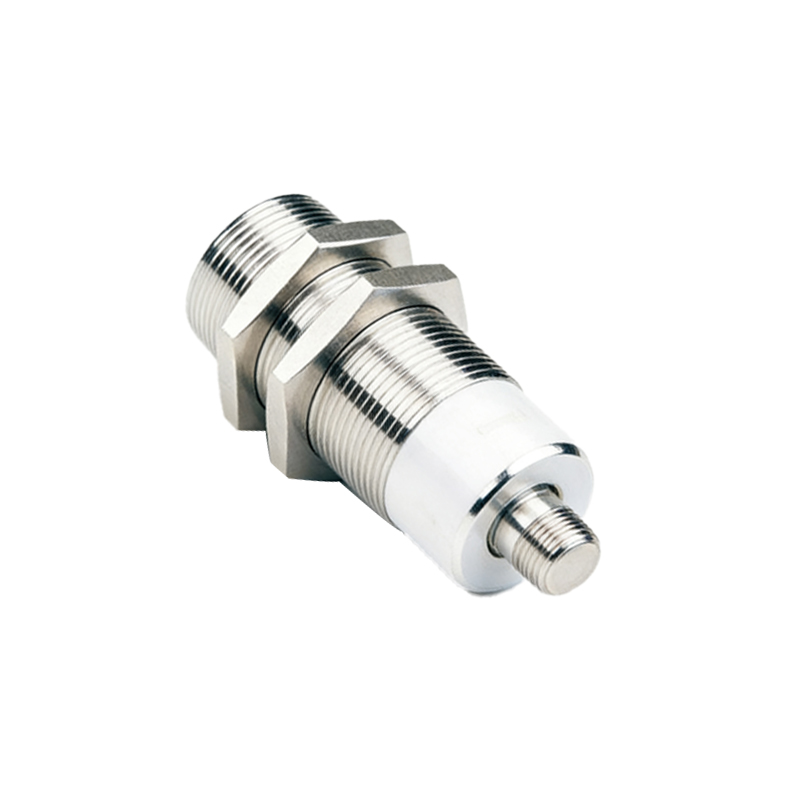
Capacitive proximity sensors, in contrast, can detect both metallic and non-metallic materials, including liquids, plastics, glass, and wood. They function by generating an electrostatic field. When any object with a dielectric constant different from air enters this field, it alters the capacitance of the circuit, which is detected to change the output state. This makes them versatile for tasks like liquid level detection in tanks, monitoring presence of plastic caps on bottles, or detecting granular materials in hoppers. However, they can be susceptible to false triggers from humidity or contaminant buildup on the sensing face.
Ultrasonic sensors operate on a time-of-flight principle. They emit high-frequency sound waves (ultrasound) and measure the time interval between the emission of a pulse and the reception of its echo after reflecting off a target. This allows them to calculate distance, making them excellent for both presence detection and precise distance measurement. They are effective on a wide variety of surfaces and materials, regardless of color or transparency, and perform well in challenging environments with dust, smoke, or light interference. Common uses include pallet detection in warehouses, loop control in winding machines, and fill level control in large containers.
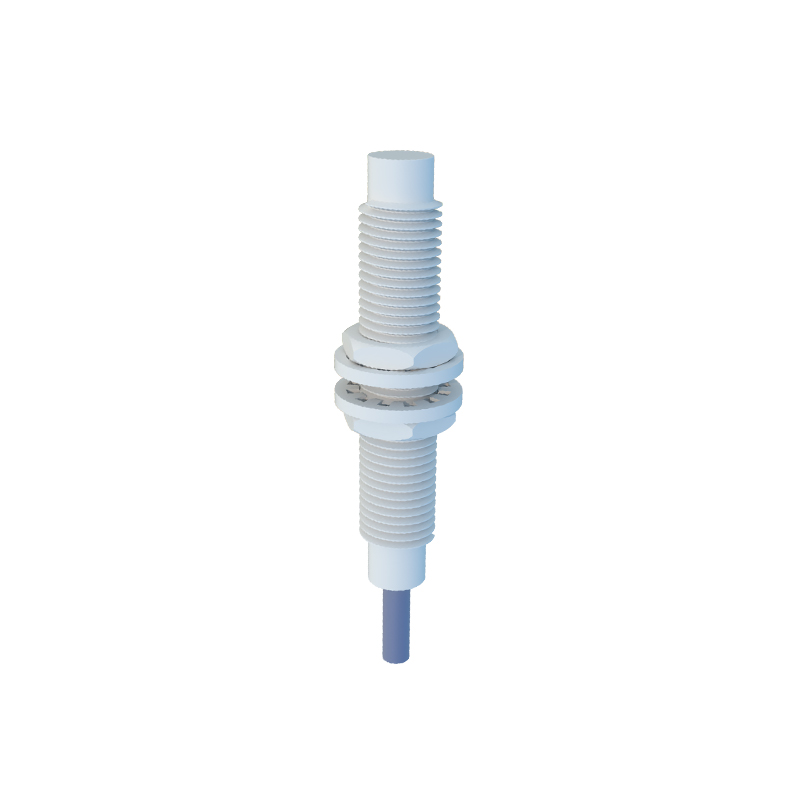
Photoelectric sensors utilize light beams, typically infrared, visible red, or laser. They consist of an emitter and a receiver. The three main operating modes are through-beam, retro-reflective, and diffuse reflective. Through-beam models have separate emitter and receiver units; breaking the beam indicates an object's presence, offering the longest sensing ranges and highest reliability. Retro-reflective types use a single unit and a reflector, detecting an object that blocks the reflected beam. Diffuse reflective sensors detect light reflected directly off the target object itself, making them compact but with a shorter, target-dependent range. Photoelectric sensors are extremely fast and can detect tiny objects, but their performance can be affected by ambient light, color, and surface characteristics of the target.
When selecting a proximity sensor for a specific application, several key parameters must be evaluated. The sensing range, often specified as a nominal value, must accommodate the required detection distance with an appropriate safety margin. The target material and size directly influence the effective range, especially for inductive and capacitive types. Environmental conditions are paramount; factors such as temperature extremes, washdown requirements (IP rating), exposure to chemicals, or heavy vibration dictate the necessary housing material and ingress protection level. The output type, whether NPN/PNP transistor, analog, or IO-Link, must be compatible with the controller's input module. Finally, the response frequency defines how quickly the sensor can detect objects passing by, which is critical for high-speed production lines.
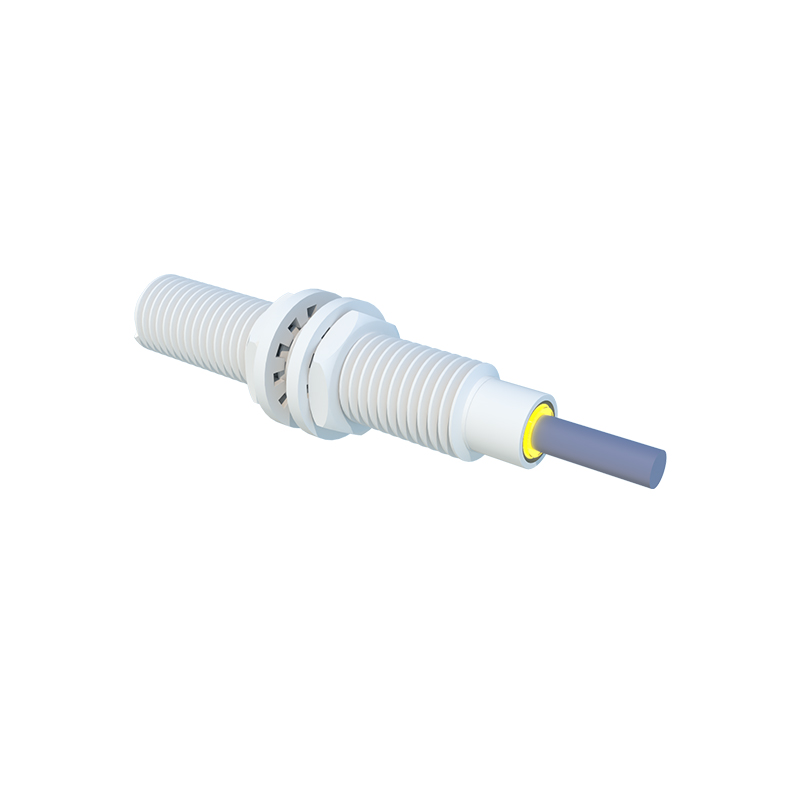
Installation and alignment are also crucial for optimal performance. Ensuring the correct mounting, avoiding sensor-to-sensor interference (especially with inductive types), and maintaining a clean sensing face free from debris or buildup will guarantee long-term, trouble-free operation. Regular maintenance checks should be part of the preventive maintenance schedule.
In summary, proximity sensors are vital for enabling precise, reliable, and efficient automation. Understanding the distinct advantages and limitations of inductive, capacitive, ultrasonic, and photoelectric technologies allows engineers to make informed decisions. By carefully matching sensor characteristics to the application's demands regarding target material, environment, required range, and speed, one can ensure robust system performance, minimize downtime, and enhance overall productivity in modern industrial settings.
SEO描述