In the realm of industrial automation, proximity photoelectric sensors stand as indispensable components, enabling precise, non-contact detection across a myriad of applications. These sensors operate on a fundamental principle: they emit a beam of light—typically infrared, visible red, or laser—and detect changes in the received light to sense the presence, absence, or position of an object. Their ability to function without physical contact eliminates wear and tear, ensuring longevity and reliability in demanding environments such as manufacturing lines, packaging systems, and material handling.
There are three primary sensing modes: through-beam, retro-reflective, and diffuse reflective. Through-beam sensors consist of separate emitter and receiver units; an object is detected when it interrupts the light beam between them. This mode offers the longest sensing range and highest immunity to environmental interference. Retro-reflective sensors house both emitter and receiver in a single housing, using a reflector to bounce the light back. Detection occurs when an object blocks this reflected beam. Diffuse reflective sensors, also self-contained, detect objects by measuring the light scattered directly back from the target's surface, making them ideal for sensing at shorter ranges without a separate reflector.
Key performance parameters define a sensor's suitability. Sensing range, response time, and repeat accuracy are critical for high-speed applications. Environmental factors like ambient light, dust, fog, or target color and surface finish can significantly impact performance. Modern sensors incorporate advanced features to mitigate these challenges. Background suppression technology allows precise sensing of objects within a defined window, ignoring surfaces beyond. Polarization filters help reject false signals from shiny objects. Robust housings with high Ingress Protection (IP) ratings safeguard against water, oil, and particulate ingress.
The integration of these sensors with Programmable Logic Controllers (PLCs) and Industrial Internet of Things (IIoT) networks is transformative. Smart sensors with IO-Link communication provide detailed diagnostic data—such as signal strength, operating temperature, and contamination warnings—enabling predictive maintenance and reducing unplanned downtime. This connectivity facilitates real-time monitoring and adjustments, optimizing entire production processes.
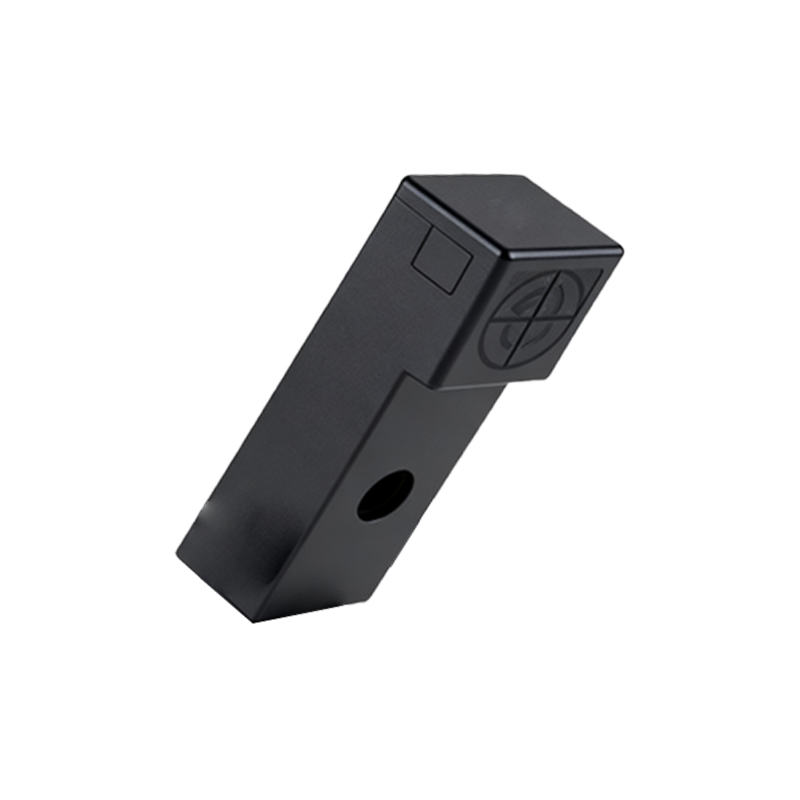
Selection criteria must be carefully considered. Engineers must evaluate the target material, size, and required sensing distance. Contrast sensors, a subtype, are excellent for detecting mark-and-codes or color differences on packaging lines. For challenging conditions, such as detecting transparent bottles or in environments with heavy washdowns, specialized models with tuned light frequencies or stainless-steel housings are available. Regular maintenance, though minimal, involves keeping lenses clean and verifying alignment to ensure consistent operation.
In conclusion, proximity photoelectric sensors are the eyes of modern automation. Their evolution from simple presence detectors to intelligent, connected devices underscores their vital role in enhancing efficiency, safety, and quality control. As Industry 4.0 advances, their capabilities will continue to expand, driving further innovation in smart manufacturing and beyond.