In modern industrial automation, proximity sensors play a critical role in ensuring efficient and reliable material handling processes. When it comes to detecting material trays, these sensors provide a non-contact solution that enhances operational safety, reduces maintenance needs, and improves overall system accuracy. This article delves into the principles, selection criteria, and application best practices for using proximity sensors in tray detection scenarios.
Proximity sensors operate based on electromagnetic, capacitive, or inductive technologies, each suited to different tray materials and environmental conditions. Inductive sensors, for instance, are ideal for detecting metallic trays, as they generate an electromagnetic field that reacts to conductive materials. When a metal tray enters this field, it induces eddy currents, causing a change in the sensor's oscillation amplitude. This change triggers an output signal, confirming the tray's presence. For non-metallic trays, such as those made of plastic or composite materials, capacitive sensors are more appropriate. These sensors detect changes in capacitance caused by the tray's dielectric properties, allowing them to sense a wide range of materials regardless of color or transparency.

Selecting the right proximity sensor for tray detection involves several key considerations. First, the sensing distance must align with the tray's position relative to the sensor. Factors like tray size, speed of movement, and installation constraints influence this choice. For example, in high-speed conveyor systems, sensors with fast response times (often in milliseconds) are essential to avoid missed detections. Additionally, environmental conditions such as temperature fluctuations, humidity, dust, or chemical exposure can impact sensor performance. Industrial-grade sensors with IP67 or higher ratings are recommended for harsh environments to ensure durability and consistent operation.
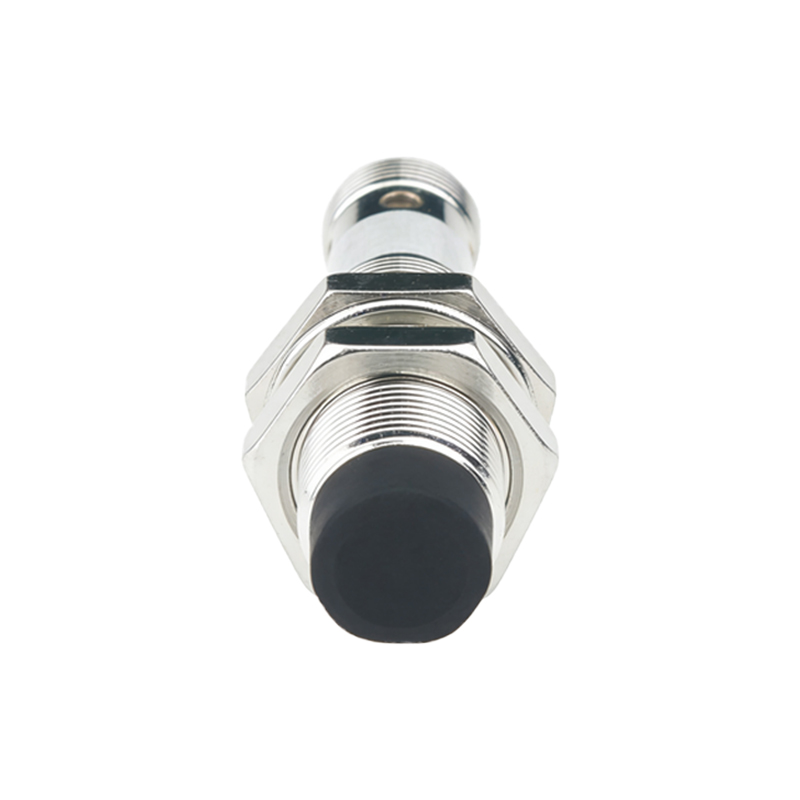
Integration of proximity sensors into control systems is another vital aspect. Most sensors offer digital outputs (e.g., PNP or NPN) that interface seamlessly with PLCs (Programmable Logic Controllers) or other automation devices. This allows for real-time monitoring and feedback, enabling automated actions like stopping a conveyor, triggering a robotic arm, or updating inventory counts. To optimize performance, sensors should be calibrated based on the tray's material and orientation. Regular maintenance, including cleaning lens surfaces and checking wiring connections, helps prevent false triggers or failures.
In practice, proximity sensors are deployed in various tray-handling applications. In packaging lines, they ensure trays are correctly positioned before filling or sealing. In assembly systems, they verify tray presence to coordinate component placement. Case studies show that implementing these sensors can reduce downtime by up to 20% and increase detection accuracy to over 99.5%. For instance, a food processing plant using capacitive sensors for plastic tray detection reported fewer jams and improved hygiene due to the non-contact nature of the sensors.
Emerging trends, such as IO-Link connectivity, are enhancing proximity sensor capabilities. IO-Link enables digital communication for parameter setting, diagnostics, and data logging, facilitating predictive maintenance and smarter automation. As industries advance toward Industry 4.0, the role of proximity sensors in tray detection will continue to evolve, offering greater precision and integration with IoT (Internet of Things) platforms.
In summary, proximity sensors are indispensable for reliable tray detection in industrial settings. By understanding their technologies and application nuances, engineers can design robust systems that boost productivity and minimize errors. Whether for metal or non-metallic trays, these sensors provide a versatile, efficient solution that aligns with the demands of modern automation.