In industrial automation, proximity sensors play a critical role in object detection, positioning, and counting applications. Designing an effective counting program requires a deep understanding of sensor characteristics, PLC (Programmable Logic Controller) programming logic, and real-world operational challenges. This guide provides a step-by-step approach to developing robust proximity sensor counting programs for manufacturing and material handling systems.
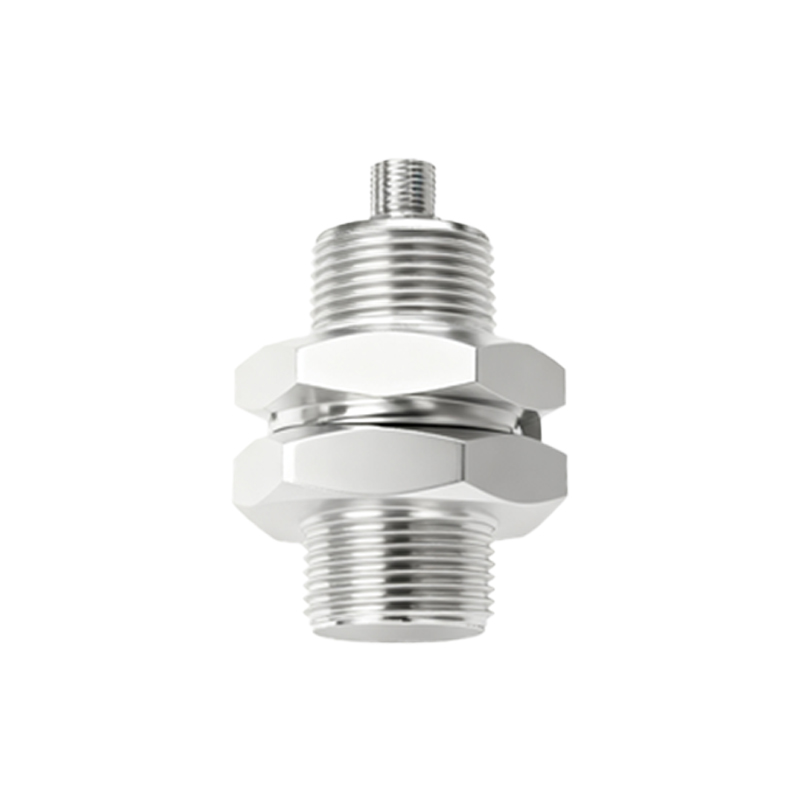
Proximity sensors, including inductive, capacitive, and photoelectric types, detect the presence or absence of objects without physical contact. Inductive sensors are ideal for metal objects, capacitive sensors for non-metallic materials, and photoelectric sensors for long-range detection. Selecting the appropriate sensor is the first step in designing a reliable counting system. Key parameters include sensing distance, response time, output type (PNP/NPN), and environmental resistance.
The core of any counting program lies in the PLC logic. A basic counting function involves using a counter instruction triggered by the sensor's output signal. When an object passes the sensor, the signal transitions from OFF to ON, incrementing the counter. However, simple edge-triggered counting can lead to errors due to sensor bounce, object vibration, or multiple detections of a single object. To mitigate these issues, programmers must implement debounce logic. A common method is to introduce a timer delay after the first detection, ignoring subsequent sensor activations within a set period (e.g., 100-500 ms). This ensures each object is counted only once, even if the sensor output fluctuates.
For high-speed applications, such as conveyor belt systems, scan time and response time become critical. PLC scan cycles must be fast enough to capture every sensor pulse. Using high-speed counter (HSC) modules is recommended for frequencies exceeding standard PLC scan rates. These dedicated hardware counters process signals independently, providing accurate counts at speeds up to several kilohertz. Additionally, integrating encoder feedback with proximity sensors can enhance precision in synchronized counting and positioning tasks.
Error handling is essential for maintaining system reliability. Programs should include routines to detect sensor failures, such as stuck-on or stuck-off conditions. Monitoring the sensor's signal duration can identify abnormalities; for instance, if the sensor remains ON for an unusually long time, it may indicate a jammed object or sensor malfunction. Implementing alarm triggers and automatic shutdown sequences prevents damage to equipment and ensures operator safety. Data logging is another valuable feature, allowing tracking of count totals, production rates, and error frequencies over time. This data aids in predictive maintenance and process optimization.
In multi-sensor setups, such as sorting or batching systems, coordination between sensors is vital. Using sequencers or state machine programming models helps manage complex interactions. For example, in a packaging line, one sensor may count items entering a box, while another verifies the box is full before sealing. Interlocking logic ensures counts are reset appropriately and prevents double-counting across stages. Communication protocols like Ethernet/IP or Profinet enable integration with higher-level systems for centralized monitoring and control.
Testing and validation are the final steps in program design. Simulating sensor inputs in a controlled environment allows debugging without disrupting production. Gradually increasing the object feed rate during testing helps identify speed-related issues. Once deployed, periodic calibration and maintenance of sensors—such as cleaning lenses or checking alignment—sustain long-term accuracy.
By combining proper sensor selection, robust PLC programming, and thorough testing, engineers can develop proximity sensor counting programs that enhance efficiency, reduce errors, and support scalable automation solutions.