In the demanding world of industrial automation, robotics, and heavy machinery, sensors are the unsung heroes. They provide the critical data that enables precise control, safety, and efficiency. Among these, the proximity sensor is fundamental, detecting the presence or absence of an object without physical contact. However, standard sensors often fail when the operating environment involves vibration, accidental impacts, or flying debris. This is where the specialized technology of impact resistant proximity sensors becomes indispensable. These robust devices are engineered not just to sense but to survive, ensuring continuous operation where others would falter.
The core challenge in harsh environments is not merely detection accuracy but sustained physical integrity. A typical sensor on a forklift, for instance, might be bumped against pallets or walls. In mining or construction equipment, sensors are exposed to rocks, dust, and constant jolts. A standard plastic or mild steel housing will crack or deform under such stress, leading to sensor failure, downtime, and costly repairs. Impact resistant proximity sensors address this by incorporating several key design philosophies.
First and foremost is the housing material and construction. Manufacturers utilize high-grade stainless steel (such as 316L for corrosive environments), ruggedized thermoplastics, or specially hardened alloys. These materials are chosen for their tensile strength and ability to absorb and dissipate kinetic energy from impacts. The design often includes reinforced corners, thicker walls, and a seamless, potted interior. Potting involves filling the sensor's internal cavity with a resin or epoxy compound. This process serves a dual purpose: it secures electronic components firmly in place, preventing damage from vibration (a major cause of internal wire breakage), and creates a complete seal against moisture, dust, and chemicals, often achieving IP67, IP68, or IP69K ratings.
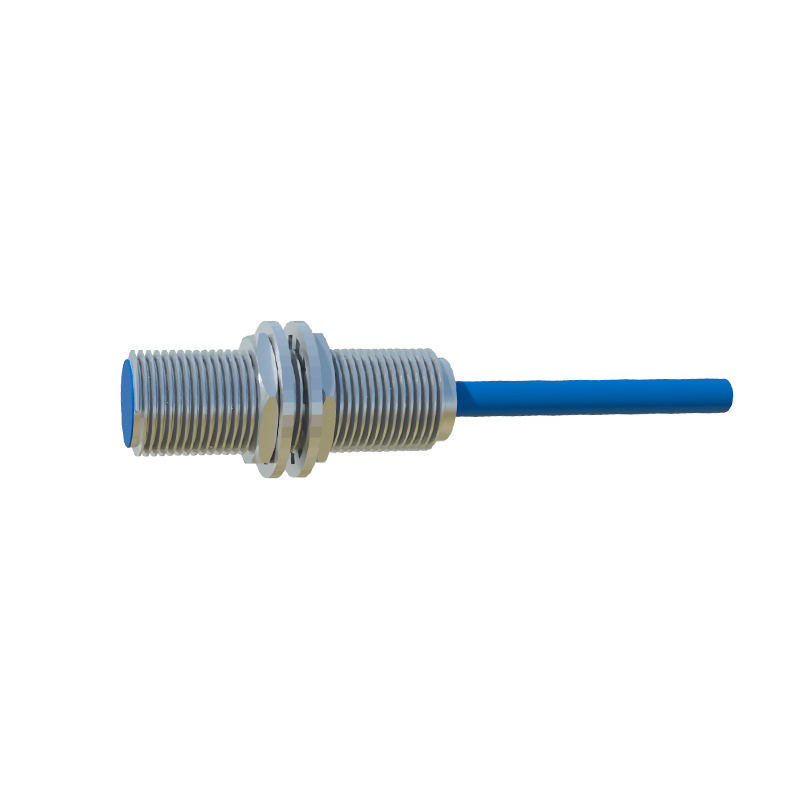
The sensing face, typically the most vulnerable point, receives special attention. For inductive sensors (which detect metals), a wear-resistant ceramic face is commonly employed. This ceramic cap can withstand direct scraping against rough metal surfaces without degrading the sensing performance. For capacitive or ultrasonic sensors, extremely tough polymer windows or metallic meshes protect the active element while allowing the sensing field to pass through.
Beyond brute strength, electronic resilience is equally critical. These sensors are built with circuitry designed to handle electrical noise commonly found in industrial settings, such as from variable frequency drives or welding equipment. They also feature wide operating voltage ranges and protection against short-circuits, reverse polarity, and voltage spikes. This electrical robustness ensures that a physical impact doesn't lead to an electrical cascade failure.
The applications for impact resistant proximity sensors are vast and varied. In automotive manufacturing, they are used on robotic welding arms and heavy stamping presses where misalignment could cause a collision. In material handling and logistics, they guide automated guided vehicles (AGVs) and protect the edges of automatic doors and dock levelers from impact damage. In agriculture and forestry machinery, they monitor the position of heavy implements and are exposed to branches, mud, and stones. In these scenarios, the sensor's durability directly translates to reduced maintenance intervals, higher system availability, and improved overall safety by ensuring safety interlocks remain functional.
Selecting the right impact resistant sensor requires careful consideration of the specific threat. Is the primary concern direct frontal impacts, lateral blows, or abrasive wear? The required sensing range, target material, and output type (PNP/NPN, analog, IO-Link) remain important, but now come with a durability specification. Look for metrics like IK ratings, which specify the degree of protection against external mechanical impacts. An IK08 rating, for example, indicates protection against 5 joules of impact energy (equivalent to a 1.7 kg mass dropped from 29 cm).
In conclusion, impact resistant proximity sensors represent a critical evolution in sensing technology, moving from a purely functional component to a durable system asset. They bridge the gap between the precise, non-contact detection needed for modern automation and the unforgiving realities of industrial and mobile applications. By investing in sensors engineered for durability, engineers and plant managers can build more resilient systems, minimize unplanned downtime, and achieve a higher return on investment, proving that in tough environments, the strongest sense is common sense.