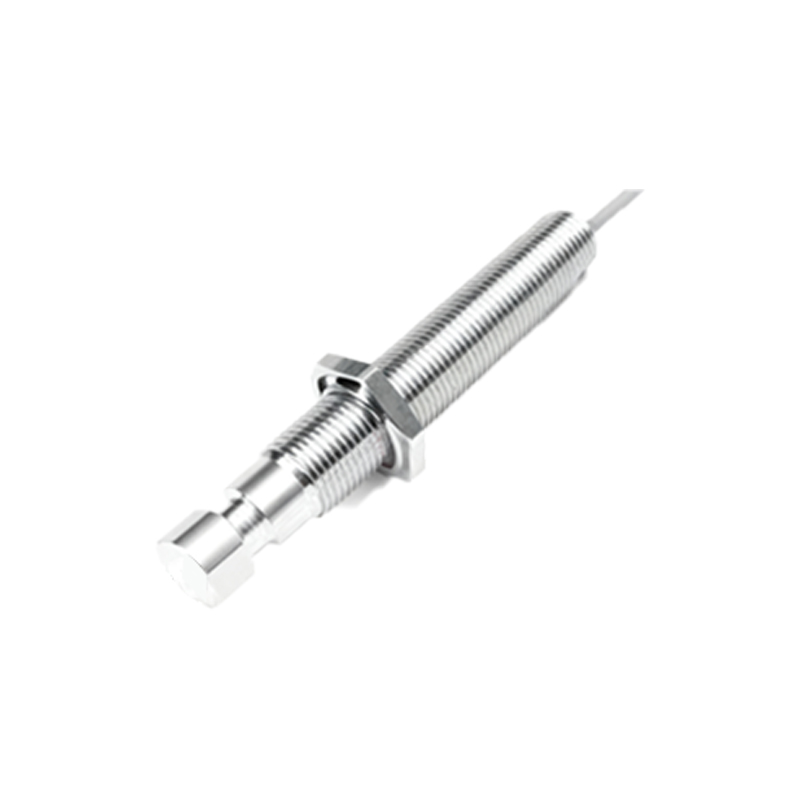
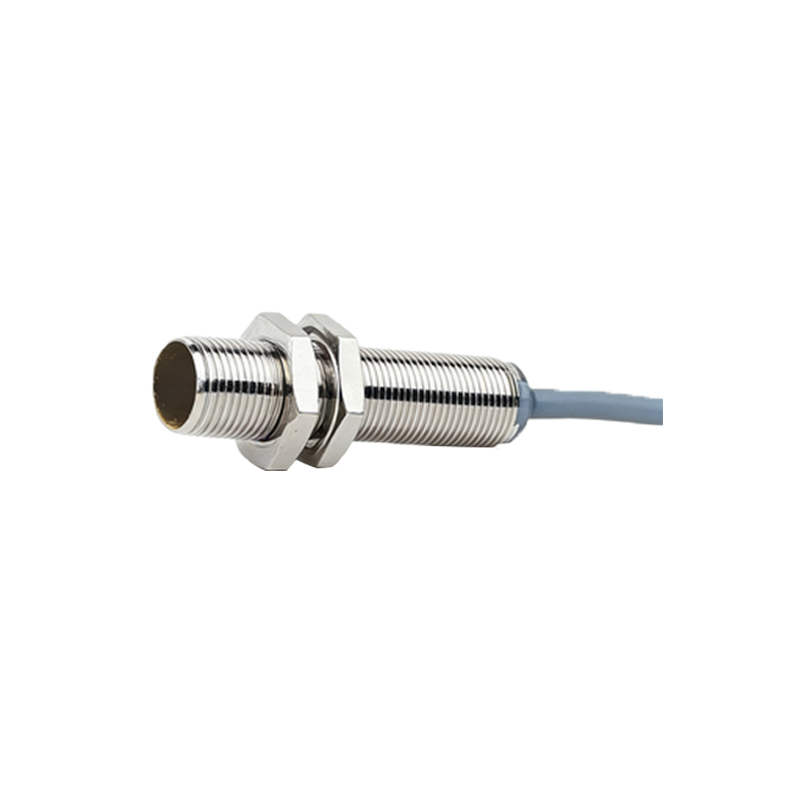
Inductive proximity sensors are stalwarts of industrial automation, providing non-contact detection of metallic objects. At the heart of their operation lies a fundamental principle: electromagnetic induction. These sensors generate an oscillating electromagnetic field from a coil within their sensing face. When a metallic object enters this field, eddy currents are induced on the object's surface. These eddy currents draw energy from the sensor's oscillator circuit, causing a measurable change in amplitude. This change is detected by the sensor's circuitry, which then triggers a solid-state output signal.
While many metals can cause this effect, the sensing performance is profoundly influenced by the target material's properties, particularly its ferrous nature. Ferrous metals, primarily iron and steel alloys containing iron, are the most commonly detected targets. Their high magnetic permeability is the key differentiator. This property allows the electromagnetic field to penetrate the material more easily and induces stronger eddy currents compared to non-ferrous metals like aluminum, brass, or copper. Consequently, for a sensor of identical size and technology, the nominal sensing distance (Sn) is specified for a standard target of mild steel, typically a 1mm thick square of side length equal to the sensor's face diameter or three times the nominal sensing distance, whichever is greater.
The "sensing factor" is a critical parameter that quantifies this material dependency. It is defined as the ratio of the achievable sensing distance for a specific material to the nominal sensing distance for mild steel. For standard carbon steel (the reference with a factor of 1.0), the sensor achieves its full rated range. For stainless steel (which has lower permeability), the factor typically ranges from 0.6 to 0.9, reducing the effective range. For non-ferrous metals like aluminum, the factor is even lower, often between 0.3 and 0.5. This reduction occurs because non-ferrous metals have higher electrical conductivity but much lower permeability, leading to a different interaction with the electromagnetic field.
The practical implications are significant for system design and reliability. When detecting ferrous targets, engineers can rely on the sensor's published specifications with confidence. The strong, consistent signal allows for robust detection even in challenging environments with vibration or minor misalignment. The high permeability of ferrous metals also provides a degree of immunity to thin non-conductive coatings like paint, oil, or water film, as the field can penetrate these to reach the underlying metal.
However, challenges arise when the application involves different materials or mixed targets. If a system is calibrated for a steel part and an aluminum part of the same physical size passes by, the sensor may fail to detect it due to the reduced sensing factor, potentially causing a fault. Therefore, precise knowledge of the target material is essential for selecting the correct sensor and determining the required installation distance. In applications with varying target materials, sensors with teach-in functionality or extended range models may be employed to ensure reliable operation across all expected targets.
Beyond material composition, other factors related to the ferrous target affect performance. The target size must meet or exceed the standard test piece dimensions for the full sensing distance. A target that is too small will not disturb the field sufficiently. Target shape also plays a role; flat surfaces parallel to the sensor face are optimal. Angled or rounded surfaces effectively reduce the target area, decreasing the sensing range. Furthermore, the presence of other ferrous metal in the sensor's background or mounting arrangement can influence its magnetic field. Manufacturers specify minimum mounting distances in ferrous and non-ferrous materials to prevent this "shielding" or "shadowing" effect.
Modern inductive sensors are engineered to be highly resilient. Their all-metal detection principle makes them immune to dust, dirt, and most ambient light. They are workhorses in machine tools for tool positioning, in material handling for part counting and presence verification, and in automotive assembly for robotic guidance. The reliable detection of ferrous metals remains one of their primary and most robust functions.
In conclusion, the interaction between an inductive proximity sensor's electromagnetic field and a ferrous metal target is a finely tuned physical process. The magnetic permeability of iron and steel makes them ideal partners for this technology, enabling longer, more stable, and more reliable sensing distances. A deep understanding of the sensing factor and the influence of target material, size, and geometry is not merely academic; it is a fundamental requirement for designing efficient, fail-safe automated systems. By respecting these principles, engineers can leverage the full potential of inductive sensing to create more intelligent and reliable industrial applications.