Laser inductive sensors are pivotal components in modern industrial automation, offering high precision and reliability for a wide range of applications. These devices operate by emitting a focused laser beam towards a target object. When the beam interacts with the object, it reflects back to the sensor's receiver. The sensor then processes this reflected signal to detect the presence, position, distance, or even specific characteristics of the object. Unlike traditional inductive sensors that rely on electromagnetic fields to detect metallic objects, laser sensors utilize optical principles, allowing them to work with various materials including metals, plastics, glass, and liquids. This versatility makes them indispensable in complex manufacturing environments.
The core technology behind laser inductive sensors involves time-of-flight measurement or triangulation methods for distance sensing, and modulation techniques to enhance accuracy and reduce interference from ambient light. Key performance parameters include sensing range, which can vary from a few millimeters to several meters; resolution, often in micrometer levels for precise tasks; response time, typically in microseconds enabling high-speed operations; and environmental robustness, with many models featuring IP67 or higher ratings for resistance to dust, moisture, and vibrations. These attributes ensure consistent performance in demanding conditions such as automotive assembly lines, packaging machinery, robotics, and semiconductor fabrication.
In practical applications, laser inductive sensors excel in tasks like object detection on conveyor belts, where they identify missing components or verify orientations. They are crucial for precise positioning in robotic arms, ensuring accurate pick-and-place operations. In quality control, they measure dimensions, thickness, or surface defects with non-contact methods, preventing product damage. Additionally, in logistics, they facilitate barcode reading and sorting processes. The integration of these sensors with programmable logic controllers (PLCs) and industrial networks like IO-Link enhances system intelligence, allowing for real-time data monitoring, predictive maintenance, and adaptive control.
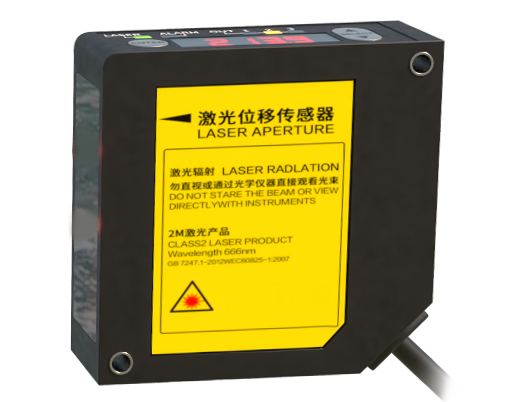
Despite their advantages, selecting the right laser sensor requires careful consideration. Factors such as target material properties (e.g., color, reflectivity), environmental conditions (e.g., temperature extremes, contaminants), and required accuracy must be evaluated. For instance, dark or transparent materials may absorb or scatter laser light, necessitating sensors with adjustable sensitivity or specialized wavelengths. Regular calibration and maintenance are also essential to sustain long-term reliability, as lens contamination or misalignment can degrade performance.
Looking ahead, advancements in laser technology and miniaturization are driving the development of smarter, more compact sensors with enhanced features like integrated analytics and wireless connectivity. As Industry 4.0 evolves, laser inductive sensors will play an increasingly vital role in enabling flexible, efficient, and data-driven manufacturing systems. By understanding their principles and applications, engineers can leverage these tools to optimize processes, improve safety, and reduce operational costs, ultimately contributing to higher productivity and innovation in the electrical and automation sectors.