In the intricate world of industrial automation, where precision and reliability are non-negotiable, the M8 inductive proximity sensor stands as a testament to engineering efficiency. This compact cylindrical device, defined by its 8mm threaded barrel, is a cornerstone in countless applications, from packaging machinery to robotic cells. Its fundamental operating principle is elegantly simple yet profoundly effective. The sensor generates a high-frequency electromagnetic field from its active face. When a metallic target—be it steel, aluminum, copper, or brass—enters this detection field, eddy currents are induced within the target. This process dampens the oscillation within the sensor's internal LC tank circuit. The embedded electronics meticulously monitor this damping, triggering a solid-state switching output precisely when the predetermined threshold is reached. This non-contact detection method eliminates mechanical wear, ensuring a remarkably long operational lifespan measured in millions of cycles.
The selection of an M8 sensor is far from a one-size-fits-all decision. A critical specification is the sensing distance, typically standardized. For a standard M8 inductive sensor, the nominal sensing range (Sn) is often 1.5mm or 2mm for mild steel. Engineers must carefully consider the reduction factor when detecting different metals; for instance, the effective range for stainless steel or aluminum is significantly less. Another pivotal choice is between shielded (flush-mountable) and unshielded (non-flush) designs. Shielded M8 sensors can be embedded in metal without affecting their performance, offering neat installation and protection. Unshielded variants provide a slightly longer sensing range but require a non-metallic surround. Output configuration is equally vital, with NPN (sinking) and PNP (sourcing) transistor outputs being the industry standards, alongside Normally Open (NO) or Normally Closed (NC) logic. The rise of IO-Link technology has further transformed the humble M8 into a smart sensor, enabling dynamic parameter setting, advanced diagnostics, and process data reporting directly onto the network.
The advantages of deploying M8 inductive sensors are manifold. Their miniature form factor allows installation in spaces where larger sensors would be impossible, enabling more compact and sophisticated machine designs. The hermetic sealing, often meeting IP67 and IP69K ratings, guarantees robust performance in environments plagued by coolants, oils, dust, and high-pressure washdowns. With switching frequencies often exceeding 1 kHz, they are perfectly suited for high-speed counting and positioning tasks. Furthermore, their inherent immunity to ambient light, sound, and most non-metallic materials makes them exceptionally reliable in chaotic industrial settings.
However, optimal performance hinges on correct application. A common pitfall is neglecting the installation geometry. Maintaining the recommended lateral and axial spacing between multiple sensors is crucial to prevent mutual interference. The sensor must also be rated for the specific metal type and target size; a tiny screw head might not be detectable at the full nominal range. For demanding applications involving extreme temperatures, weld field immunity (resistance to spurious triggering from welding currents), or exposure to aggressive chemicals, specialized M8 variants are essential.
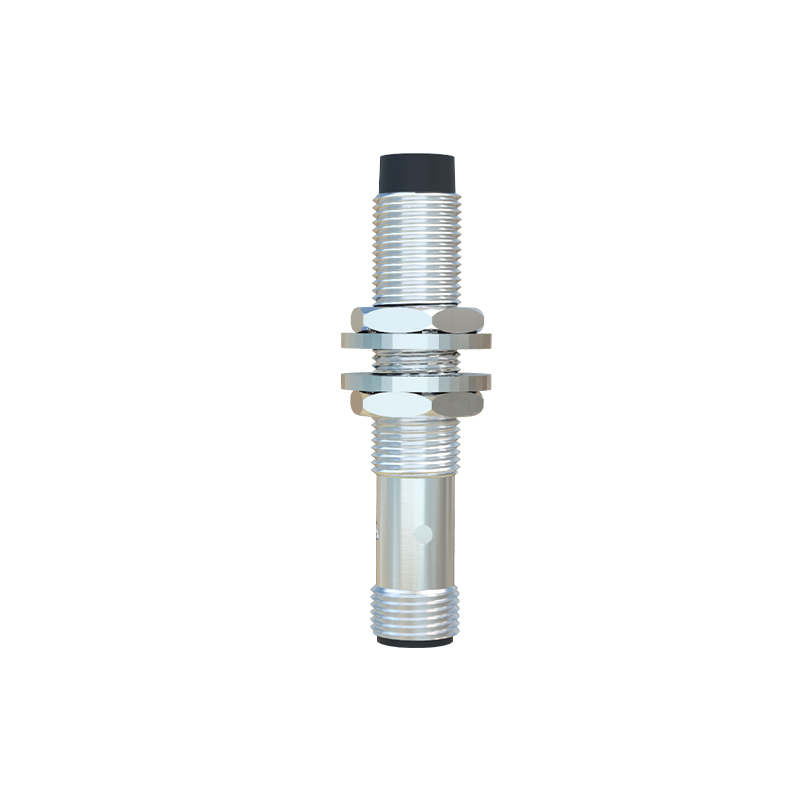
Looking forward, the evolution of the M8 sensor continues. Integration with advanced industrial networks via IO-Link is becoming commonplace, paving the way for predictive maintenance and tighter integration into Industry 4.0 frameworks. Manufacturers are also pushing the boundaries on sensing distances and developing models with enhanced resistance to electromagnetic interference. In essence, the M8 inductive proximity sensor, a paragon of miniaturized reliability, remains an indispensable component. Its continued innovation ensures it will keep silently and reliably enabling the automated systems that form the backbone of modern manufacturing, proving that great capability indeed comes in small packages.