In the realm of industrial automation, the demand for compact, reliable, and high-performance sensing solutions continues to grow. Among the various technologies available, inductive proximity sensors stand out for their robustness and non-contact detection capabilities. Specifically, 8mm inductive proximity sensors have become a cornerstone in numerous applications, offering an optimal balance between size, sensing range, and environmental resilience. This article delves into the technical aspects, operational principles, and practical applications of these sensors, providing insights for engineers and system integrators.
Inductive proximity sensors operate on the principle of electromagnetic induction. The sensor generates an oscillating electromagnetic field from its active face. When a metallic object enters this field, eddy currents are induced on the surface of the target, causing a change in the oscillation amplitude. This change is detected by the sensor's internal circuitry, which subsequently triggers a switching output. The 8mm designation refers to the diameter of the sensing face, which directly influences the sensor's physical footprint and its nominal sensing distance. Typically, an 8mm inductive sensor offers a nominal sensing range (Sn) of up to 2mm for ferrous metals like mild steel, and approximately 1.2mm for non-ferrous metals such as aluminum or copper. This compact size allows for installation in space-constrained environments without compromising detection reliability.
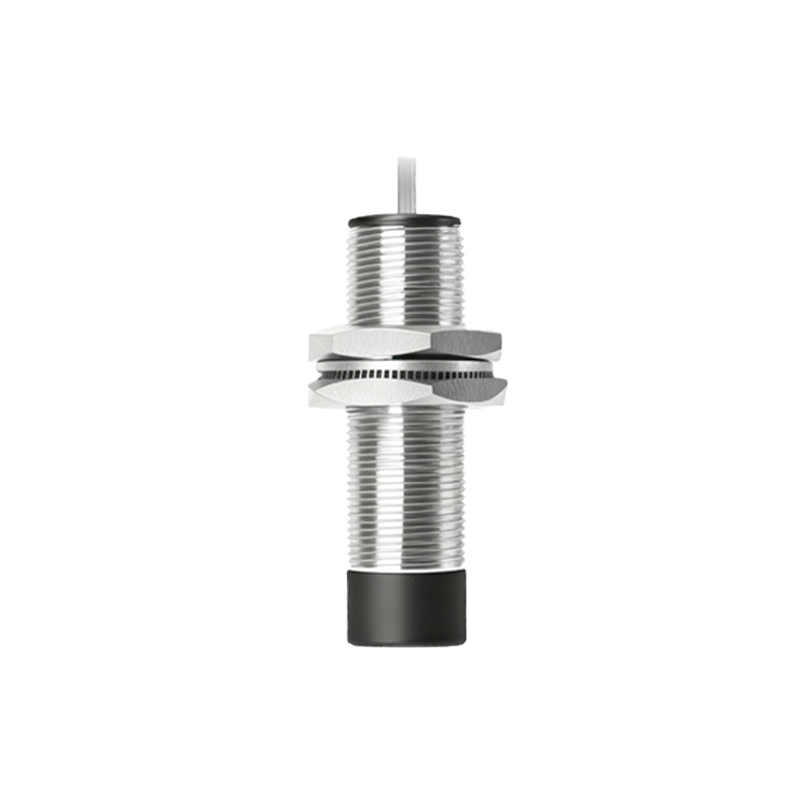
Key technical characteristics define the performance of 8mm inductive proximity sensors. Firstly, their housing is usually constructed from nickel-plated brass, stainless steel, or PBT plastic, ensuring high resistance to mechanical stress, oils, coolants, and industrial chemicals. This makes them suitable for harsh manufacturing environments, including machine tools, assembly lines, and robotic cells. Secondly, these sensors are available in both shielded (flush-mountable) and unshielded (non-flush-mountable) variants. Shielded sensors can be embedded in metal without affecting their sensing field, ideal for precise positioning tasks. Unshielded types offer a slightly longer sensing range but require clearance from surrounding metal. The output configurations commonly include NPN (sinking) and PNP (sourcing) transistor outputs, as well as analog (4-20mA or 0-10V) versions for distance-proportional measurement, providing flexibility for integration with PLCs (Programmable Logic Controllers) and other control systems.
A critical parameter is the switching frequency, which denotes how many detection cycles the sensor can perform per second. High-end 8mm models can achieve frequencies up to 5 kHz, enabling them to detect fast-moving objects on high-speed production lines. Additionally, features like short-circuit protection, reverse polarity protection, and immunity to electromagnetic interference (EMI) are standard, enhancing system durability and reducing downtime. The operating voltage range typically spans from 10-30V DC, aligning with common industrial power supplies.
The application spectrum for 8mm inductive proximity sensors is vast. In automotive manufacturing, they are deployed for part presence verification, such as detecting pistons in engine blocks or confirming the position of gear teeth. In packaging machinery, they monitor the presence of metallic caps or foil seals on containers. Within robotic arms, these sensors provide end-of-arm tooling (EOAT) feedback, confirming gripper closure or part acquisition. They are also integral in metal stamping presses for die protection, detecting misaligned sheets before a stamping cycle initiates, thereby preventing costly damage. Their small diameter allows them to be integrated directly into fixtures, molds, and custom machinery where larger sensors would be impractical.
When selecting an 8mm inductive proximity sensor, engineers must consider several factors. The target material is paramount, as the sensing distance varies significantly between ferrous and non-ferrous metals. The required sensing distance should be chosen with a safety margin, typically 70-80% of the nominal range, to account for temperature drift and part tolerances. Environmental conditions, such as exposure to welding spatter, cutting fluids, or extreme temperatures, dictate the required ingress protection (IP) rating, with IP67 being common for washdown or dusty areas. Finally, the electrical interface must match the control system's input module specifications to ensure seamless communication.
Installation and maintenance practices significantly impact sensor longevity. Proper alignment between the sensor face and the target is crucial for consistent operation. Maintaining the recommended clearance from adjacent metal surfaces prevents false triggering. Regular cleaning of the sensing face from debris or buildup ensures optimal performance. While these sensors are known for their solid-state reliability with no moving parts, periodic functional checks as part of preventive maintenance routines are advisable.
In conclusion, the 8mm inductive proximity sensor exemplifies engineering precision tailored for modern industrial challenges. Its compact form factor, coupled with robust construction and versatile output options, makes it an indispensable component for automation engineers seeking to enhance machine efficiency, safety, and reliability. As Industry 4.0 and smart factory concepts evolve