In the realm of industrial automation and control systems, proximity sensors stand as indispensable components, enabling non-contact detection of objects with remarkable precision and reliability. Their functionality is pivotal in applications ranging from object counting and position verification to machine safety and robotic guidance. But what is the fundamental principle that empowers these devices to "sense" the presence of an object without physical touch? The answer lies in the clever application of electromagnetic fields and electronic oscillation.
At its core, a proximity sensor is a device that detects the presence or absence of a target object within a specified sensing range, without any physical contact. It achieves this by generating an electromagnetic field or beam and monitoring changes in that field caused by the approach of a target. The most common types are inductive, capacitive, and photoelectric sensors, each operating on a distinct physical principle tailored for different materials and environments.
The inductive proximity sensor is the workhorse for detecting metallic objects. Its principle of operation is based on electromagnetic induction and the use of a high-frequency oscillator. The key components include an oscillator coil that generates a high-frequency alternating magnetic field at the sensor's active face, a signal evaluator, and an output switching circuit. When no metal target is present, the oscillator operates at a constant amplitude. As a ferrous or non-ferrous metal object enters this oscillating magnetic field, eddy currents are induced on the surface of the metal. These eddy currents draw energy from the oscillator coil, causing a measurable reduction in the amplitude of oscillation. The sensor's internal circuitry detects this amplitude damping and triggers a change in the output state (e.g., from OFF to ON). The point at which this switch occurs is defined as the sensor's nominal sensing distance. Inductive sensors are highly robust, immune to environmental factors like dust or oil, and are ideal for detecting metal parts in machinery.
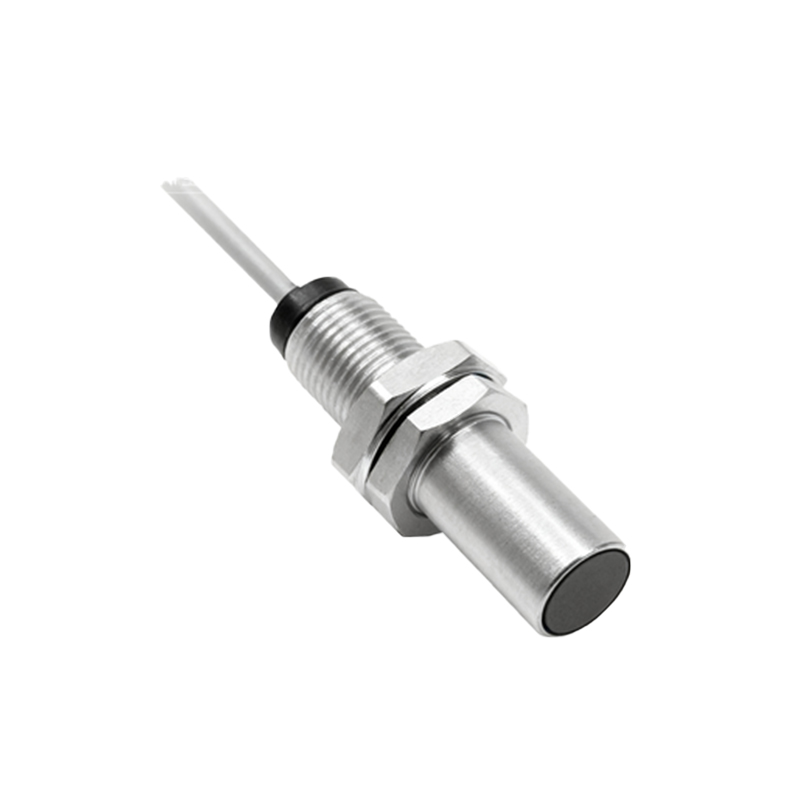
For non-metallic targets such as plastics, wood, liquids, or granular materials, the capacitive proximity sensor is the preferred choice. Its working principle resembles that of an open capacitor. The sensor's active face forms one plate of a capacitor, with the target object (if conductive) or a ground reference forming the other plate. An oscillator circuit charges this capacitive system. When a target object approaches the sensing face, it alters the dielectric constant of the surrounding space and increases the capacitance of the system. This change in capacitance affects the oscillator's amplitude. Once the amplitude reaches a predetermined threshold, the output circuit switches state. Even for non-conductive materials, the sensor can detect them because the material's dielectric constant differs from that of air, still causing a measurable change in capacitance. This makes capacitive sensors versatile for level detection of liquids or powders.
While not always classified strictly under "proximity" sensors in some taxonomies, photoelectric sensors perform a similar non-contact detection function using light. They operate by emitting a beam of light (visible red, infrared, or laser) from a transmitter and detecting its reflection or interruption. In the diffuse reflective mode, the sensor detects light reflected directly from the target object. The key principle here is the triangulation method; the receiver only detects light when the target is at a specific distance, allowing for precise proximity sensing. These sensors can detect objects of almost any material, provided they affect the light beam.
The output from these sensors is typically a discrete on/off signal, provided via solid-state switches (like NPN or PNP transistors) or relay contacts. This signal is fed into a Programmable Logic Controller (PLC) or other control unit to initiate actions such as stopping a conveyor, counting items, or activating a robotic arm.
Understanding the principle behind proximity sensors is crucial for correct selection and application. Factors such as target material, required sensing distance, environmental conditions (temperature, contaminants), and output type must be carefully considered. For instance, an inductive sensor will not detect a plastic bottle, just as a standard capacitive sensor may be falsely triggered by humidity variations. The hallmark of a well-chosen sensor is its seamless and reliable operation, contributing to enhanced productivity, safety, and automation efficiency. By harnessing fundamental physics—electromagnetic induction, capacitance variation, and light modulation—proximity sensors provide the essential "eyes" and "touch" for modern automated systems, all without ever making contact.