In the rapidly evolving landscape of automotive technology, laser-based distance measurement sensors have emerged as a cornerstone for advanced driver-assistance systems (ADAS) and autonomous driving platforms. These sensors, often referred to as LiDAR (Light Detection and Ranging) or laser rangefinders in vehicular applications, utilize pulsed laser light to accurately measure distances to surrounding objects. The fundamental principle involves emitting laser pulses and calculating the time-of-flight (ToF) for the reflected signals, generating precise, real-time three-dimensional maps of the vehicle's environment.
Modern automotive LiDAR systems operate primarily in the near-infrared spectrum, typically around 905nm or 1550nm wavelengths. The choice of wavelength is critical; 1550nm lasers are considered safer for human eyes at higher power levels, allowing for longer detection ranges—often exceeding 200 meters under optimal conditions. The sensor's performance is quantified by key parameters such as angular resolution, frame rate, field of view (often up to 120° horizontally), and range accuracy, which can achieve centimeter-level precision.
The integration of these sensors into vehicles supports critical functions like adaptive cruise control, automatic emergency braking, lane-keeping assistance, and pedestrian detection. Unlike radar, which may struggle with fine spatial resolution, or cameras, which are limited by lighting conditions, laser sensors provide high-resolution depth information regardless of ambient light. However, challenges persist, including performance degradation in adverse weather conditions like heavy fog or rain, where scattering of laser pulses can reduce effective range.
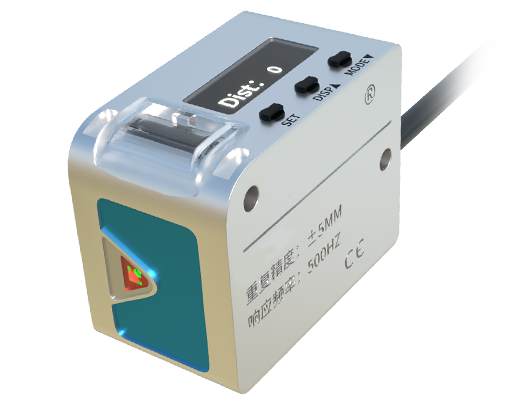
Recent technological strides are addressing these limitations. Solid-state LiDAR, which uses no moving mechanical parts, is gaining traction for its enhanced durability, smaller form factor, and potential for lower cost at high-volume production. Innovations like beam-steering via optical phased arrays and the development of Frequency-Modulated Continuous Wave (FMCW) LiDAR are improving measurement accuracy and velocity detection directly. Furthermore, sensor fusion—combining LiDAR data with radar, cameras, and ultrasonic sensors—is becoming standard to create robust, redundant perception systems.
From an engineering perspective, the design of these sensors involves intricate considerations. The laser emitter must balance power output with eye safety regulations (governed by standards like IEC 60825). The receiver, typically an avalanche photodiode (APD) or silicon photomultiplier (SiPM), must be highly sensitive to detect weak return signals. Signal processing algorithms, often leveraging specialized integrated circuits, filter noise and interpret the vast point cloud data. Power consumption and thermal management are also paramount, especially for systems operating continuously.
The future trajectory points toward higher levels of integration and intelligence. Embedding processing capabilities within the sensor module itself (edge computing) can reduce latency and data bandwidth needs. As the automotive industry progresses toward higher levels of autonomy (SAE Level 3 and above), the demand for reliable, scalable, and cost-effective laser distance sensors will only intensify. Their role is indispensable in creating the precise environmental models that allow vehicles to navigate complex, dynamic scenarios safely and efficiently.
In summary, laser vehicle distance sensors represent a sophisticated fusion of optics, electronics, and software. They are pivotal in translating raw environmental data into actionable intelligence for vehicle control systems, forming a critical sensory layer in the architecture of modern intelligent transportation. Continuous innovation in this field is essential to overcome current limitations and unlock the full potential of automated driving.