In industrial automation and control systems, proximity sensors are indispensable components for detecting the presence or absence of an object without physical contact. Among various types, 4-wire proximity sensors are widely favored for their versatility, offering both normally open (NO) and normally closed (NC) output configurations in a single device. This article delves into the wiring methods, operational principles, and best practices for installing and troubleshooting 4-wire proximity sensors, ensuring optimal performance in diverse applications.
A 4-wire proximity sensor typically comprises two power supply wires and two output wires. The power supply wires connect to a direct current (DC) source, commonly 10-30 VDC, which energizes the sensor's internal oscillator and evaluation circuitry. The output wires provide a switched signal based on the detection state, with one wire for the NO contact and another for the NC contact. This dual-output design allows flexibility in control logic, enabling users to select the appropriate output type for their specific system requirements, such as safety interlocks or process monitoring.
The wiring process begins with identifying the sensor's terminals, usually labeled as brown (positive), blue (negative), black (NO output), and white (NC output). To wire the sensor, first connect the brown wire to the positive terminal of the DC power supply and the blue wire to the negative terminal. This establishes the necessary power for the sensor to operate. Next, connect the black wire to the load device, such as a programmable logic controller (PLC) input or a relay coil, and link the other side of the load to the positive supply. Similarly, the white wire can be connected to another load if the NC function is required, with the load's other terminal tied to the positive supply. It is crucial to ensure proper polarity and voltage ratings to prevent damage to the sensor or connected equipment.
Understanding the sensor's output behavior is key to effective integration. In the absence of a target, the NO output (black wire) remains open, meaning no current flows through it, while the NC output (white wire) is closed, allowing current to pass. When a target enters the sensing range, the NO output closes, completing the circuit and activating the load, whereas the NC output opens, interrupting the current flow. This complementary action facilitates fail-safe designs, where a broken wire or power loss can trigger an alarm via the NC circuit. For instance, in conveyor systems, the NO output might start a motor when an object is detected, while the NC output could halt the system if an obstruction is sensed, enhancing safety and reliability.
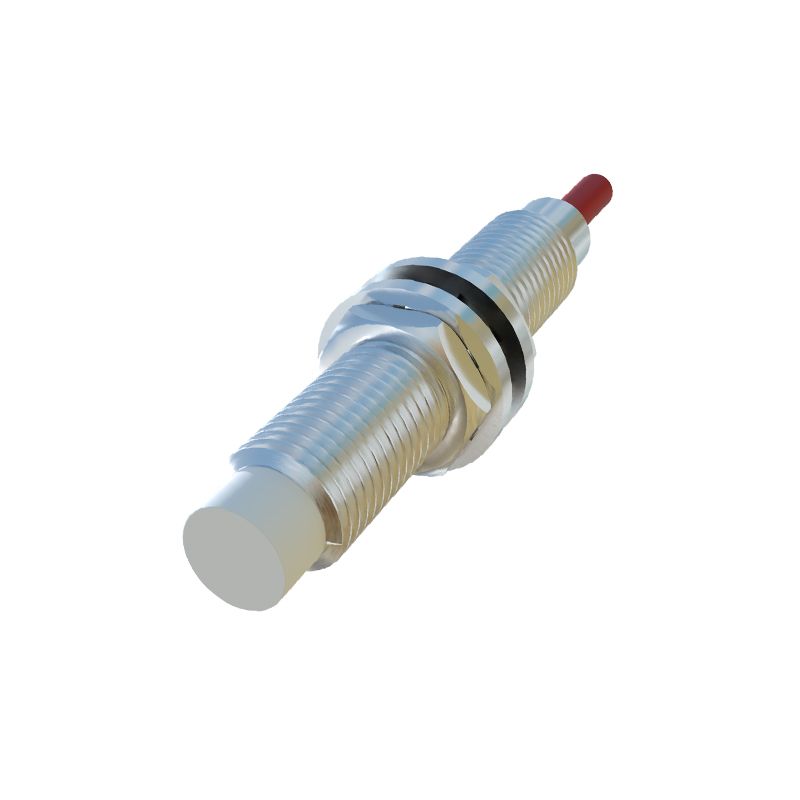
Installation best practices include mounting the sensor securely to minimize vibration effects, maintaining the recommended sensing distance to avoid false triggers, and shielding the wiring from electromagnetic interference (EMI) in noisy industrial environments. Use twisted-pair cables for the output wires to reduce noise pickup, and consider adding surge protection devices if the sensor is exposed to voltage spikes. Regular maintenance, such as cleaning the sensor face to prevent contamination from dust or oil, ensures long-term accuracy and prevents downtime.
Troubleshooting common issues often involves checking the power supply voltage with a multimeter to confirm it falls within the sensor's specified range. If the sensor fails to detect targets, verify the wiring connections for loose or corroded terminals and inspect the sensing area for obstructions. For erratic behavior, test the output signals using an oscilloscope to identify noise or switching anomalies. Additionally, consult the manufacturer's datasheet for diagnostic LEDs or specific error codes that aid in pinpointing faults.
In summary, 4-wire proximity sensors offer a robust solution for non-contact detection with flexible output options. By following correct wiring techniques, adhering to installation guidelines, and implementing routine checks, engineers can leverage these sensors to enhance automation efficiency and system safety. Whether in manufacturing, packaging, or material handling, mastering the wiring methods for 4-wire proximity sensors is essential for achieving reliable and precise control in modern industrial setups.