In the realm of industrial automation and smart systems, proximity sensors stand as fundamental components, enabling non-contact detection and facilitating countless applications from assembly lines to consumer electronics. A well-conceived conceptual design is paramount to developing a sensor that is not only functional but also reliable, efficient, and cost-effective. This guide outlines a systematic approach to the conceptual design of a proximity sensor, tailored for electrical engineering professionals.
The initial phase of any sensor design is a rigorous definition of requirements. This goes beyond simply stating the need for "object detection." Key parameters must be quantified: the required sensing distance (nominal and maximum), the physical nature of the target (metal, plastic, liquid), the required output type (digital NPN/PNP, analog 0-10V, IO-Link), the operating voltage range (commonly 10-30V DC), and the environmental conditions (temperature range, IP rating for dust/water ingress, resistance to chemicals or oils). Furthermore, considerations for housing material (e.g., stainless steel for washdown environments, PBT for general use), mounting style (flush, non-flush, cylindrical, rectangular), and connection method (cable or connector) are crucial. This specification document becomes the blueprint against which all design decisions are measured.
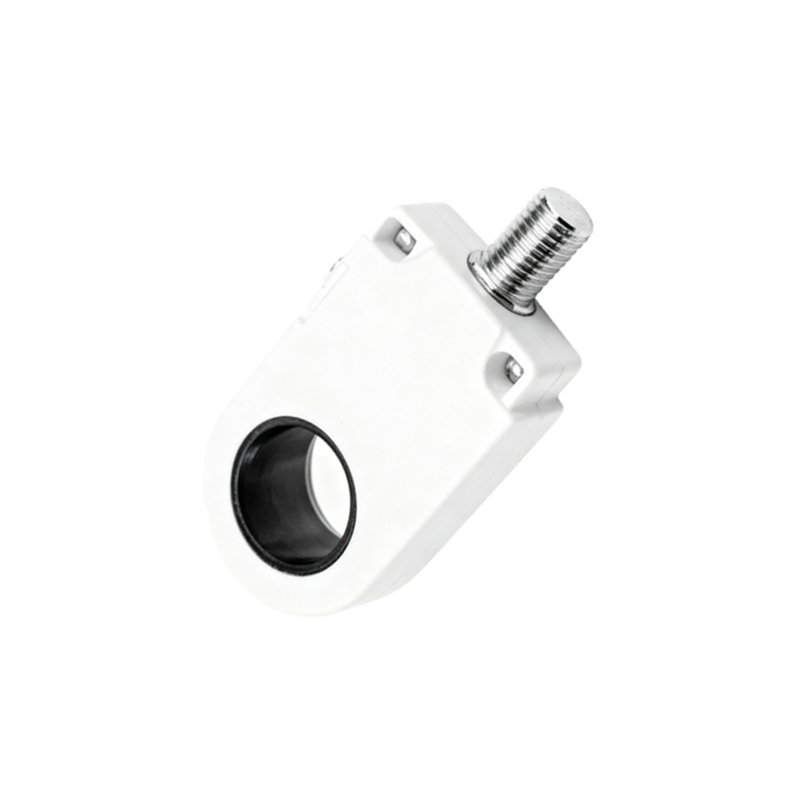
Selecting the core sensing technology is the heart of the conceptual design. The three primary types for industrial proximity sensors are Inductive, Capacitive, and Ultrasonic. Inductive sensors are the workhorses for detecting metallic objects. Their operation is based on generating an electromagnetic field. When a metal target enters this field, it induces eddy currents, which dampen the oscillation in the sensor's LC tank circuit, triggering a state change. The design focus here is on the coil geometry, oscillator frequency (typically 100 kHz to 1 MHz), and the evaluation circuit to ensure stability and noise immunity. Sensing range is influenced by the coil size and the target's material (ferrous metals like steel are detected at greater distances than non-ferrous metals like aluminum or copper).
For non-metallic targets—liquids, plastics, wood, or granular materials—capacitive sensors are the appropriate choice. They function by generating an electrostatic field. Any object with a dielectric constant different from air alters the capacitance of the sensor's electrode system, which is detected by a sensitive circuit. The conceptual challenge lies in shielding the sensor from unwanted influences (like a user's hand) while allowing the field to penetrate to the intended target. Electrode design and sophisticated signal processing to distinguish the target from background environmental changes are critical.

Ultrasonic sensors offer the longest sensing ranges and are excellent for detecting objects regardless of material, color, or transparency. They operate on the time-of-flight principle: emitting a high-frequency sound pulse and measuring the time for the echo to return. The design complexities involve the piezoelectric transducer for generating/receiving sound, the acoustic housing design (horn), and advanced algorithms for echo processing to filter out background noise and handle varying surface angles. They are ideal for level detection or presence sensing at distances of several meters.
Once the technology is chosen, the electronic architecture must be conceptualized. A block diagram typically includes: a power supply regulation unit to handle wide input voltages; the core oscillator/driver for generating the sensing field; a signal conditioning stage (amplifiers, filters) to process the weak return signal; a microcontroller or application-specific integrated circuit (ASIC) for evaluation, implementing hysteresis to prevent output chatter, and providing diagnostics; and finally, the output stage (solid-state switch for digital, DAC for analog). Incorporating features like short-circuit protection, reverse polarity protection, and LED status indicators should be integral to the concept.
The mechanical design is inseparable from the electrical. The housing must protect the internal electronics while optimally shaping the sensing field. For inductive sensors, a ferrite core is often used to direct and concentrate the electromagnetic field. The choice between flush and non-flush mounting significantly affects the sensing characteristics; non-flush sensors have a longer range but require more installation space. Material selection for the sensing face (often PBT or PPS) must consider wear resistance and temperature stability.
Finally, no conceptual design is complete without considering manufacturability and testability. The design should facilitate automated assembly and calibration. Test points and procedures must be conceived to validate key parameters like switching point accuracy, repeatability, temperature drift, and EMC compliance (per standards like IEC 60947-5-2). A robust design for electromagnetic compatibility (EMC), including strategies for suppressing conducted and radiated emissions while maintaining immunity to interference, is a non-negotiable aspect of the modern sensor concept.
In conclusion, a successful proximity sensor concept is a holistic fusion of precise requirement analysis, appropriate technology selection, thoughtful electronic and mechanical design, and upfront planning for production and compliance. By meticulously addressing each of these