In the rapidly evolving landscape of automotive technology, vehicle-mounted Light Detection and Ranging (LiDAR) sensors have emerged as a cornerstone for advanced speed measurement and safety systems. Unlike traditional speed sensors that rely on wheel rotation or radar-based systems, LiDAR utilizes pulsed laser light to create high-resolution, three-dimensional maps of the surrounding environment in real-time. By measuring the time it takes for each laser pulse to reflect off objects and return to the sensor, LiDAR calculates distances with extraordinary precision—often within centimeters. This distance data, captured at rates exceeding hundreds of thousands of points per second, is then processed through sophisticated algorithms to determine not only the relative speed of the vehicle itself but also the velocity vectors of nearby objects, such as other cars, pedestrians, or cyclists.
The operational principle hinges on the Doppler effect and time-of-flight calculations. While some specialized LiDAR systems can directly measure speed using frequency shifts in the reflected light (coherent or FMCW LiDAR), most automotive-grade systems rely on sequential point-cloud comparisons. By analyzing the positional change of specific object features between successive laser scans, the sensor's processing unit derives accurate speed data. This capability is integral to Advanced Driver-Assistance Systems (ADAS) and autonomous driving platforms. For instance, Adaptive Cruise Control (ACC) uses LiDAR-derived speed and distance metrics to maintain a safe following interval, while Automatic Emergency Braking (AEB) systems leverage this data to preemptively assess collision risks.
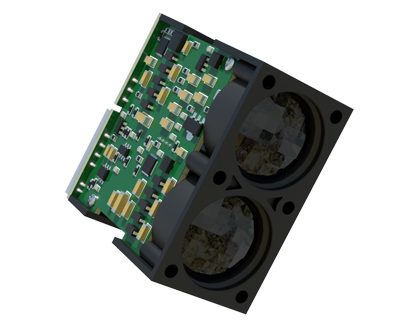
The advantages of LiDAR for speed measurement are manifold. Its exceptional angular resolution and accuracy function effectively in diverse lighting and weather conditions, although heavy rain or fog can attenuate laser signals. LiDAR provides a much richer data set compared to radar, capturing intricate contours of objects, which allows for better classification (e.g., distinguishing a pedestrian from a street sign). This contextual awareness is vital for predictive algorithms in self-driving cars. Furthermore, the integration of LiDAR with other sensors like cameras, radar, and inertial measurement units (IMUs) through sensor fusion creates a robust, redundant perception system. This fusion mitigates the limitations of any single sensor type, ensuring reliable speed and trajectory estimation critical for lane-keeping, highway piloting, and urban navigation.

From an engineering perspective, the development of solid-state LiDAR has been a game-changer for automotive integration. These systems, with no moving mechanical parts, offer improved durability, smaller form factors, and lower production costs—key factors for mass-market vehicle adoption. Engineers continuously work on enhancing the range, field of view, and data processing speed of these sensors. The latest generations operate in the 905nm or 1550nm wavelength spectra, balancing eye safety regulations with performance needs. The onboard computational hardware, often powered by dedicated AI chips, must process the enormous point-cloud data streams with minimal latency to enable real-time vehicle control decisions.
Looking forward, the role of LiDAR in speed sensing is set to expand beyond basic measurement. It is becoming a foundational element for dynamic speed adaptation systems that interact with high-definition maps and vehicle-to-everything (V2X) communication. This will enable cars to preemptively adjust speed based on complex road geometries, traffic flow data, and hazard warnings received from infrastructure. In essence, vehicle-mounted LiDAR is transitioning from a passive measuring tool to an active participant in a comprehensive, data-driven safety ecosystem. Its precision and reliability in measuring speed and relative motion are indispensable for achieving higher levels of automation and ultimately, realizing the vision of collision-free mobility.