As an electrical engineer with over a decade of experience in industrial automation and process control, I've always been fascinated by the precision and reliability of laser-based sensors. Today, I'm conducting a detailed teardown and analysis of a modern laser powder sensor, commonly used in additive manufacturing, pharmaceutical powder handling, and food processing for real-time concentration and particle size monitoring. This examination will reveal the intricate engineering behind its operation.
The external housing, typically constructed from anodized aluminum or stainless steel, provides IP67-rated protection against dust and moisture—a critical feature for industrial environments. Removing the housing reveals the core modular architecture. The heart of the system is the laser diode module, usually a Class 2 or Class 3R device emitting a coherent, collimated beam at a wavelength of 650nm or 780nm. This module is securely mounted on a thermally stable platform with a dedicated heat sink to manage junction temperature and ensure long-term output stability, as power fluctuations directly impact measurement accuracy.
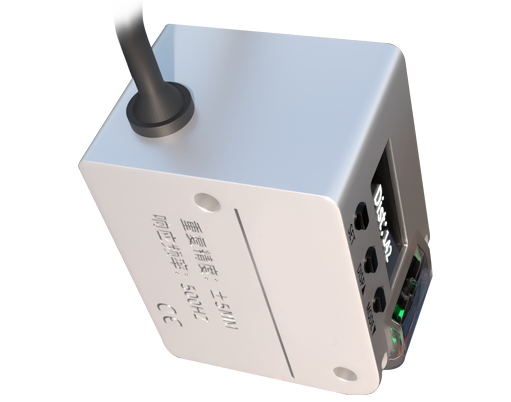
The laser beam passes through a series of precision optical components. First, a beam expander lens assembly widens the beam to create a defined measurement volume. Following this, a beam splitter diverts a small portion of the light to a reference photodiode. This component is crucial for closed-loop feedback, constantly monitoring the laser's output intensity to compensate for any drift or aging of the diode, thereby maintaining calibration. The main beam then exits the sensor head through a durable, scratch-resistant sapphire window into the process area.
As airborne particles pass through this measurement volume, they scatter the laser light. The scattered light is collected by a high-sensitivity silicon photodetector, positioned at a specific angle (often 90 degrees for optimal signal-to-noise ratio in certain particle size ranges). This detector converts the photon flux into a weak electrical current. Adjacent to it lies the first stage of the signal chain: a transimpedance amplifier (TIA). This low-noise, high-gain amplifier is critical, as it converts the picoampere-level photocurrent into a usable voltage signal without introducing significant electronic noise. The PCB layout here is meticulous, with guard rings and shielded traces to minimize interference.
The amplified analog signal is then routed to an analog-to-digital converter (ADC), typically a 16-bit or 24-bit sigma-delta type for high resolution. This digital data stream is processed by the system's microcontroller unit (MCU) or digital signal processor (DSP). The firmware running on this processor executes sophisticated algorithms based on Mie scattering theory. These algorithms analyze the pulse height, duration, and frequency of the detected signals to calculate real-time particle concentration and derive particle size distribution. The processing power required for this in real-time is substantial, highlighting the optimization of the embedded code.
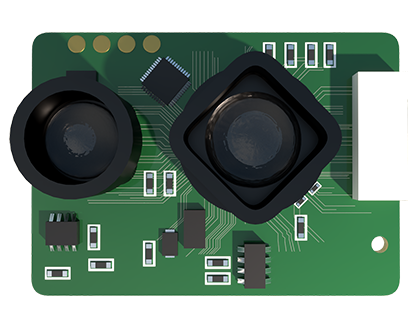
Power management is handled by a dedicated circuit block featuring switching regulators for efficiency and low-dropout linear regulators (LDOs) to provide clean, stable voltage rails for the sensitive analog and digital components. Communication interfaces, such as a 4-20mA analog output, Modbus RTU over RS-485, or industrial Ethernet protocols, are isolated from the main circuitry using optocouplers or digital isolators to protect the sensor from ground loops and electrical surges common in plant environments.
Upon reassembly, the sensor's calibration is verified. This process involves exposing the sensor to a known standard, such as polystyrene latex spheres of a certified size, to ensure its output correlates precisely with the physical phenomenon. The entire design—from the selected optical grade of the window to the thermal design of the PCB—exemplifies a holistic approach to solving a challenging measurement problem in harsh conditions. The robustness, self-diagnostic capabilities, and precision of this laser powder sensor underscore the advanced electro-optical engineering that enables modern, data-driven industrial processes.