In the intricate world of industrial automation, where precision, reliability, and safety are non-negotiable, proximity sensors stand as silent sentinels. Among the leaders in this critical field, Turck has established a formidable reputation. Turck proximity sensors are not merely components; they are sophisticated solutions engineered to withstand the harshest environments while delivering unparalleled performance. This article delves into the technology, applications, and distinct advantages that make Turck a preferred choice for engineers and system integrators worldwide.
At its core, a proximity sensor is a device that detects the presence or absence of an object without physical contact. Turck excels in offering a comprehensive portfolio encompassing various sensing principles, primarily inductive, capacitive, and ultrasonic. Inductive sensors, Turck's forte, are designed to detect metallic objects. They generate an electromagnetic field, and when a metal target enters this field, it induces eddy currents, causing a change in the oscillation amplitude which is then processed to trigger an output signal. Turck's inductive sensors are renowned for their exceptional switching distances, even for non-ferrous metals like aluminum or copper, a challenge many standard sensors fail to address consistently.
Capacitive sensors from Turck, on the other hand, can detect nearly any material—liquids, plastics, wood, glass, and granular substances—by measuring changes in capacitance. This makes them indispensable in level detection, fill control, and material handling applications where non-metallic targets are prevalent. Furthermore, Turck's ultrasonic sensors utilize sound waves to detect objects and measure distances, offering reliable performance in environments filled with dust, steam, or fog where optical sensors might falter.
What truly differentiates Turck proximity sensors is their ruggedized design and innovative features. Built to meet IP67, IP68, and IP69K ratings, they are resistant to water, oils, coolants, and extreme temperatures. Many models feature robust metal housings (stainless steel or brass) and are equipped with advanced diagnostics like IO-Link technology. IO-Link transforms a simple sensor into an intelligent device, enabling parameter setting, real-time process data monitoring, and predictive maintenance alerts directly from the control system. This digital transparency significantly reduces downtime and simplifies troubleshooting.
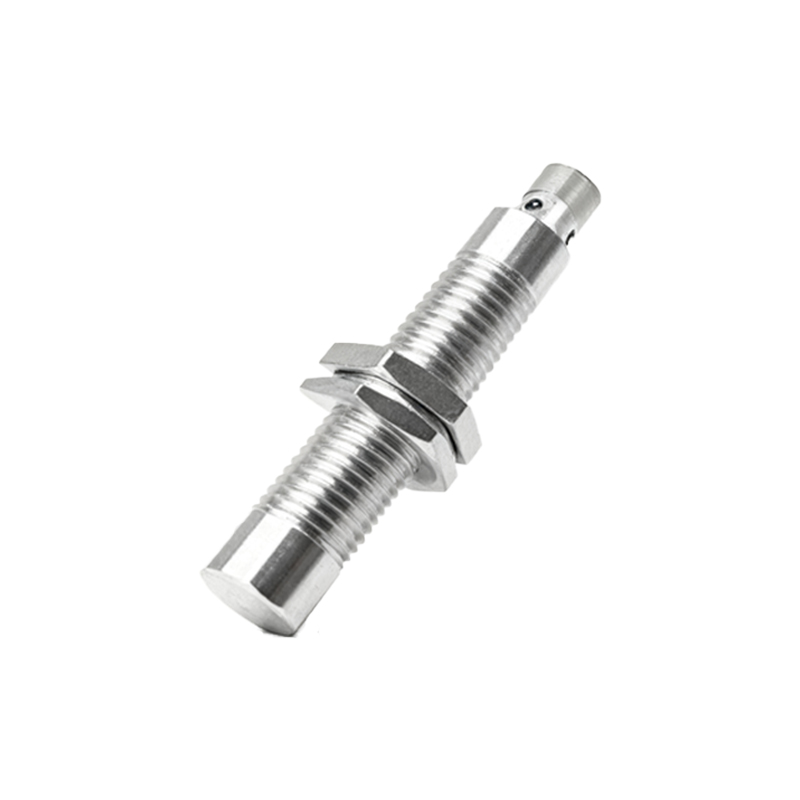
The application spectrum for Turck sensors is vast. In automotive manufacturing, they ensure precise positioning of robotic arms and verify part presence on assembly lines. In food and beverage processing, their hygienic designs and high ingress protection ensure safe operation during washdowns. In material handling and packaging, they detect product position, count items, and control conveyor systems. In heavy machinery, they serve as critical safety components, providing position feedback for hydraulic cylinders and ensuring machine guards are properly closed.
Choosing Turck means investing in system longevity and operational efficiency. Their sensors offer high immunity to electromagnetic interference (EMI), ensuring stable operation even near variable frequency drives (VFDs) or welding equipment. The availability of diverse form factors (cylindrical, rectangular, ring-shaped), connection types (M8, M12, cable outlets), and output configurations (PNP, NPN, analog, IO-Link) provides unparalleled flexibility for any cabinet or field layout.
In conclusion, Turck proximity sensors represent the convergence of German engineering precision and practical industrial robustness. They provide the essential "eyes" for automated systems, translating physical presence into actionable electronic signals with unwavering reliability. For engineers tasked with designing resilient, efficient, and smart automation systems, specifying Turck sensors is a strategic decision that enhances performance, ensures safety, and future-proofs industrial operations against evolving technological demands. Their commitment to quality and innovation continues to solidify their position as a backbone technology in the ever-advancing landscape of industrial automation.