In the realm of industrial automation and control systems, proximity sensors stand as fundamental components that enable non-contact detection of objects. Their principle of operation is rooted in various physical phenomena, primarily electromagnetic, capacitive, and inductive effects, which allow them to sense the presence, absence, or position of metallic or non-metallic targets without physical contact. This non-contact nature ensures minimal wear, high reliability, and long operational life, making them indispensable in applications ranging from manufacturing lines to robotics and safety systems.
The most common type is the inductive proximity sensor, which operates based on electromagnetic induction. It consists of an oscillator circuit that generates a high-frequency electromagnetic field from a coil wound around a ferrite core. When a metallic object enters this field, eddy currents are induced on the surface of the object, causing a change in the oscillation amplitude or frequency. This alteration is detected by a threshold circuit, which then triggers an output signal, typically a switching action to indicate the object's presence. Inductive sensors are highly effective for detecting ferrous and non-ferrous metals, with sensing ranges varying from a few millimeters to several centimeters, depending on the sensor design and target material.
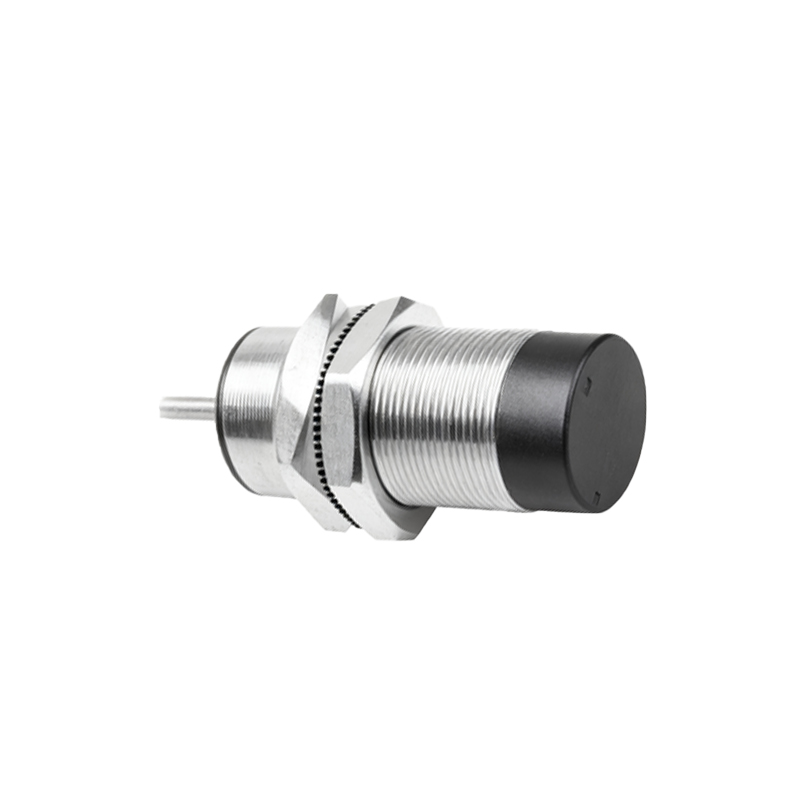
Another prevalent type is the capacitive proximity sensor, which functions by detecting changes in capacitance. It incorporates an electrode that forms one plate of a capacitor, with the target object acting as the other plate when it approaches. The sensor generates an electrostatic field, and as an object enters this field, the capacitance between the electrode and the object increases. This change is measured by an internal circuit, leading to an output signal when a preset threshold is exceeded. Capacitive sensors can detect both metallic and non-metallic materials, such as plastics, liquids, or granular substances, making them versatile for applications like level detection or material handling.
Ultrasonic proximity sensors utilize sound waves beyond the human hearing range, typically above 20 kHz. They emit ultrasonic pulses and measure the time taken for the echo to return after reflecting off an object. By calculating the time-of-flight, the sensor determines the distance to the target. This principle allows for precise detection of various materials, regardless of color or transparency, and is ideal for harsh environments where dust, moisture, or lighting conditions might interfere with other sensor types.
Photoelectric sensors, though sometimes categorized separately, also serve as proximity detectors by using light beams. They emit infrared or visible light and detect its reflection or interruption by an object. In the diffuse reflection mode, the sensor and receiver are housed together, and detection occurs when light bounces off the target back to the receiver. This enables non-contact sensing of diverse materials, including transparent or shiny surfaces, with adjustments for sensitivity.
The selection of a proximity sensor depends on factors such as the target material, required sensing distance, environmental conditions, and response speed. For instance, inductive sensors excel in metal detection with fast response times, while capacitive sensors handle non-metallics in varied industrial settings. Ultrasonic and photoelectric types offer longer ranges and adaptability to complex surfaces.
In practice, proximity sensors integrate seamlessly into control systems, providing real-time feedback for automation processes. They enhance efficiency by enabling precise positioning, counting, and monitoring without mechanical contact, reducing maintenance needs and downtime. As technology advances, innovations like smart sensors with integrated diagnostics and IoT connectivity are emerging, further expanding their capabilities in Industry 4.0 applications.
Overall, the principle of proximity sensors revolves around converting physical interactions into electrical signals through electromagnetic, capacitive, or acoustic means. This foundational understanding empowers engineers to deploy these devices effectively, ensuring robust and automated operations across diverse industrial landscapes. By leveraging their non-contact detection, industries achieve higher productivity, safety, and reliability in dynamic environments.