In the rapidly advancing field of medical technology, precision is not merely a desirable attribute—it is an absolute necessity. Among the myriad of sophisticated tools enabling this precision, the medical laser displacement sensor stands out as a critical component in diagnostic, therapeutic, and manufacturing applications. This article delves into the operational principles, key specifications, and transformative applications of these sensors within the healthcare sector.
At its core, a laser displacement sensor operates on the principle of optical triangulation or time-of-flight measurement. In the triangulation method, a focused laser beam is projected onto the target surface. The reflected light is then captured by a receiving lens at a known angle and focused onto a position-sensitive detector, such as a CCD or CMOS array. Any minute change in the distance to the target alters the position of the light spot on the detector. By calculating this positional shift, the sensor determines displacement with micron-level accuracy. Time-of-flight sensors, often used for longer ranges, measure the phase shift or the direct round-trip time of a modulated laser pulse. For medical applications, non-contact measurement is paramount, eliminating the risk of contamination or tissue deformation that physical probes might cause.
The selection of a medical-grade laser displacement sensor hinges on several critical specifications. Resolution, often down to sub-micron levels, determines the smallest detectable change. Sampling speed, reaching into the hundreds of kilohertz, is vital for capturing dynamic processes like vocal cord vibration or robotic arm movement during surgery. The type of laser, typically a Class 1 or Class 2 visible red laser or a Class 1 infrared laser, is chosen for safety and target material properties. Linearity error, stability, and spot size are equally crucial. Furthermore, sensors designed for medical use must comply with stringent regulatory standards, such as IEC 60601-1 for electrical safety and often require biocompatible or sterilizable housing materials for use in sterile fields.
The applications of these sensors are diverse and impactful. In surgical robotics, such as in robotic-assisted minimally invasive surgery, laser displacement sensors provide real-time feedback on instrument position and tissue topography, enhancing the surgeon's control and spatial awareness. They are integral to the guidance systems of CyberKnife or Gamma Knife radiosurgery, ensuring sub-millimeter targeting accuracy for tumor ablation. In diagnostics, they enable high-precision optical coherence tomography (OCT) systems for retinal imaging, measuring microscopic layers of the retina to diagnose conditions like glaucoma or macular degeneration. Dental CAD/CAM systems utilize them for rapid and accurate 3D scanning of dental impressions and preparations, streamlining the creation of crowns, bridges, and implants.

Beyond direct patient care, these sensors play a vital role in pharmaceutical manufacturing and medical device production. They perform critical quality control checks, such as measuring the thickness of tablet coatings, inspecting the seal integrity of vials and syringes, and verifying the precise dimensions of stent struts or orthopedic implants. In research settings, they are used in biomechanics to study gait analysis, joint kinematics, and even the subtle movements of the eardrum.
Despite their advantages, challenges persist. Specular or highly reflective surfaces, such as surgical steel or wet tissue, can interfere with readings, necessitating sensor models with specialized filters or algorithms. Biological tissues are often heterogeneous and semi-transparent, which can scatter the laser beam. Ongoing research focuses on multi-wavelength systems and advanced signal processing to overcome these hurdles. The future points toward miniaturization for integration into endoscopic tools, enhanced integration with AI for predictive analytics in surgical navigation, and the development of even faster, more robust sensors for next-generation point-of-care diagnostics.
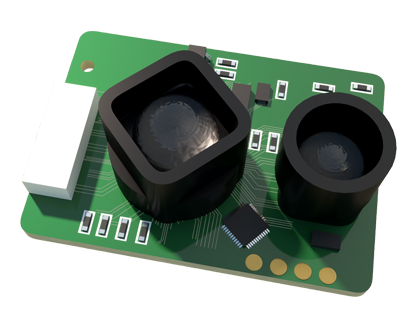
In conclusion, medical laser displacement sensors are indispensable enablers of modern high-precision medicine. By providing accurate, non-contact, and real-time dimensional data, they enhance safety, improve outcomes, and drive innovation across the entire healthcare continuum—from the research lab and factory floor to the operating room and clinic. Their continued evolution will undoubtedly unlock new frontiers in medical capability and patient care.
