In the world of industrial automation and machine control, proximity switch sensors are indispensable components. They provide non-contact detection of objects, enabling precise, reliable, and wear-free operation in countless applications. Understanding the fundamental principle behind these sensors is key to selecting and implementing them effectively.
At its core, a proximity sensor is a device that detects the presence or absence of an object within its sensing range without any physical contact. It does this by emitting an electromagnetic field or a beam of electromagnetic radiation and then looking for changes in the field or return signal. The primary advantage of this non-contact method is the elimination of mechanical wear and tear, leading to longer service life and higher reliability compared to mechanical limit switches.
The working principle varies significantly depending on the technology employed. The most common types are inductive, capacitive, and photoelectric proximity sensors.
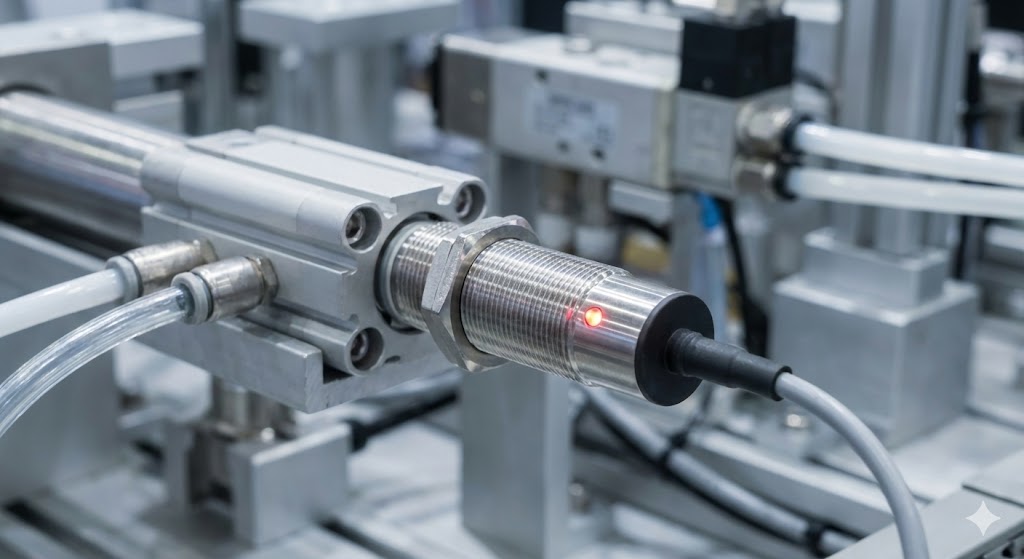
Inductive proximity sensors are used exclusively for detecting metallic objects. The core of an inductive sensor is a coil wound around a ferrite core, connected to an oscillator. When an alternating current is passed through this coil, it generates an oscillating electromagnetic field around the active face of the sensor. When a metallic object enters this field, eddy currents are induced on the surface of the metal. These eddy currents draw energy from the sensor's oscillator, causing a reduction in the amplitude of oscillation. This amplitude change is detected by a threshold circuit, which subsequently triggers a solid-state switch to change the output state (e.g., from OFF to ON). The sensing distance depends on the type of metal; ferrous metals like iron and steel can be detected at a greater distance than non-ferrous metals like aluminum or copper.
Capacitive proximity sensors, on the other hand, can detect both metallic and non-metallic materials, including liquids, powders, plastics, and wood. They operate on the principle of capacitance. The sensor face acts as one plate of a capacitor, and the target object acts as the other plate. The sensor electronics generate an electrostatic field. When a target object approaches, it alters the dielectric constant between the plates, causing a change in the capacitance of the system. This change is measured by the internal circuitry. Once the change exceeds a predetermined threshold, the output state of the sensor switches. The sensitivity of capacitive sensors can often be adjusted to ignore certain materials or to detect materials through thin non-metallic barriers.
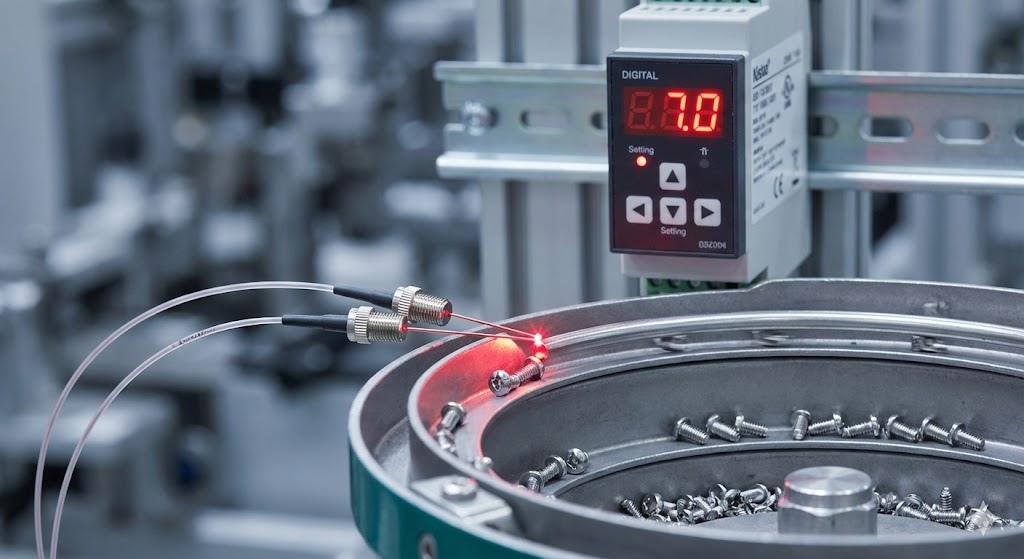
Photoelectric sensors use light to detect objects. They consist of a light emitter (usually an LED) and a receiver. There are three main configurations: through-beam, retro-reflective, and diffuse. In the diffuse (or proximity) mode, the emitter and receiver are housed in the same unit. The emitted light strikes a target and is scattered (diffused); some of this scattered light returns to the receiver. When the received light intensity exceeds a set level, the output is triggered. These sensors are highly versatile and can detect objects of almost any material, but their performance can be affected by environmental factors like dust, fog, or color and reflectivity of the target.

Beyond these, other types include ultrasonic sensors, which use sound waves, and magnetic sensors (reed switches or Hall effect sensors), which detect permanent magnets.
The output of a proximity sensor is typically a switched signal. Common output types include NPN (sinking), PNP (sourcing), analog current (4-20 mA), or analog voltage (0-10V). Two-wire AC/DC sensors are also common, simplifying wiring. The choice depends on the control system's input requirements.
The applications for proximity switches are vast. In manufacturing, they are used for part detection on conveyor lines, counting products, monitoring robot arm positions, and checking for proper closure of doors or guards. Inductive sensors are perfect for detecting metal parts in machinery, such as checking if a cylinder is extended or retracted. Capacitive sensors can control liquid levels in tanks or detect the presence of a plastic bottle on a filling line. Photoelectric sensors are widely used in packaging, material handling, and assembly automation for precise object detection.
When selecting a proximity sensor, key parameters to consider include sensing distance (rated and effective), target material, output type, supply voltage, housing style (cylindrical or rectangular), and environmental ratings like IP (Ingress Protection) for dust and water resistance. It is crucial to derate the nominal sensing distance in practical installations to account for temperature variations, supply voltage tolerances, and target size.
In summary, proximity switch sensors operate by interacting with an object through an electromagnetic field, capacitance, or light beam. Their non-contact nature ensures high reliability and fast response times, forming the backbone of modern automated systems. By choosing the correct technology and specifications for the application, engineers can achieve robust and maintenance-free object detection, crucial for efficiency and safety in industrial environments.