In the intricate world of industrial automation, robotics, and smart devices, the ability to detect the presence, absence, or position of an object without physical contact is fundamental. This critical task is performed by proximity sensors. Among these, the miniature proximity sensor has emerged as a pivotal component, enabling sophisticated functionality in increasingly compact and space-constrained applications. These tiny yet powerful devices are the unsung heroes, providing the essential "sense of touch" for modern machinery.
A miniature proximity sensor is a non-contact electronic device designed to detect the presence of a nearby object within a very small sensing range, typically from a few millimeters up to about 15-20 mm. Their defining characteristic is their exceptionally small physical size, often with housing diameters as tiny as M4, M5, or M8 (approximately 4mm, 5mm, or 8mm in diameter). Despite their compact form factor, they pack the core technology of their larger counterparts, primarily operating on inductive, capacitive, or photoelectric principles.

Inductive miniature sensors are the most common, used to detect metallic objects. They generate an electromagnetic field; when a metal target enters this field, it causes a change in oscillation amplitude, which the sensor's circuitry detects. These are workhorses in automated assembly lines, CNC machines, and robotic arms for precise part positioning and counting. Capacitive miniature sensors can detect both metallic and non-metallic materials (like plastic, glass, or liquids) by measuring changes in capacitance. This makes them ideal for fill-level detection in small containers or presence sensing of non-metal components. Miniature photoelectric sensors use a light beam (usually infrared) and are excellent for detecting very small objects or for applications requiring a slightly longer range within a tiny package.
The advantages of miniaturization are transformative. First and foremost, they enable design integration where space is at an absolute premium. This includes inside compact robotic grippers, on miniature linear actuators, within portable medical devices, and on densely populated printed circuit boards (PCBs). Their small size allows for installation in locations previously inaccessible to standard sensors, unlocking new possibilities for machine design and diagnostic monitoring. Furthermore, their reduced mass minimizes inertia, which is crucial for high-speed, precision applications like pick-and-place robots in electronics manufacturing, where every millisecond and millimeter counts.
The applications of miniature proximity sensors are vast and growing. In the electronics manufacturing sector, they are indispensable for verifying the placement of microchips on circuit boards, detecting the presence of tiny connectors, and ensuring the precise alignment of components during surface-mount technology (SMT) processes. The burgeoning field of collaborative robots (cobots) relies heavily on these sensors for safe, close-quarter interaction with humans and for delicate handling tasks. In the medical device industry, they ensure accuracy in diagnostic equipment, drug dispensing machines, and surgical instruments. Even consumer products, such as advanced smartphones and wearables, utilize miniature sensing technology for features like automatic screen wake/sleep.
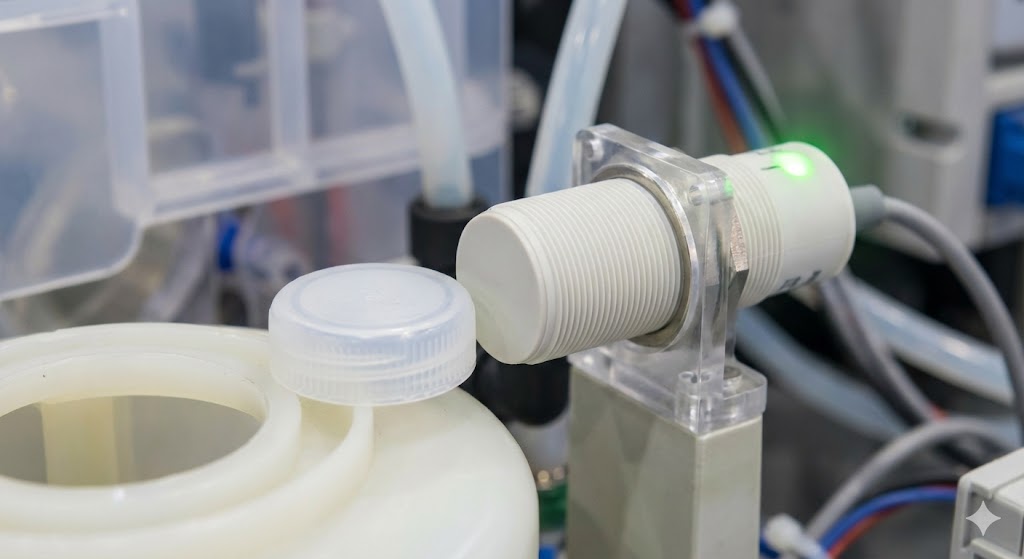
Selecting the right miniature proximity sensor requires careful consideration of several parameters. The sensing distance must be appropriate for the application, noting that the effective range is often less than the nominal range for reliability. The housing material and style (e.g., cylindrical, rectangular, shielded or unshielded) must suit the environmental conditions, including exposure to coolants, oils, or washdowns. Output configuration (PNP/NPN, NO/NC) must be compatible with the controller's input module (PLC). Key performance specs like switching frequency (response speed) and hysteresis (the difference between switch-on and switch-off points) are critical for high-speed or precision applications. Finally, ensuring the sensor is rated for the specific environmental conditions, including temperature, voltage supply fluctuations, and electromagnetic interference (EMI), is essential for long-term reliability.
As technology advances, the trend is toward even smarter and more integrated miniature sensors. Modern versions come with built-in IO-Link communication, a digital protocol that allows for detailed parameter setting, real-time process data monitoring, and advanced diagnostics directly from the controller. This facilitates predictive maintenance, remote configuration, and seamless integration into Industry 4.0 and Industrial Internet of Things (IIoT) frameworks. Future developments will likely focus on enhancing sensing accuracy, increasing resistance to environmental contaminants, and further reducing power consumption for battery-operated portable devices.
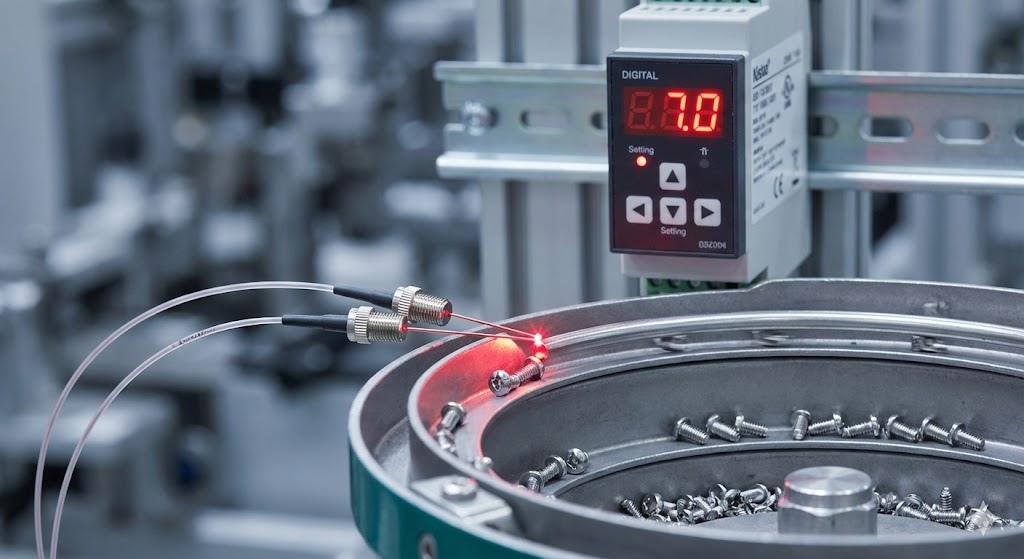
In conclusion, miniature proximity sensors are far more than just shrunken versions of standard sensors. They are specialized, high-performance components that solve unique spatial and performance challenges. By providing reliable, non-contact detection in the tightest of spaces, they form a critical backbone for innovation across automation, robotics, and advanced electronics. Their continued evolution will be central to enabling the next generation of smarter, smaller, and more agile automated systems.