In the rapidly evolving landscape of industrial automation and precision engineering, laser sensor technology has emerged as a cornerstone for mobile measurement applications. The integration of high-precision laser sensors onto mobile platforms—including autonomous guided vehicles (AGVs), drones, and robotic arms—has fundamentally transformed data acquisition, quality control, and spatial analysis across numerous sectors. This article delves into the core principles, recent technological advancements, and practical implementations of laser sensors in dynamic, mobile environments.
At its essence, a laser sensor for measurement operates by emitting a focused beam of light towards a target surface. The sensor then detects the reflected light, calculating parameters such as distance, displacement, or profile based on principles like time-of-flight (ToF), triangulation, or interferometry. When these sensors are mobilized, they transcend the limitations of fixed-station measurement, enabling continuous, large-scale, and often real-time data collection. Key technologies facilitating this mobility include the miniaturization of sensor components, enhanced power efficiency, robust housing for vibration and shock resistance, and sophisticated onboard or wireless data processing capabilities.
One of the most significant advancements is the development of 2D and 3D laser scanners, or LiDAR (Light Detection and Ranging) systems, designed for mobile use. Modern mobile LiDAR units combine a rapidly rotating laser beam with precise inertial measurement units (IMUs) and GPS/GNSS systems. This fusion allows for the generation of highly accurate point clouds of environments such as construction sites, mining pits, or factory floors, even while the platform is in motion. The data is crucial for creating as-built models, monitoring progress, and performing volumetric calculations.
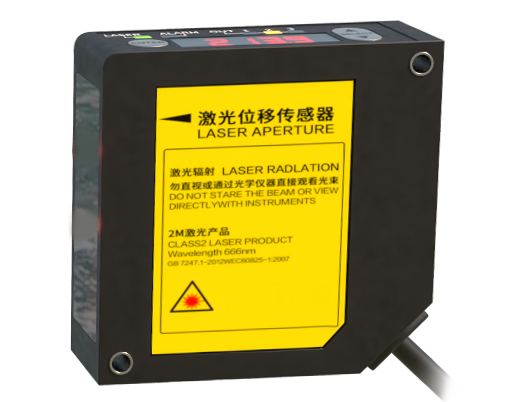
In manufacturing and logistics, mobile laser sensors are indispensable for automated guidance and inspection. AGVs equipped with laser scanners navigate complex warehouse layouts by creating and referencing real-time maps, avoiding obstacles with millimeter precision. Simultaneously, robotic arms with integrated laser displacement sensors can perform non-contact inspection of parts on a moving assembly line, measuring dimensions, detecting defects, or verifying assembly completeness without halting production. This application significantly boosts throughput and quality assurance.
The field of autonomous vehicles represents a pinnacle of mobile laser measurement. Automotive LiDAR systems continuously scan the vehicle's surroundings in 360 degrees, creating a dynamic 3D map to identify other vehicles, pedestrians, and road features. This real-time environmental perception is critical for path planning and collision avoidance, pushing the boundaries of safety and autonomy. Similarly, in aerospace, drones equipped with lightweight laser scanners conduct aerial surveys for topography, forestry management, and infrastructure inspection, accessing areas that are hazardous or inaccessible to humans.
Despite the progress, challenges persist. Environmental factors like ambient light interference, dust, fog, or highly reflective surfaces can degrade laser sensor performance. Engineers are countering these issues with advanced filtering algorithms, multi-echo detection technology, and sensors operating at different wavelengths. Another challenge is the immense data volume generated by mobile scanning, necessitating robust edge computing solutions for preliminary data processing before transmission to central systems.
Looking ahead, the convergence of laser sensing with artificial intelligence and machine learning promises even smarter mobile measurement systems. AI algorithms can interpret point cloud data in real-time, not just collecting geometric information but also classifying objects and predicting potential system anomalies. Furthermore, the development of solid-state LiDAR, which has no moving parts, will enhance the durability and reliability of sensors in harsh mobile applications.
In conclusion, the mobilization of laser sensor technology is a transformative force, enabling unprecedented levels of automation, accuracy, and efficiency. From the factory floor to open roads and aerial spaces, mobile laser measurement systems are providing the critical eyes for intelligent machines. As sensor technology, data processing, and integration techniques continue to advance, their role in shaping the future of autonomous systems and industrial productivity will only become more profound and indispensable.