In the realm of industrial automation and machine design, proximity sensors are indispensable components. Their primary function is to detect the presence or absence of an object without physical contact, enabling precise control, safety interlocks, and process monitoring. A critical, yet often overlooked, specification in selecting the right sensor for an application is its power consumption. This parameter directly impacts system design, energy efficiency, heat dissipation, and overall operational cost. This article delves into the factors influencing proximity sensor power draw, typical power ranges, and considerations for optimal integration.
Fundamentals of Power Consumption
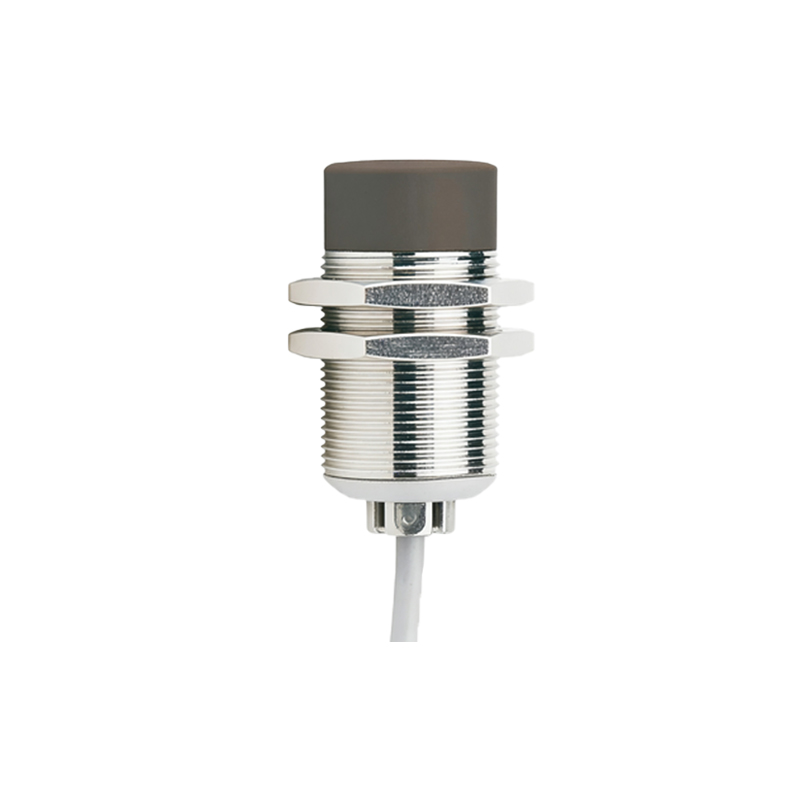
The power consumption of a proximity sensor is essentially the electrical power it requires to operate, typically measured in watts (W) or milliwatts (mW). It is calculated as the product of the supply voltage (V) and the current draw (I), expressed as P = V x I. For DC sensors, this is straightforward. For AC sensors, the calculation involves the root-mean-square (RMS) values of voltage and current, and may include a power factor for inductive loads. Sensor datasheets always specify the operating voltage range and the maximum or typical current consumption, allowing engineers to compute the power requirement.
Key Factors Influencing Power Draw
Several intrinsic and extrinsic factors determine how much power a proximity sensor consumes:
1. Sensing Technology: The core technology is the most significant determinant.
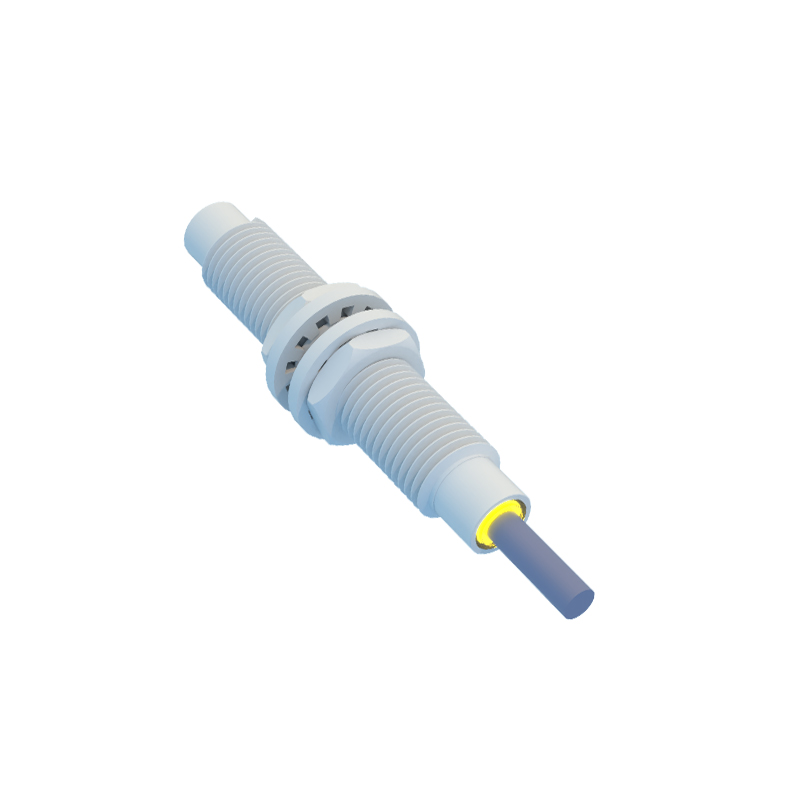
Inductive Sensors: Used for detecting metallic objects. Their power consumption is primarily driven by the oscillator circuit that generates the electromagnetic field. Larger sensing ranges or more robust housings often require more powerful oscillators, leading to higher current draw. Typical consumption ranges from 0.5W to 2.5W.
Capacitive Sensors: Used for detecting both metallic and non-metallic materials. They operate similarly to inductive sensors but measure changes in capacitance. Their power consumption is generally comparable to or slightly higher than inductive models, often between 0.8W to 3W, depending on sensitivity settings.
Photoelectric Sensors: These use a light emitter (LED or laser) and a receiver. The power consumption of the emitter is a major component. Long-range sensors or those with high-brightness LEDs for challenging environments consume more power. Additionally, background suppression or high-speed models may have more complex circuitry. Power consumption can vary widely, from 0.5W for simple diffuse models to 3W+ for long-range thru-beam or specialized types.
Ultrasonic Sensors: These generate high-frequency sound waves. The piezoelectric transducer that produces and receives the sound pulses requires significant energy, especially for long-range detection. Consequently, ultrasonic sensors often have the highest power consumption among common proximity types, frequently ranging from 1.5W to 5W or more.
2. Output Configuration: The type of output switch influences power draw.
Two-wire (AC/DC) Sensors: These sensors are connected in series with the load. Their "leakage current" or "off-state current" is a key specification, as it represents the minimum current the sensor must pass to power its internal electronics even when "off." This contributes to a base-level power consumption.
Three-wire and Four-wire DC Sensors: These have separate power supply and load connections. Their power consumption is the current drawn by the supply terminals, independent of the load. Solid-state (PNP/NPN) outputs are very efficient, while electromechanical relay outputs within a sensor housing have negligible holding coil power but are slower.
3. Additional Features: Modern sensors include features that add to power needs:
IO-Link and Smart Functions: Digital communication interfaces like IO-Link allow for parameter setting and advanced diagnostics. The communication transceiver and additional processing logic increase power consumption, though usually by a modest amount (e.g., 0.1W to 0.3W).
Diagnostic LEDs: Bright status indicators, while useful, consume power. Multiple LEDs or high-intensity versions add to the total draw.
Extended Temperature Range or Robust Housing: Sensors designed for extreme conditions may use components rated for wider tolerances or include heating elements, which significantly increase power usage.
Typical Power Ranges and Implications
While specific numbers must always be sourced from the manufacturer's datasheet, here are general guidelines:
Standard Inductive/Capacitive (M12/M18): 0.8W - 2W
Compact Inductive (M5/M8): 0.5W - 1.2W
Standard Photoelectric (Diffuse/Retro-reflective): 1W - 2.5W
Long-Range or